
08.07.26 — 02.02.26
Tropical Aliens
Solo exhibition by Eko Nugroho
Download E-Catalogue
Portrait of Tropical Aliens
WAHYUDIN
Three days after Eko Nugroho completed his site-specific installation and displayed 34 artworks for
his solo exhibition titled Tropical Aliens at Nadi Gallery—I paid a visit to the gallery,
which is located on Jalan Kembang Indah III Block G3/4-5, Puri Indah, West Jakarta.
On Thursday morning, June 11th, I was honoured with a privilege to have a preview of the exhibition
and had an online conversation with Eko Nugroho himself. While being personally accompanied by the
founder, owner and director of Nadi Gallery—Biantoro Santoso and Dhira Dwinanda—I gratefully
accepted the honour.
Tropical Aliens is Eko Nugrohos's second solo exhibition with Nadi Gallery while also being
the 36th solo exhibition by him, a graduate of the Indonesian Institute of the Arts (ISI)
Yogyakarta, presented in numerous galleries and museums in Indonesia and abroad over the past 26
years.
Previously, from July 29 - August 11, 2009, Eko Nugroho held his first solo exhibition with Nadi
Gallery, titled In the Name of Pating Tlecek. At that moment, Dhira was a 13-years-old
first-year junior high school student. Which is why, as he himself stated, he could not vividly
recall his impression about that exhibition, which presented 13 artworks of various sizes, subject
matters and medium—including paintings, drawings, graphic prints, sculptures, embroidery, mural and
installation objects.
“However, since that exhibition, Eko Nugroho’s name has been etched in my memories specifically
because of his highly characterized visual,” said Dhira.
“So every time I encountered his visual work, I instantly recognized them as Eko’s, even though back
then I did not really know who Eko Nugroho was,” he added.
We know, and Dhira is no exception, Eko Nugroho is currently one of the few Indonesian artists who
joined the rank of most recognized artist in the international art scene. On February 11th, 2016,
Donald Frazier from New York Times, acknowledged him as an example of local artists who rose
to become a global superstar as South-East Asia’s contemporary art attracting more attention all
around the world. This fact can serve as an evidence: In 2013, ArtReview magazine named Eko
Nugroho as “Power 100” or 100 most influential figures in the contemporary art world, and Art +
Auction magazine placed him in their “Top 50 under 50” list, which highlights the top 50
leading individuals in international contemporary art scene under the age of 50.
As stated by Sonia Kolesnikov-Jessop in The New York Times (September 17th, 2013), his
recognition and inclusion signalled the rapid rise of Eko Nugroho’s career, especially after his
solo exhibition at Musee d’Art Moderne de la Ville de Paris and Arario Gallery Seoul, participation
in Venice Biennale, and collaboration with Louis Vuitton which not only enable him to create a new
scarf design based on one his six large-scale oil paintings, but also placed him on the same rank as
renowned international artists such as Yayoi Kusama, Takashi Murakami and Richard Prince, all of
whom had previously collaborated with the luxury brand.
What has enabled this artist, born in Yogyakarta on July 4th, 1977, to gain recognition from the
international art world is revealed in Rachel Vance’s opening statement (Ocula.com—October 8th,
2015) for his interview with Eko Nugroho:
“Nugroho’s ability to intertwine popular culture within the vernacular of contemporary art has
elevated his practice to broad audience appeal and seen him undertake
collaborations with brands such as Louis Vuitton and Ikea while also exhibiting in art
museums such as: Musee d’Art Moderne de la Ville de Paris, Kiasma Museum of
Contemporary Art Helsinki, The National Gallery of Victoria Melbourne, ZKM Centre
for Art and Media Karlsruhe; and at biennales such as the Biennale de Lyon, Busan
Biennale Korea, Taipei Biennial Taiwan and the Asia Pacific Triennial.”
Based on these skills and recognition, as noted by Donald Frazier (2016), Eko Nugroho
“offers a firm, unique yet brutal approach that is capable of delivering sharp commentaries on
politics and pop culture.”
Nevertheless, as admitted by Dan Cameron, curator of Orange County Museum of Art
California, through Sonia Kolesnikov-Jessop (The New York Times, September 17th, 2013),
“despite his potential for keen observation and critique, Eko Nugroho is a highly humorous and
inventive artist, the form and character of his animation placed him somewhere in the middle of
the spectrum between Kenny Scharf and Takashi Murakami—with the additional dimension of a
comical brutality that brings him into the visual idiom of contemporary zombie and apocalyptic
fantasy.”
Rachel Vance (2015) highlighted Donald Frazier’s observation and Dan Cameron’s
statement above by noting that Eko Nugroho’s contemporary art practice “is characterized by
diversity and takes many forms, investigating macro-universal issues such as globalization,
political turbulence, human existence, corruption, racial intolerance, and cultural value system
through critical lens, while simultaneously being humorous and comical.”
With all of these, I have acquired a solid foundation and a comparative perspective that
allows me to appreciate and understand Tropical Aliens.
***
"Every exhibition tells a story," said Boris Groys, a philosopher and art critic, in Art
Power (2008: 44). Tropical Aliens is no exception. Through this exhibition, Eko
Nugroho
presents a narrative populated by magical creatures endowed with distinct forms, models and
powers, similar to those characters in the movie Star Wars, Disney and Pixar animated films,
Studio Ghibli productions, as well as Alice in Wonderland by Lewis Carroll and The Book of
Imaginary Beings by Jorge Luis Borges.
One of them is a creature called Feeding to Silence (2026). Its appearance is
unmistakably contemporary: black-and-white sneakers, black cargo pants and a black canvas
jacket. It sits on a red plastic chair, both of its hands resting on its thighs and supporting a
silver
tray filled with a meal composed of a withered forest, barren hill and a pockmarked mountain.
Most astonishingly, the creature wears silver food tray as a mask, covering its face and head and
emblazoned with the words "corruption, corruption, corruption."
Perceptive viewers may well imagine the creature as a visual representation of the
villainous figure who embezzles public funds from the Makan Bergizi Gratis (Free Nutritious
Meal) program in a country led by a president whose intelligent quotient (IQ) is said to rival the
IQ of the scientist who won the Nobel Prize in Physics, Albert Einstein.
However, no matter how it is imagined, Feeding to Silence convinces me that a
compelling work of art is concerned not only with aesthetic matter but also ethical ones. In this
sense, Feeding to Silence, borrowing from cultural critic Susan Sontag's statement in 1964,
serves as a "statement model"—a work of visual art as the artist's statement on socio-political
reality. This has been Eko Nugroho's signature for almost three decades and enables him, as stated
above, to cements his place in the history of art, both in Indonesia and internationally.
It is therefore understandable that e-flux journal (2013) observed, "Nugroho's arrival was
a timely event that reflected this need."— namely, the need to question social norms that
oppress individuals and the hypocritical conventions that perpetuate the cycle of collectivism
during the New Order regime under Soeharto, as well in the aftermath of its fall, which left
Indonesia facing economic, social and political crisis.
Unsurprisingly, Feeding to Silence is not alone in Tropical Aliens. There exist 33
other tropical magical creatures with myriad different forms, costumes, styles and media, including
works on paper (drawings), canvas (paintings), embroidery, fiberglass (objects and sculptures),
mural and site specific installation—which reminds me of this statement from Susan Sontag from 1965:
“A work of art is a kind of showing or recording or witnessing which gives palpable form to
consciousness; its object is to make something singular explicit (…) What a work of art does is
to make us see or comprehend something singular, not judge or generalize.”
Subsequently, Tropical Aliens transforms into a collection of Eko Nugroho's most recent works
from these past three years (2024 - 2026), demonstrating the consistency and integrity of his
artistic practice, sustained by a well-preserved creative vision.
I have said it before, by quoting sociologist Hannah Wohl in Bound by Creativity: How
Contemporary Art is Created and Judged (2021: 9), "Creative visions represent a bundle of
meaningful consistencies within a body of work, which changes over time as the body of work
evolves." Unsurprisingly, Eko Nugroho has fully embodied this wisdom in this past 26 years of his
artistic career.
For that "creative vision", it should be noted, Tropical Aliens does not fully encompass the
breadth of Eko Nugroho's artistic practice. Rather, it represents a fragment of his artistic
activism, one that aptly embodies Hannah Wohl observation (2021: 24), "Contemporary artists now view
their work as not only a calling, but also a career."
In Tropical Aliens, traces of both "the calling" and "the career" can be found throughout the
embroidered paintings, sculptures, mural and installations. It is well known that Eko Nugroho
produces his embroidered paintings in collaboration with a number of textile artisan from
communities surrounding his home studio, including the villages of Nayu and Jeblog in Tirtonirmolo,
Bantul, Yogyakarta, Indonesia.
This collaboration not only allows him to connect his creative works with the communities around
him, thereby giving both social and economic values to his embroidered paintings, but also allows
him to gain critical acknowledgement from key stakeholders in the global contemporary art world. We
may recall his embroidered painting, Mask 2 (2012), was chosen to be featured in Vitamin
T: Threads and Textiles in Contemporary Art, edited by Louisa Elderton and Rebecca Morrill,
published by Phaidon, London and New York, in 2019.
Meanwhile, the production of Eko Nugroho's sculptures, murals and installations involves close
collaboration with a team of highly skilled assistants and fabricators.
"They are not just helpers, I train them too," Eko Nugroho remarked with a sincere smile to Michael
Vatikiotis in 2008.
"I Like working as a team. I find painting is too solitary", Eko Nugroho added.
Through such collaboration and team work, Eko Nugroho embraces contemporary artistic practice as an
"activity that can be practiced by everyone, an inclusive and truly egalitarian activity," to borrow
Boris Groys's words from 2016. In doing so, he recognizes that a good artist is one who is sincere
and self-aware enough to share artistic knowledge and practice with others, thereby enabling him to
face whatever may come, whether expected or unforeseen—including the dismantling of installations
and the erasure of murals in Tropical Aliens.
Base on that recognition, attentive viewers, after experiencing Tropical Aliens, may find
themselves curious about the secret or mysteries concealed behind the figures in Eko Nugroho's
works, which appear charming, whimsical, and engaging beneath their many different masks.
In fact, eleven years ago, on January 28th, 2025, Eko Nugroho had already revealed that secret, or
mystery, to Sola Agustsson of Artsy.
" Many of the figures in my work … are masked in some way. By changing the heads of figures I convey
my interpretation; this is the picture I end up with,” Eko Nugroho explained.
At that point, I felt that I had found the wisdom needed to appreciate and understand Tropical
Aliens attentively and at the most unhurried pace possible.
Jakarta, July 8th, 2026
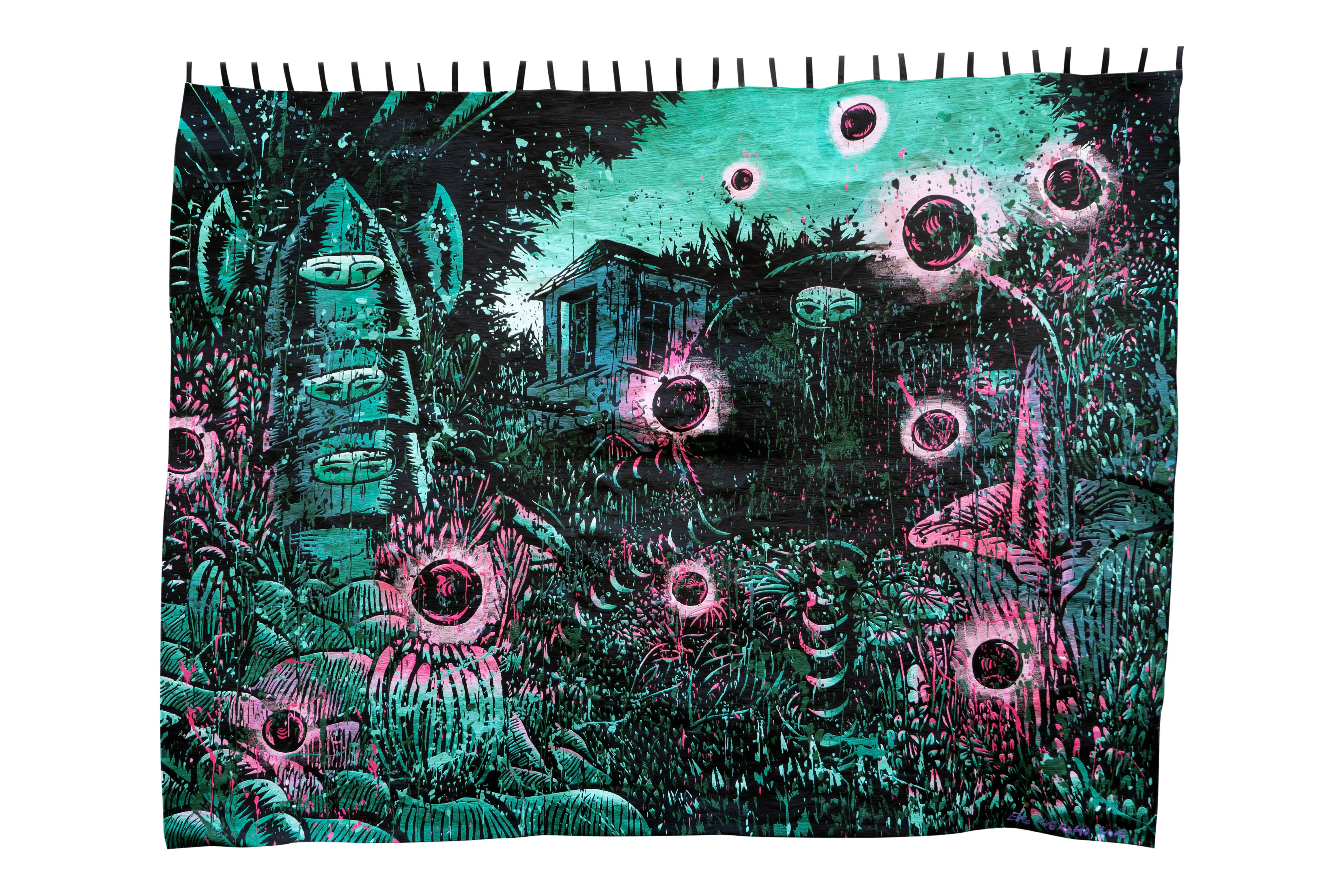
Eko Nugroho
Abandoned Nation, 2026
embroidered painting
237 x 304 cm
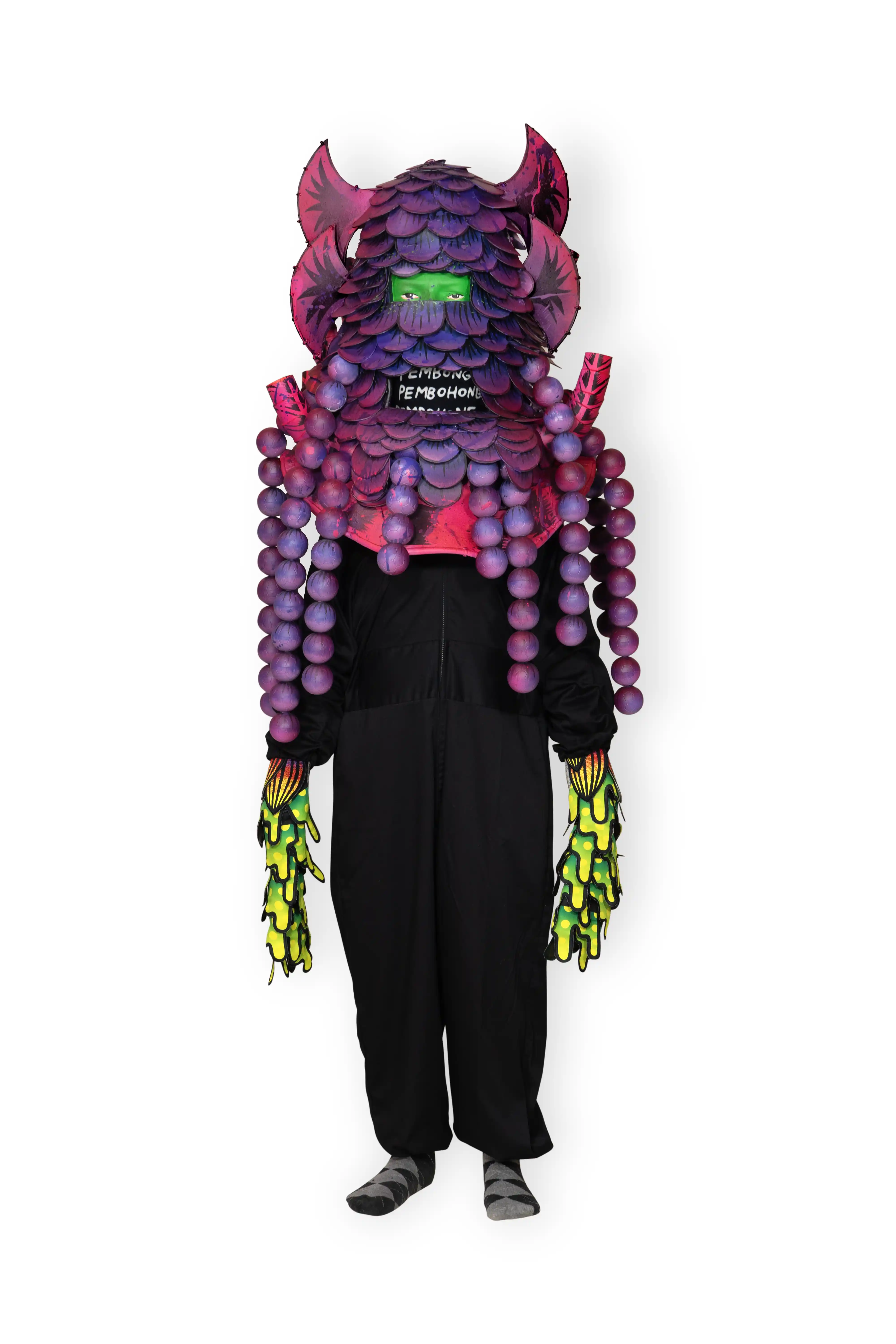
Eko Nugroho
Costume Party 1 Dancer on Empty Land, 2026
fiberglass painting with acrylic, spray paint, cloth, manual embroidery, plastic upcycle,
socks
186 x 70 x 64 cm

Eko Nugroho
Costume Party 2 Feeding to Silence, 2026
fiberglass painting with acrylic, mannequin, aluminium food tray, cloth, shoes, socks
158 x 76 x 58 cm

Eko Nugroho
Costume Party 3 Multi Kultus Menolak Lupa, 2026
fiberglass painting with acrylic, manual embroidery, cloth, fabric, bolsters, imitation
peacock feather
174 x 98 x 44 cm
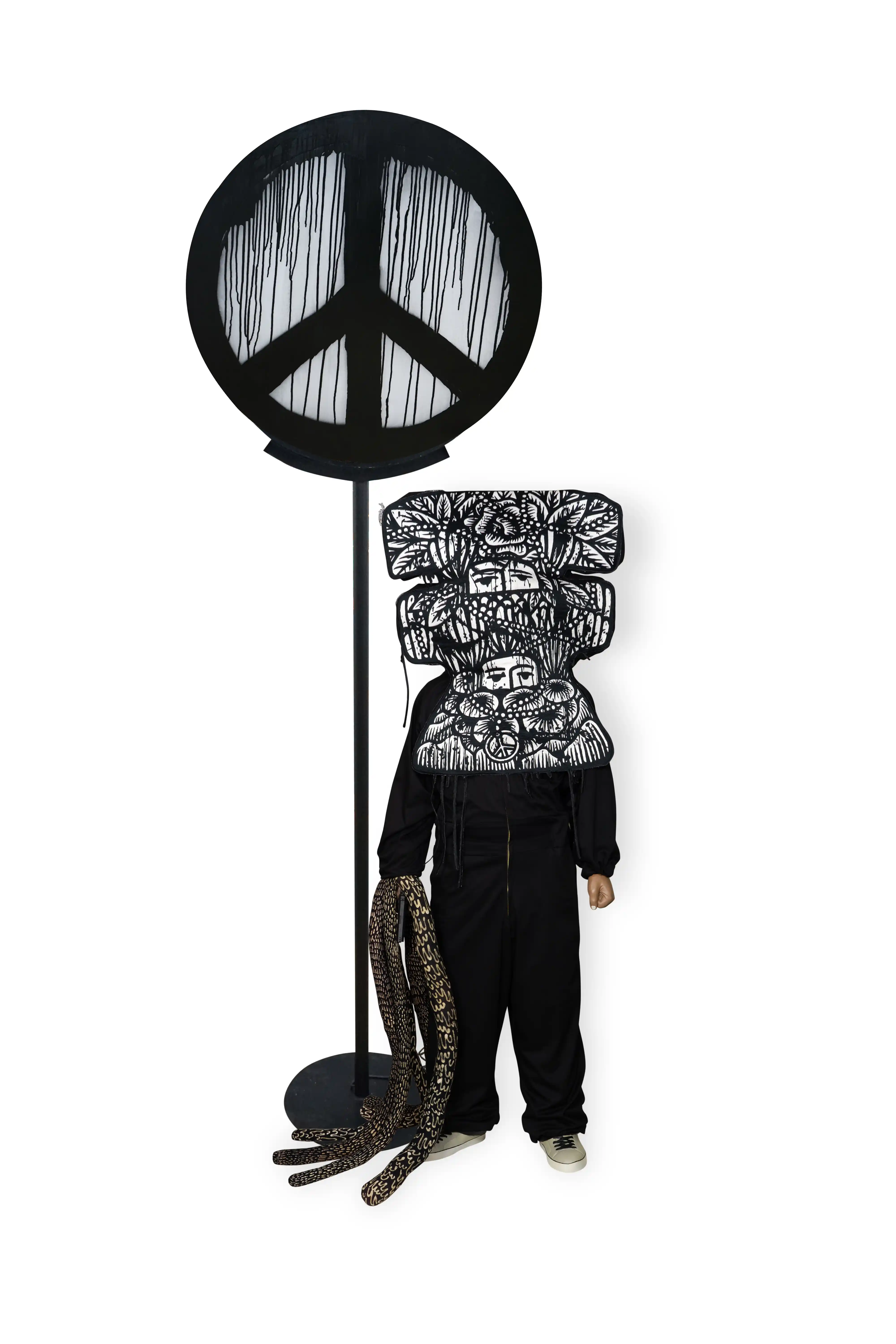
Eko Nugroho
Costume Party 4 Peace For Every Life, 2026
fiberglass painting with acrylic, embroidered painting, batik bolsters, neon box
Sculpture 188 x 97 x 85 cm, Neon Box peace 290 x 92 x 50 cm
_2026_fiberglass painted with acrylic, spray paint_250 x 144 x 125 cm.webp)
Eko Nugroho
Culture Shop (Abandoned Monument series), 2026
fiberglass painted with acrylic, spray paint
250 x 144 x 125 cm
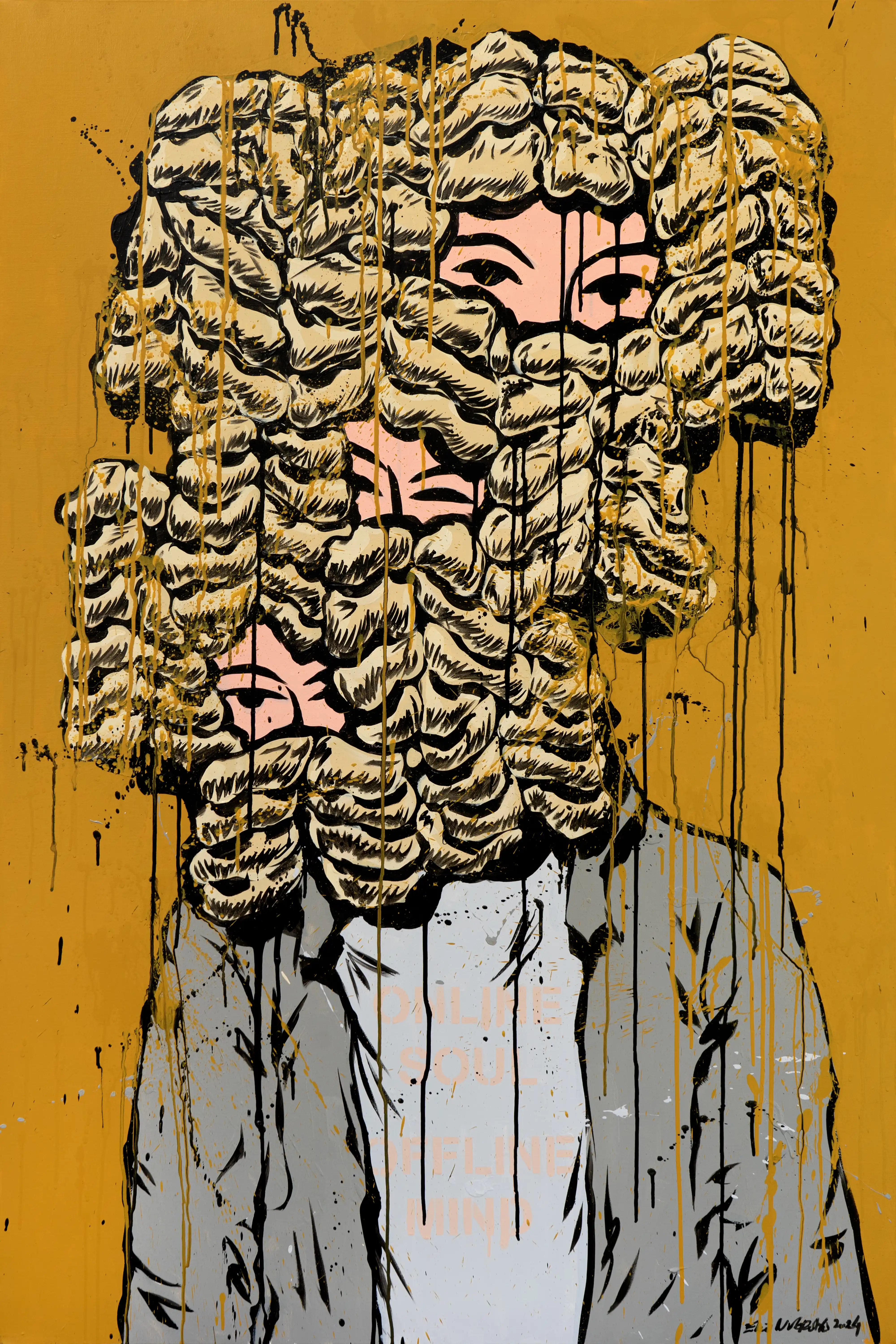
Eko Nugroho
Devil Political Rights, 2024
acrylic on canvas
150 x 100 cm
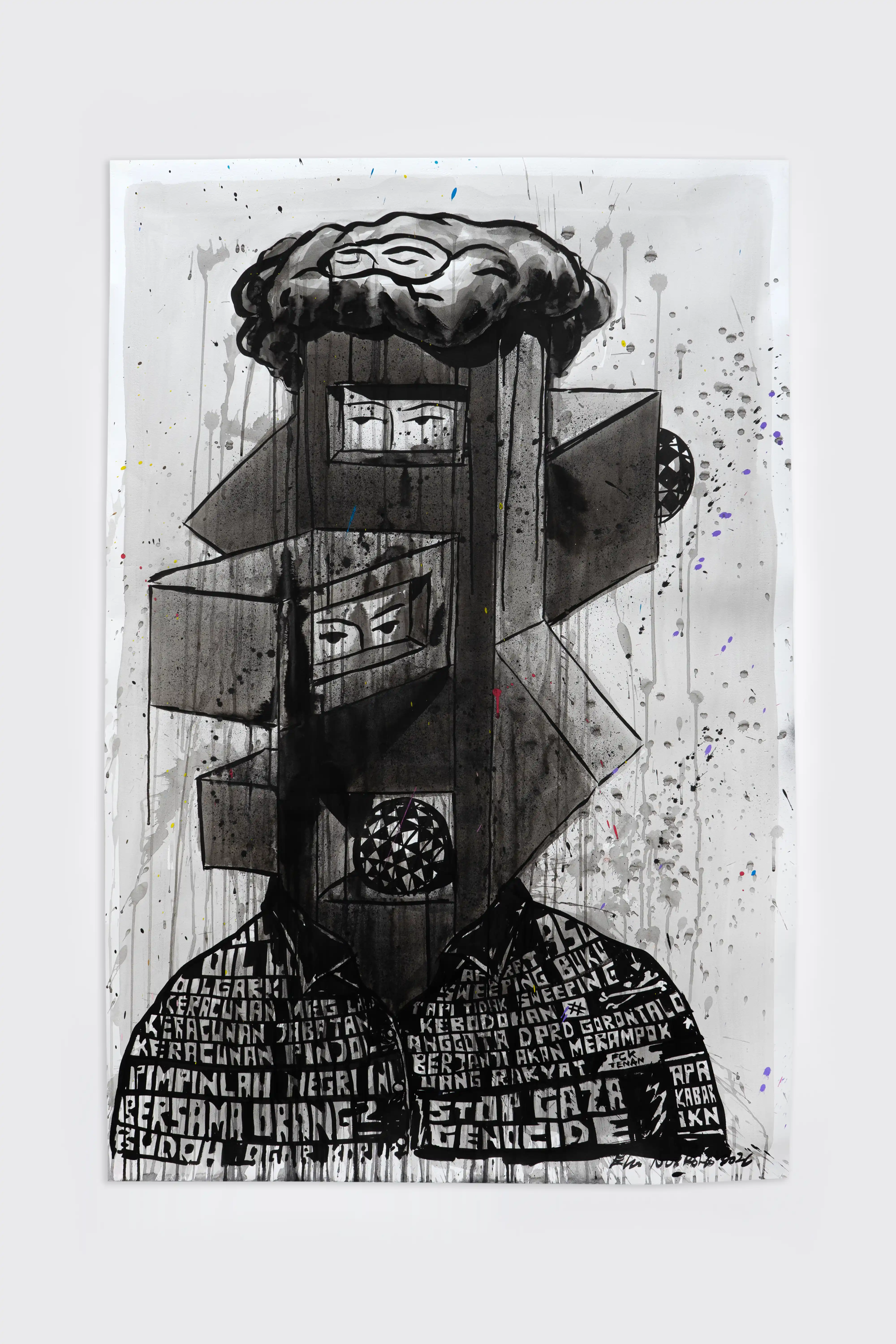
Eko Nugroho
Dress Code, 2026
indian ink, spray paint, glitter on paper
150 x 100 cm
_2025_embroidered painting_73 x 78,5 cm.webp)
Eko Nugroho
Hidden in Ours series (Freedom), 2025
embroidered painting
73 x 78,5 cm
_2025_embroidered painting_74 x 79 cm.webp)
Eko Nugroho
Hidden in Ours series (Happiness), 2025
embroidered painting
74 x 79 cm
_2025_embroidered painting_74 x 79 cm.webp)
Eko Nugroho
Hidden in Ours series (Honest), 2025
embroidered painting
74 x 79 cm
_2025_embroidered painting_76 x 79 cm.webp)
Eko Nugroho
Hidden in Ours series (Peace), 2025
embroidered painting
76 x 79 cm
_2025_embroidered painting_76 x 79 cm.webp)
Eko Nugroho
Hidden in Ours series (Share), 2025
embroidered painting
76 x 79 cm
_2025_embroidered painting_73 x 79 cm.webp)
Eko Nugroho
Hidden in Ours series (Strength), 2025
embroidered painting
73 x 79 cm
_2025_embroidered painting_73 x 79 cm.webp)
Eko Nugroho
Hidden in Ours series (Trust), 2025
embroidered painting
73 x 79 cm
_2025_embroidered painting_75 x 79 cm.webp)
Eko Nugroho
Hidden in Ours series (Truth), 2025
embroidered painting
75 x 79 cm
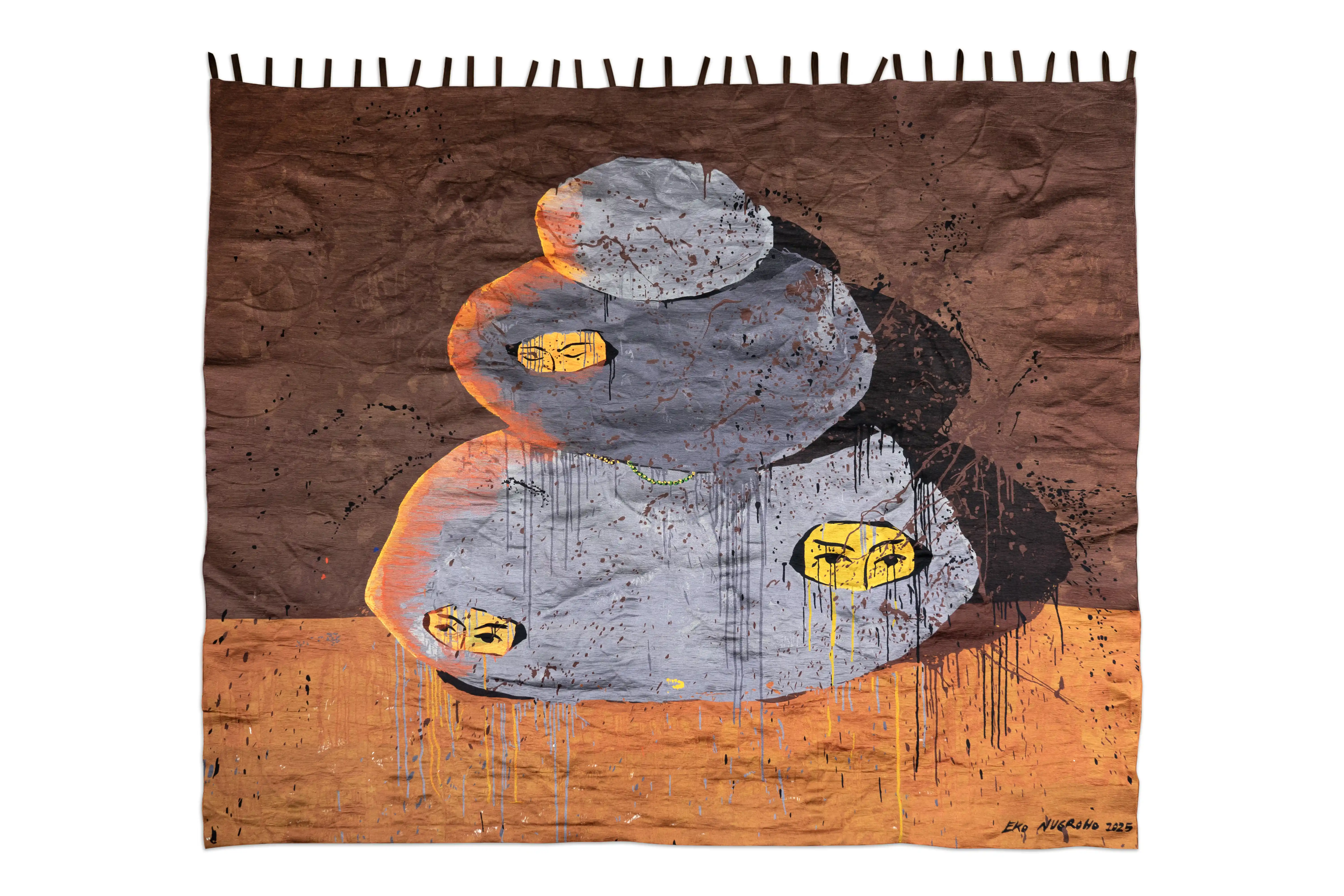
Eko Nugroho
Hierarchy of Stones, 2025
embroidered painting
274 x 320 cm
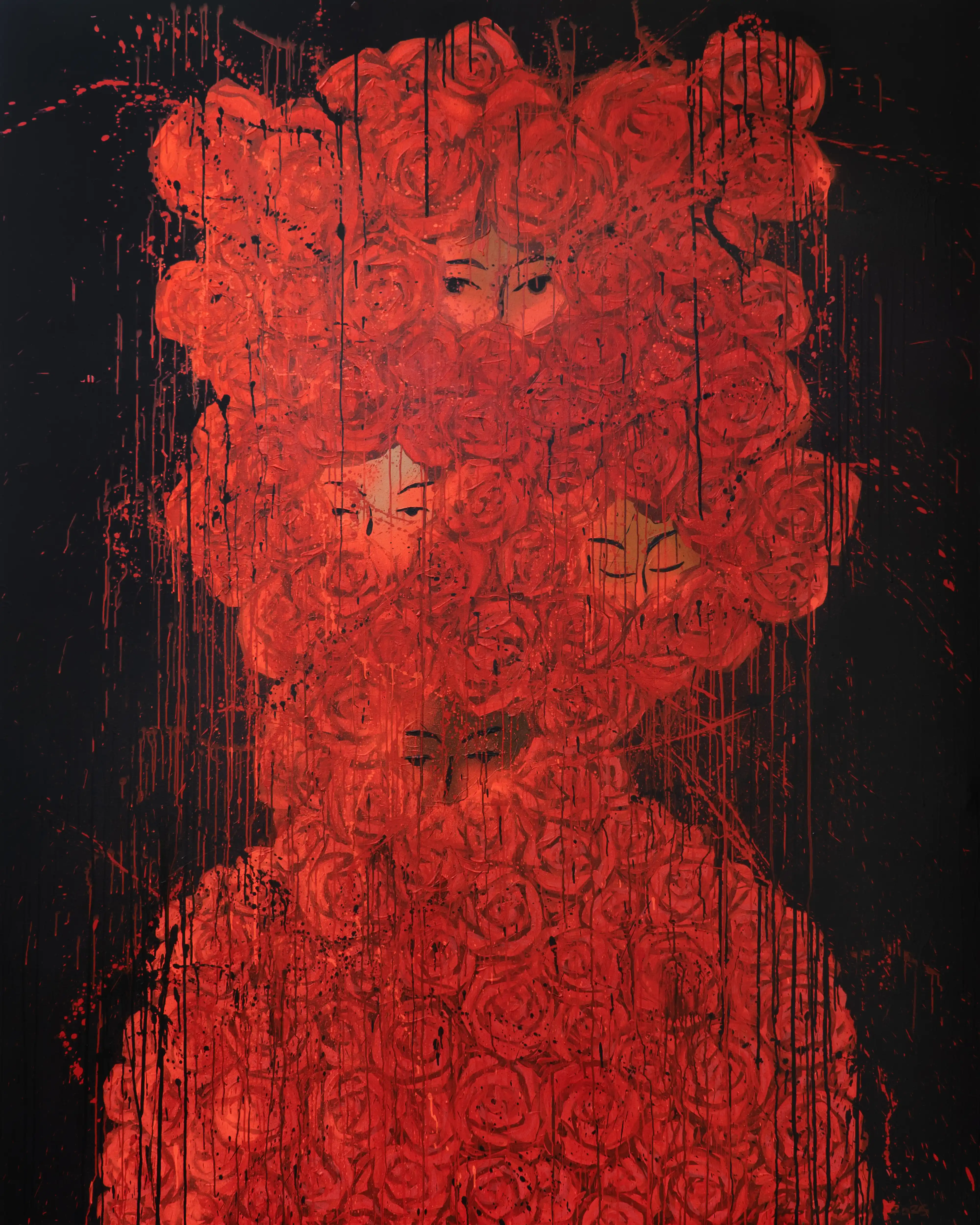
Eko Nugroho
Mawar Man, 2025
acrylic and spray paint on canvas
250 x 200 cm
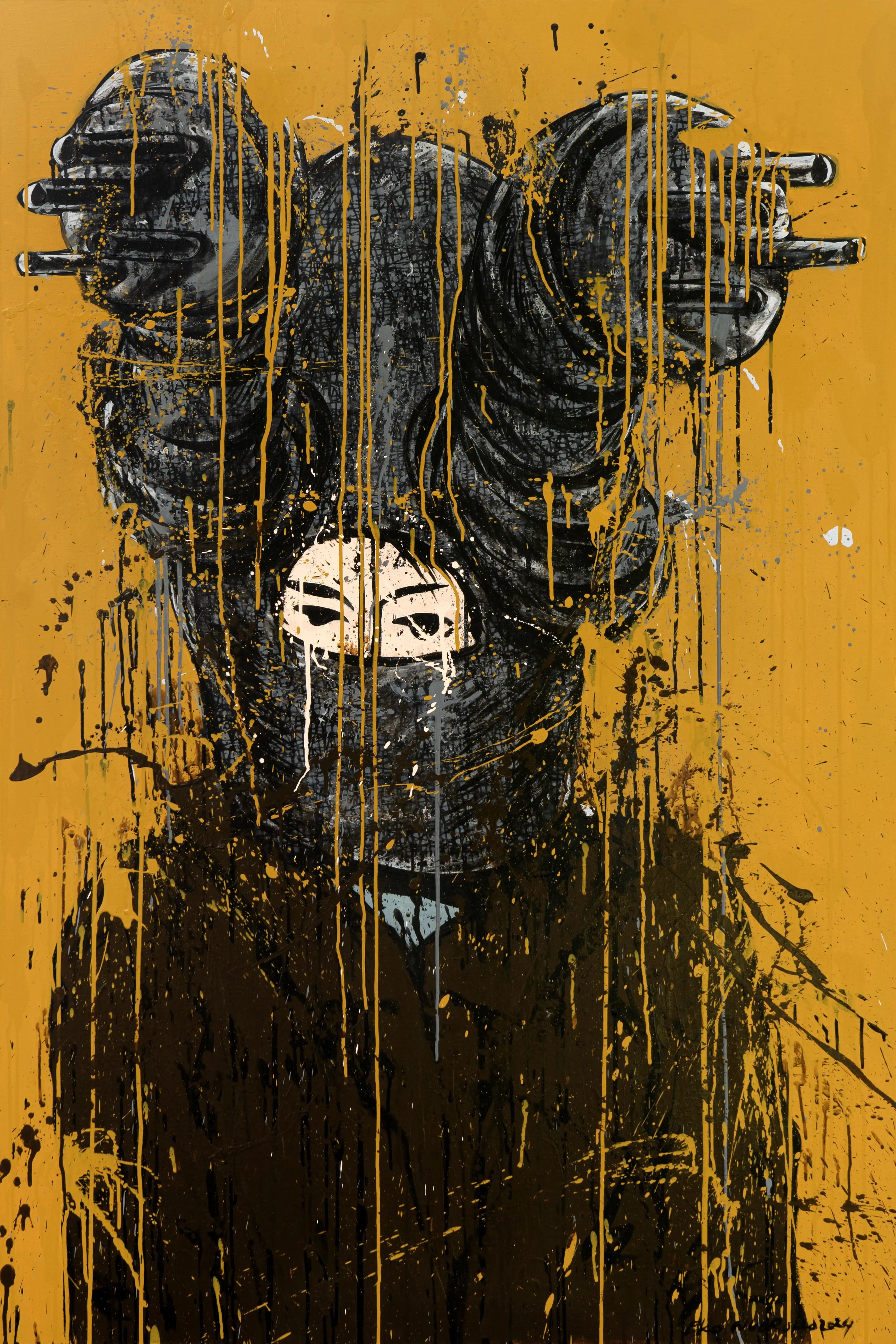
Eko Nugroho
My Hairdo Against your System, 2024
acrylic on canvas
150 x 100 cm
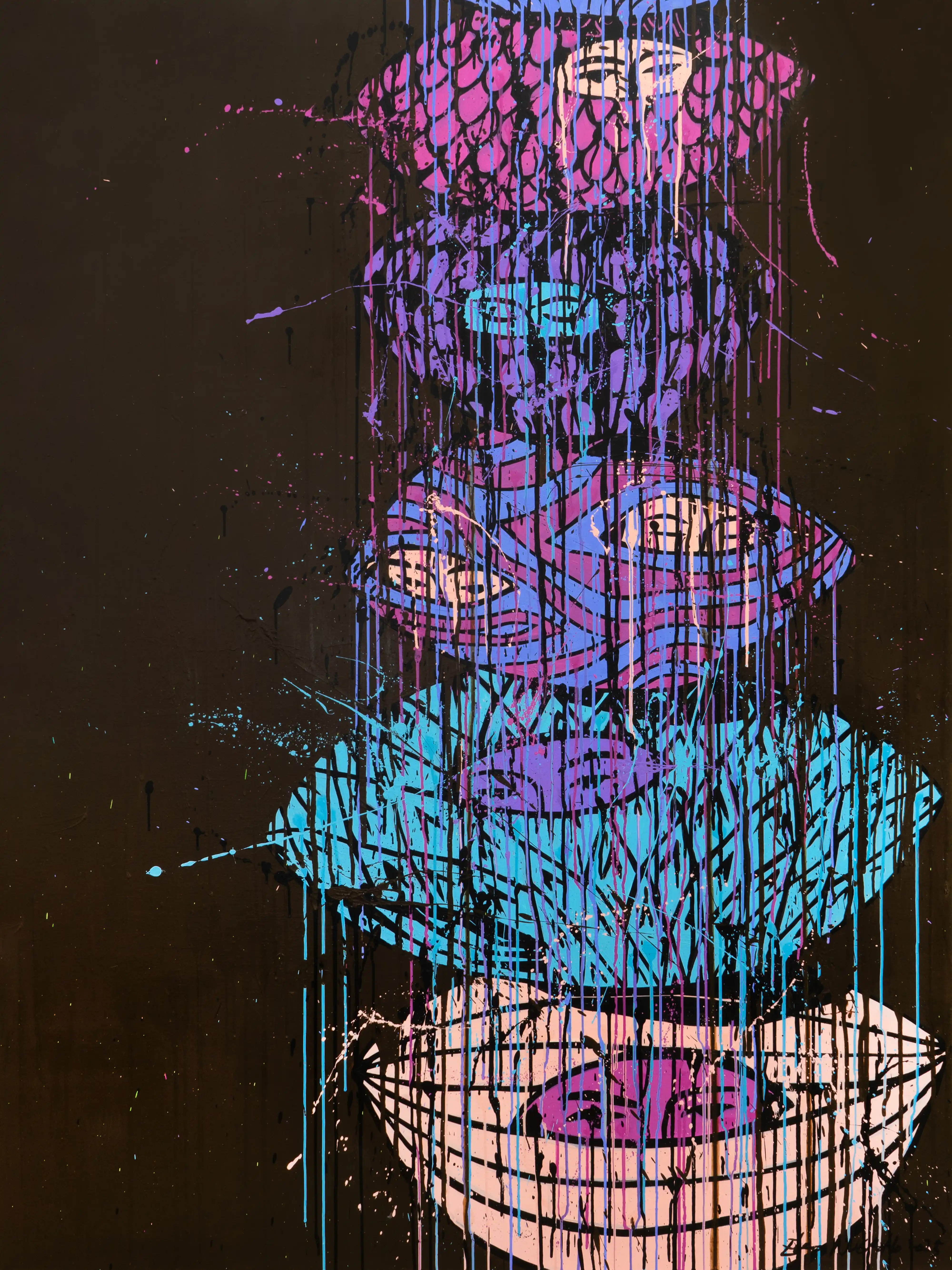
Eko Nugroho
Our Color Our Life 1, 2025
acrylic on canvas
200 x 150 cm
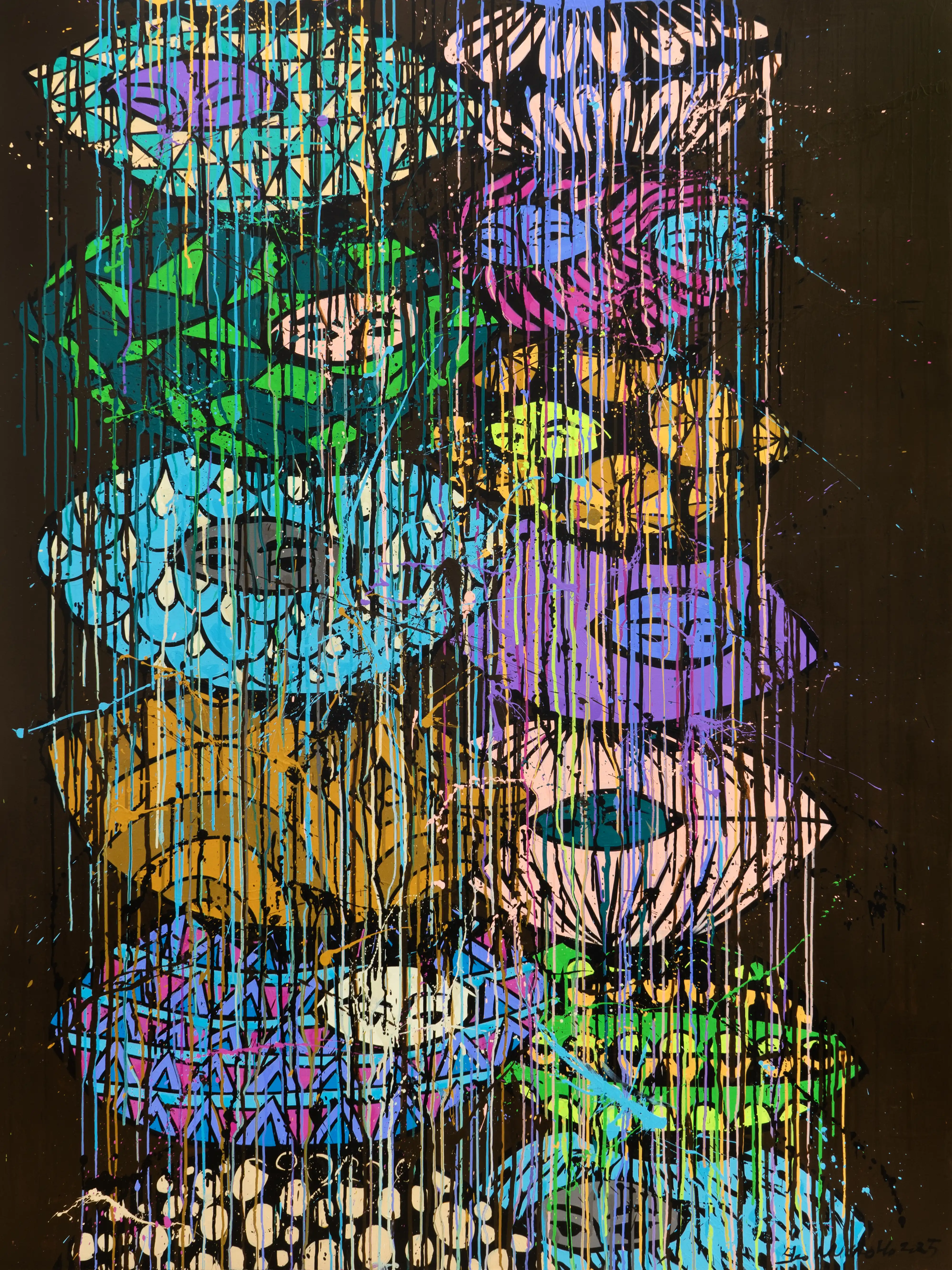
Eko Nugroho
Our Color Our Life 2, 2025
acrylic on canvas
200 x 150 cm
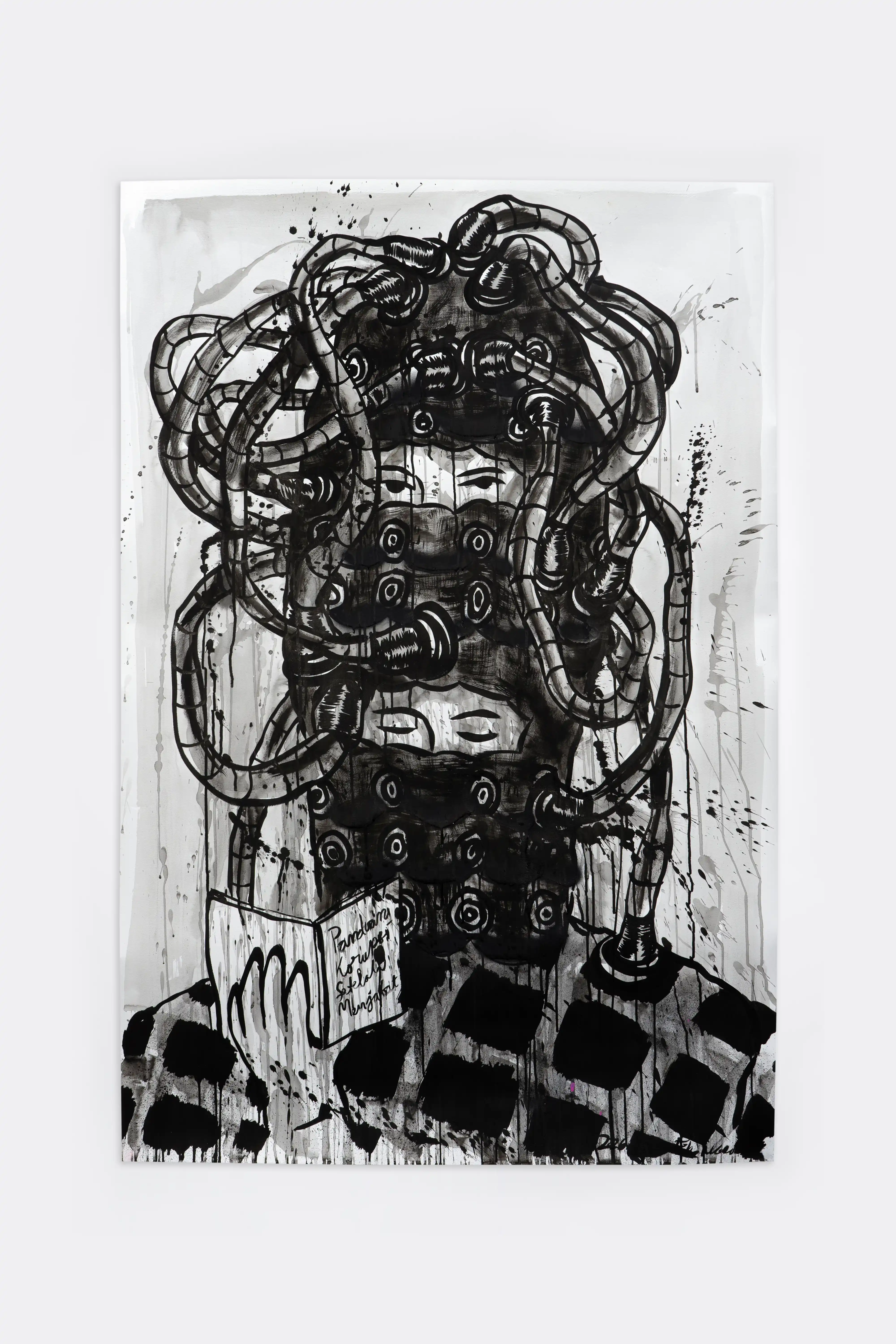
Eko Nugroho
Pandora Korupsi Setelah Menjabat, 2026
indian ink, spray paint, glitter on paper
150 x 100 cm
_2026_Fiberglass, painted with acrylic, spary paint_244x109x107cm.webp)
Eko Nugroho
Pesta Nestapa (Abandoned Monument series), 2026
Fiberglass, painted with acrylic, spary paint
244x109x107cm
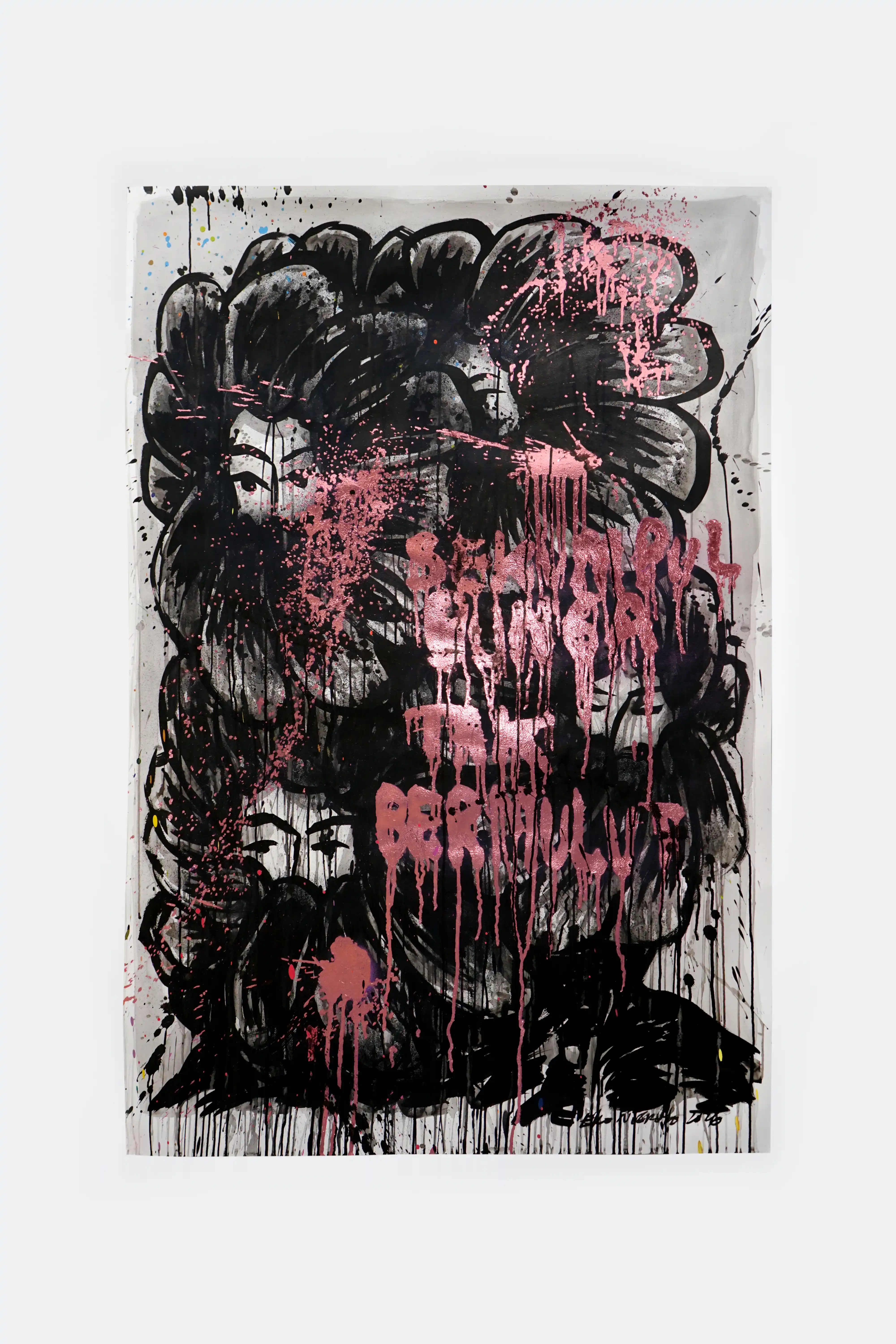
Eko Nugroho
Sekumpul Bunga Tak Bermulut, 2026
indian ink, spray paint, glitter on paper
150 x 100 cm

Eko Nugroho
Tak Terjamah, Tak Terhentikan, Tak Termatikan, 2026
indian ink, spray paint, glitter on paper
150 x 100 cm
_2026_fiberglass painted with acrylic, marker_248x124x113cm.webp)
Eko Nugroho
The Usai (Abandoned Monument series), 2026
fiberglass painted with acrylic, marker
248x124x113cm
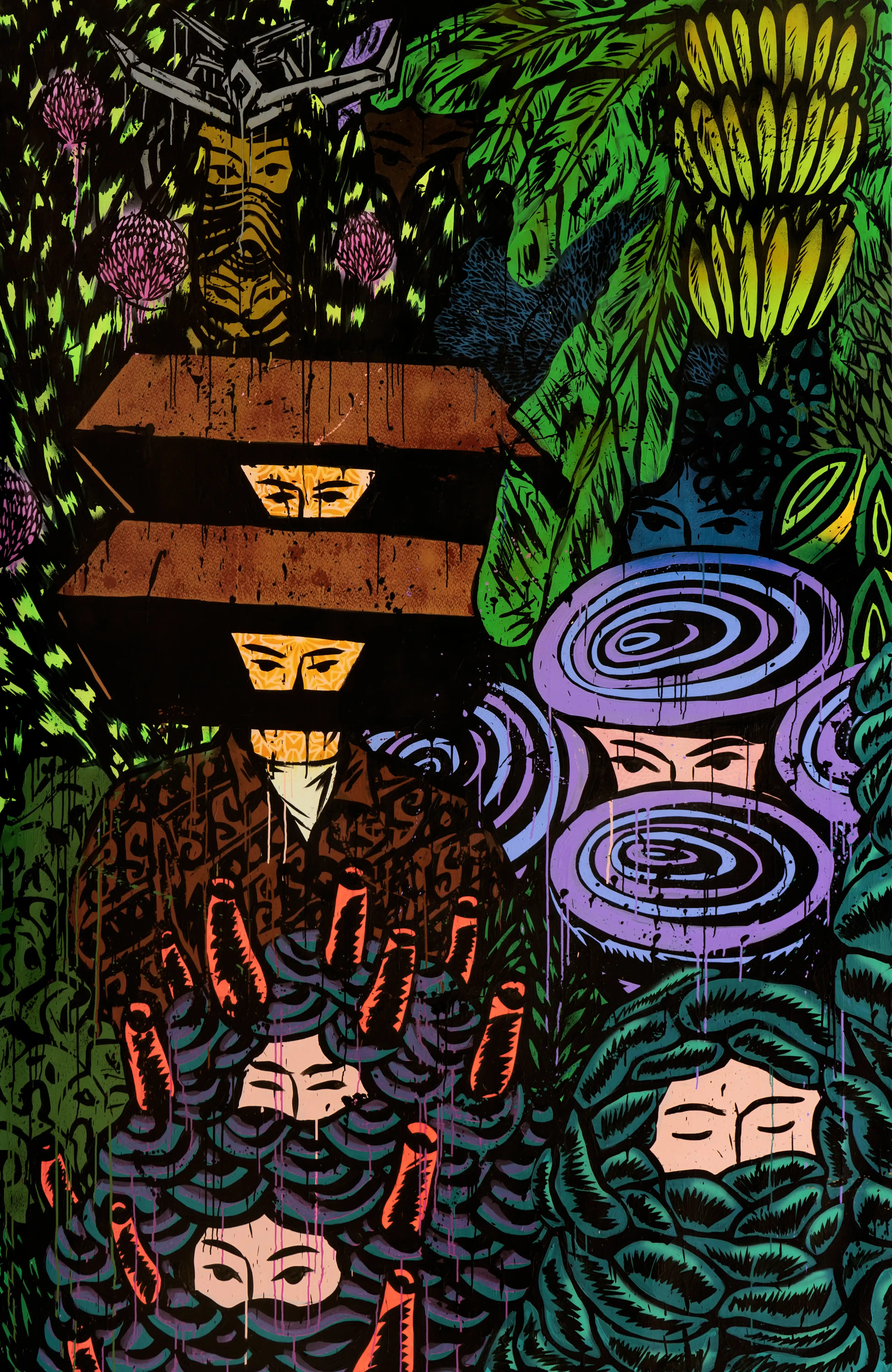
Eko Nugroho
Tropical Aliens 1, 2026
acrylic on canvas
300 x 195 cm
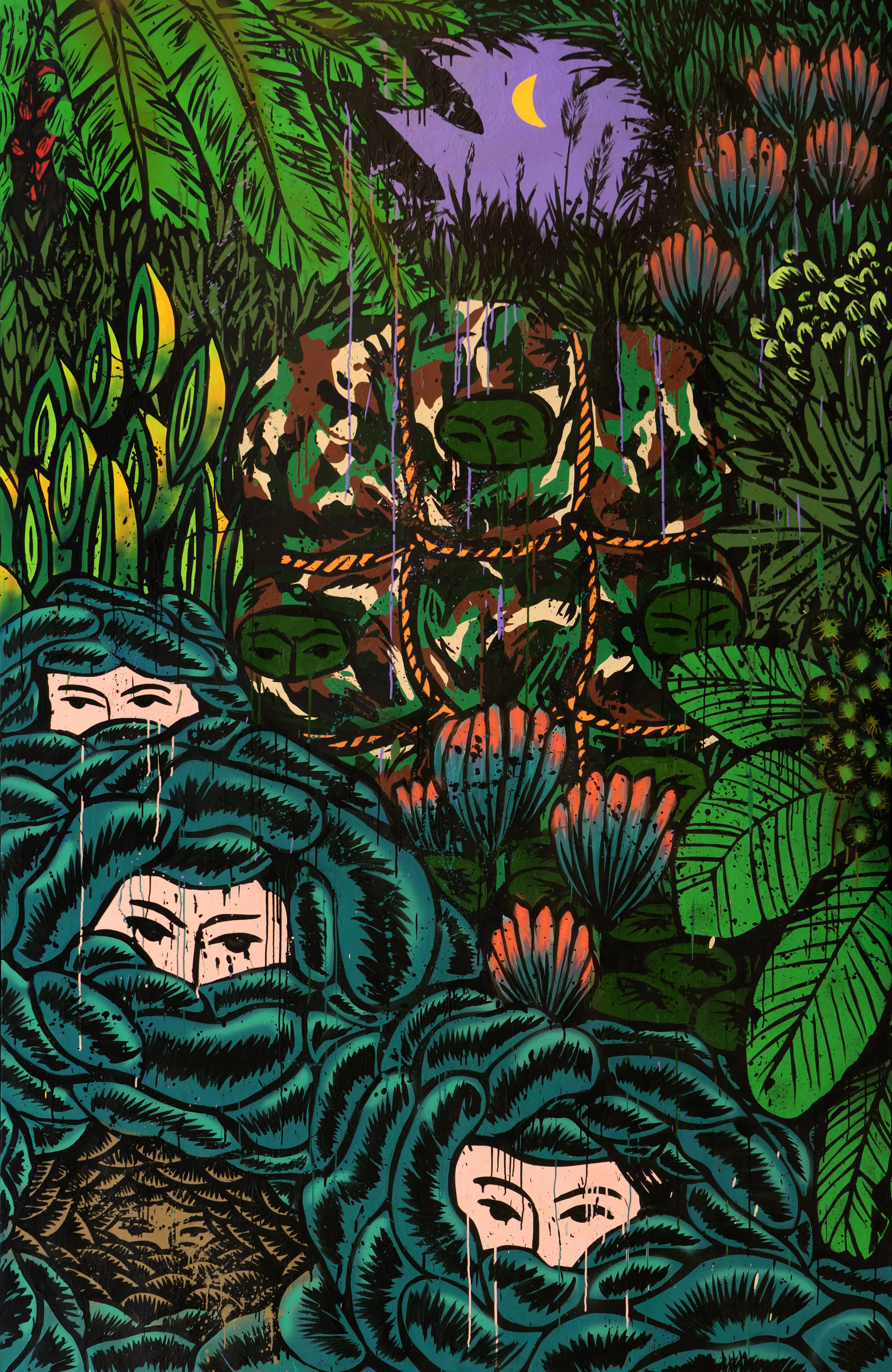
Eko Nugroho
Tropical Aliens 2, 2026
acrylic on canvas
300 x 195 cm
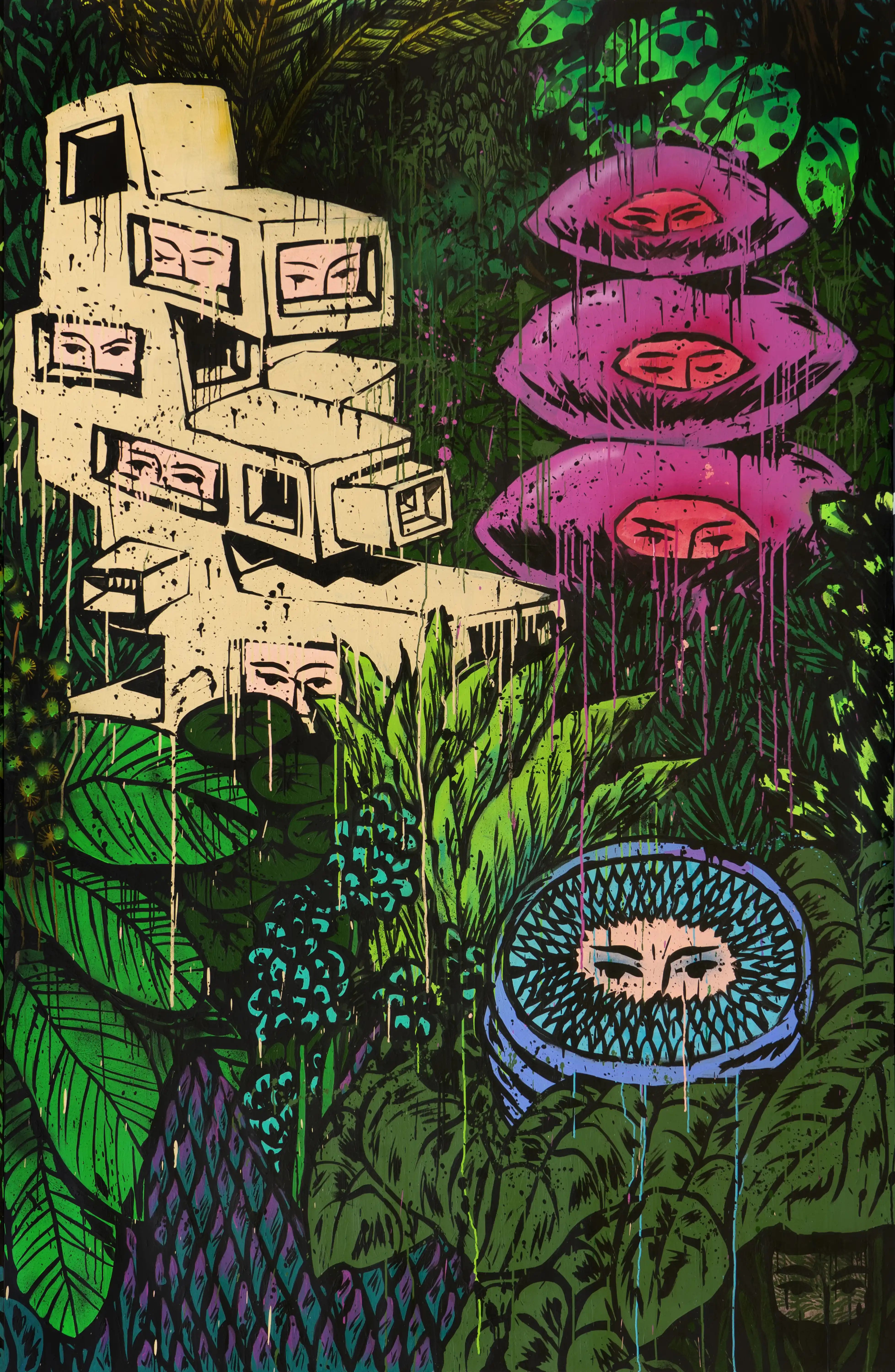
Eko Nugroho
Tropical Aliens 3, 2026
acrylic on canvas
300 x 195 cm
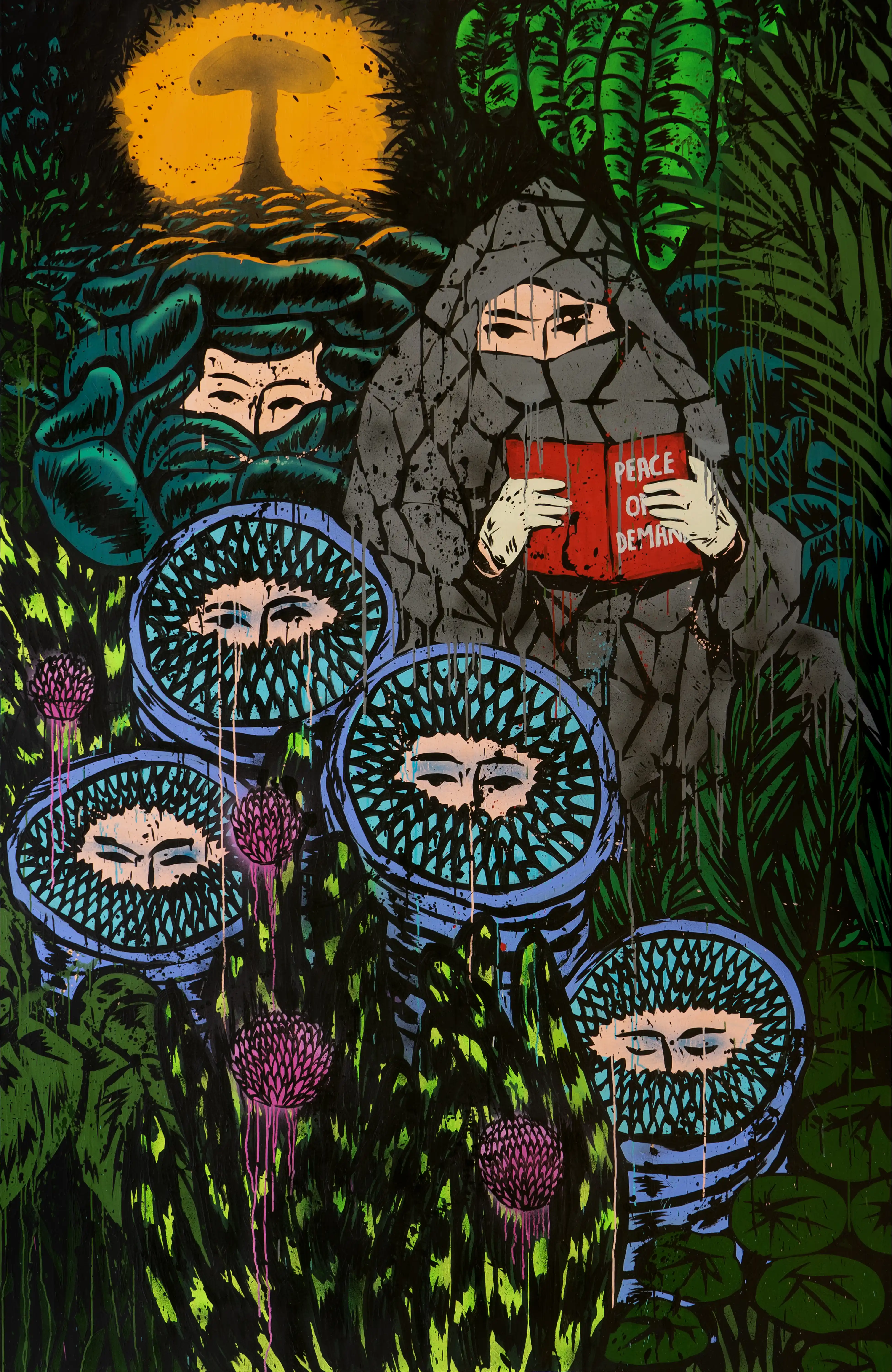
Eko Nugroho
Tropical Aliens 4, 2026
acrylic on canvas
300 x 195 cm
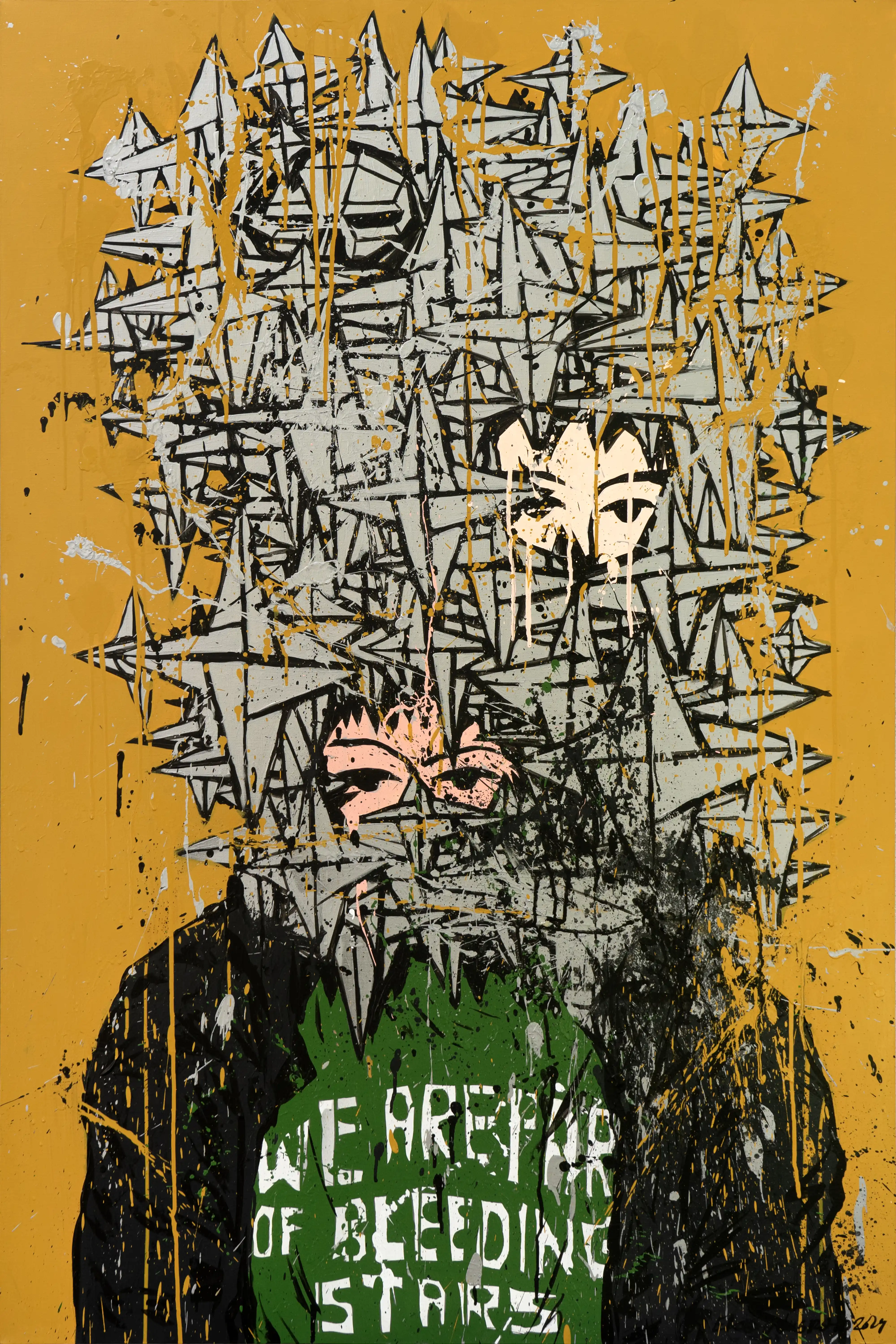
Eko Nugroho
We Are Part of Bleeding Stars, 2024
acrylic on canvas
150 x 100 cm
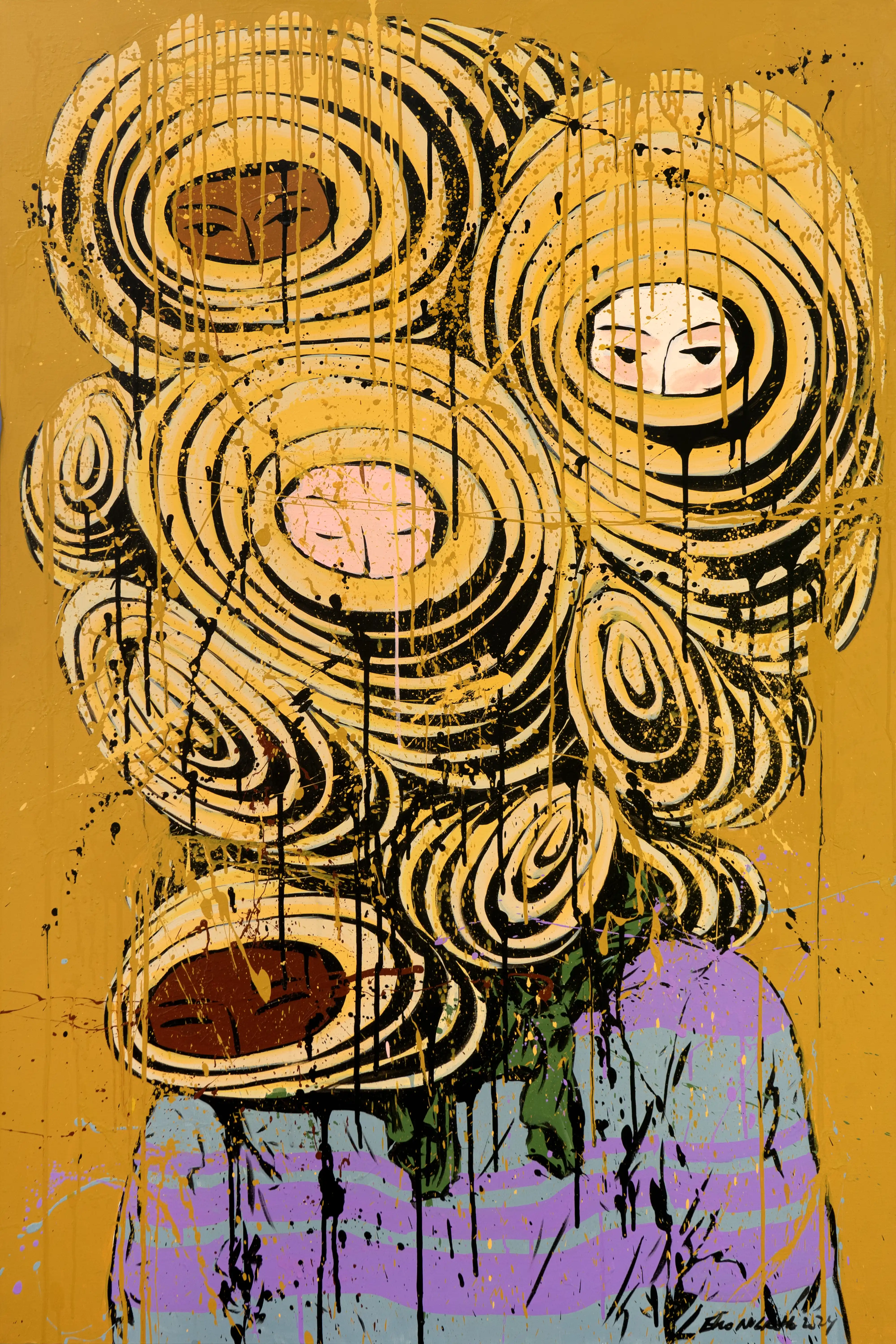
Eko Nugroho
We Don t Know Everything but We Are Pretty Optimistic, 2024
acrylic on canvas
150 x 100 cm
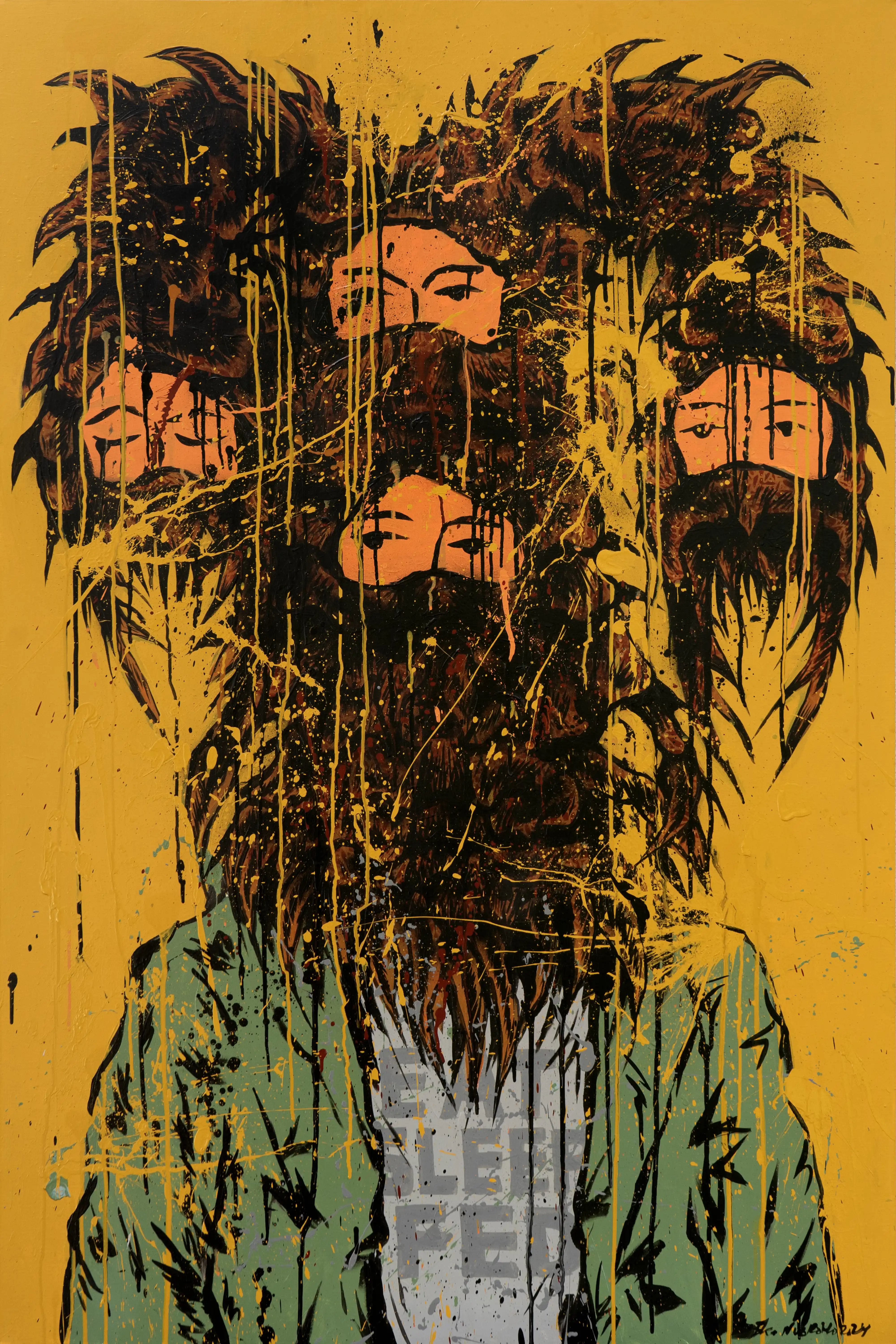
Eko Nugroho
When I Say Independent It Means Dependent, 2024
acrylic on canvas
150 x 100 cm
_2026_fiberglass painted with acrylic, marker, 250 x 133 x 141 cm.webp)
Eko Nugroho
Wise Man Slay (Abandoned Monument series), 2026
fiberglass painted with acrylic, marker, 250 x 133 x 141 cm