
25.02.20 — 15.03.20
Di Hadapan Bayang-bayang
Solo exhibition by Ngakan Ardana
Download E-Catalogue
The Photographic Phantoms
tested
Every artist must has taken a leap once in their artistic explorations. To take a leap means
deciding to “change lanes”, for example, from a work over one theme to another; a
mastery of one technique to another more refined; a medium to another. Not a few can go through such
a process with ease. But I know exactly how many artists stagger when they have to step out of their
comfort zone, shifting their focus to other “objects”. Not a few are indeed obsessed
with solely one or two things throughout their lives, so that what appears in their works remain
relatively unchanged for decades.
For Dewa Ngakan Made Ardana, “taking a leap” is something
typical, and always there throughout his artistic explorations. Although widely known as a
painter, Ardana thinks that the strongest impulse leading him to work is actually not the
technique or material in painting itself. For him, the initial phase, the most important and
therefore takes the longest time, is the formulation of ideas. What is meant by ideas here is of
course not limited to the choice of objects (to be painted, for example), but also sparks of
thoughts that for him are important markers for certain phases of his life. When he has done
with such “brewing” process and is able to express them in more organized ways
(sometimes in writings, in short notes), technical execution is an easier matter. At the end,
the artistic technique, material, and medium that he chooses are merely consequences that
immediately follow the formulation of the ideas.
Ardana’s artistic gesture, which tends to be reflective (if not “conceptual”), is manifested quite
prominently in his current solo exhibition: Di Hadapan Bayang-bayang (In the Face of
Reflections).
Here, he has pieced together here a series of paintings, drawings, and videos in one presentation
integrated in the exhibition room. This exhibition seems to be projecting and emphasizing his latest
working area as an artist who has previously been identical to mere paintings.
Photographic Paintings
Looking back at Ardana’s early works throughout the first decade of the 2000s, I can say that his
exploration revolved around ideas or themes.
Ardana began to be achieve fame as the “garlic painter” when participating in the CP Biennale:
“Interpellation” (2003). Jim Supangkat writes that what was special about Ardana’s paintings lay in
the artist’s decision to dramatically highlight trivial objects, almost “without message”. Ardana
depicted his garlic bulbs—intact, sliced, gouged, or peeled from their skin—in extraordinarily
detailed, delicate, macroscopic manners against an all flat background that emphasized the interplay
of empty spaces: the spaces-in-between.
It is understandable that in relation to the context of the art development in Indonesia at that
time, Ardana’s paintings would naturally draw public’s attention. Ever since a series of
socio-political events took place before and after the 1998 Reform in Indonesia, “political” works,
figuratively or representational in nature, featuring messages of protests and criticisms of the
social situations, were dominating the trends in art at that time. Ardana’s garlic paintings became
political precisely because they were able to interrupt such trend of “socio-political art” that had
become too clichéd, even banal.
Viewing his garlic painting series, we might be able to capture young Ardana’s obsession with the
concreteness and “lucidity” of an object—two things that can be maximally achieved by photorealistic
painting techniques. For Ardana who was born, grew up, and received arts education in Bali, painting
in a photorealistic style is by no means a norm. Ardana is part of a generation of Balinese artists
who grew up under the influence of Balinese art forms (the legacy of Pitamaha artists from the
1930s) that was notably strong and rooted. For Balinese artists of his generation, painting using
photorealistic techniques is an alternative strategy, if not challenge, against stereotypes of
Balinese art traditions.
Ardana’s journey was further marked by leaps and bounds of themes that still rested on exploration
of photographic painting. In his solo exhibition, “Anonymous Project” (2009), Ardana presented
portrait paintings rendered by synthesizing various traits of his own face and the faces of those
around him. In the broad areas of the canvas, he painted the faces with extraordinary magnification
of scale. His unique skill and accuracy in presenting objects in detail made the faces appear
absurd. Instead of utilizing photographic painting techniques to express the clarity and objectivity
of photographic images, Ardana here emphasized the completely arbitrary and fictitious relationship
between photographic images and reality.
In 2009, Ardana moved to Yogyakarta, where he lives and works to this day. He has acknowledged that
it is this new environment that first directed his interest to another dimension of the photographic
image, namely “the past”. For him, the city of Yogyakarta is a historical archive that is more open
to continuous readings and translations, at least compared to his original milieu in Bali where
traces of the past have not undergone radical change despite their cohabitation with the
intermittent streams of modernization, seeping through the culture and tourism industry. In
Yogyakarta, he is fascinated by local cultural icons (including the Yogyakarta Palace) that show
syntheses of local and various “foreign” cultures pouring into Java through colonialization. All
these forms of syntheses are then naturalized with a solid attribute: the Javanese culture. There is
no doubt that the photography technology and the dissemination of photographic images through
printed mass media have played a major role in the process of strengthening such identity.
Since 2010 Ardana has started working on paintings based on old photo sheets that depict figures,
objects, and atmosphere of the past. His interest began with the monochromatic color spectrum and
the blurred, faded prints of old photographs, which left “obscurity” or “uncertainty” for the
beholder. This is yet another different leap, if we compare this approach with young Ardana’s
perspective who was obsessed with clear and detailed photographic images.
Photographs: spyglass of the adventurer
Having explored different themes and objects, Ardana has never shifted his focus too far from the
photographic image. His interest in the photo archives continued into a more personal domain. Just
like the classic saga of the nomad: Ardana has felt a strong urge to dive into his personal history
precisely when away from his hometown. He found a new “material” for painting when his attention
began to shift to the photographs of his own family. In the course of 2012-2014 Ardana depicted many
figures or groups of figures posing as if they were facing a camera—similar to family portraits that
are usually taken at moments of gathering. Although he did not always know in person all the figures
in the photographs he painted, Ardana acknowledged that this series of paintings was born by
emotional impulses of sentimental and nostalgic natures; by a desire to return to his past.
In 2015, Ardana began a simple study by meeting a number of his relatives in Bali who were in the
know of a bloody event that allegedly claimed the lives of thousands of people accused as PKI
(Partai Komunis Indonesia, or Indonesian Communist Party) members and communist sympathizers. He
also collected old photographs, to paint, depicting the families of the victims who were lost. Some
of the results of this work were exhibited in the solo exhibition “Hana Tan Hana: Death and Life of
the Unknown” (2016), in which Ardana also began to present videos and installations.
Up to this point, we can see that the leaps in Ardana’s artistic exploration is not linear. From
works that were born due to personal sentiments about his hometown in Bali, Ardana in fact reverted
to the “historical theme” that immediately reminds me of the art project Memasak Sejarah,
which he
presented with the Taxu Art Clinic at Cemeti Art House, Yogyakarta (2004).
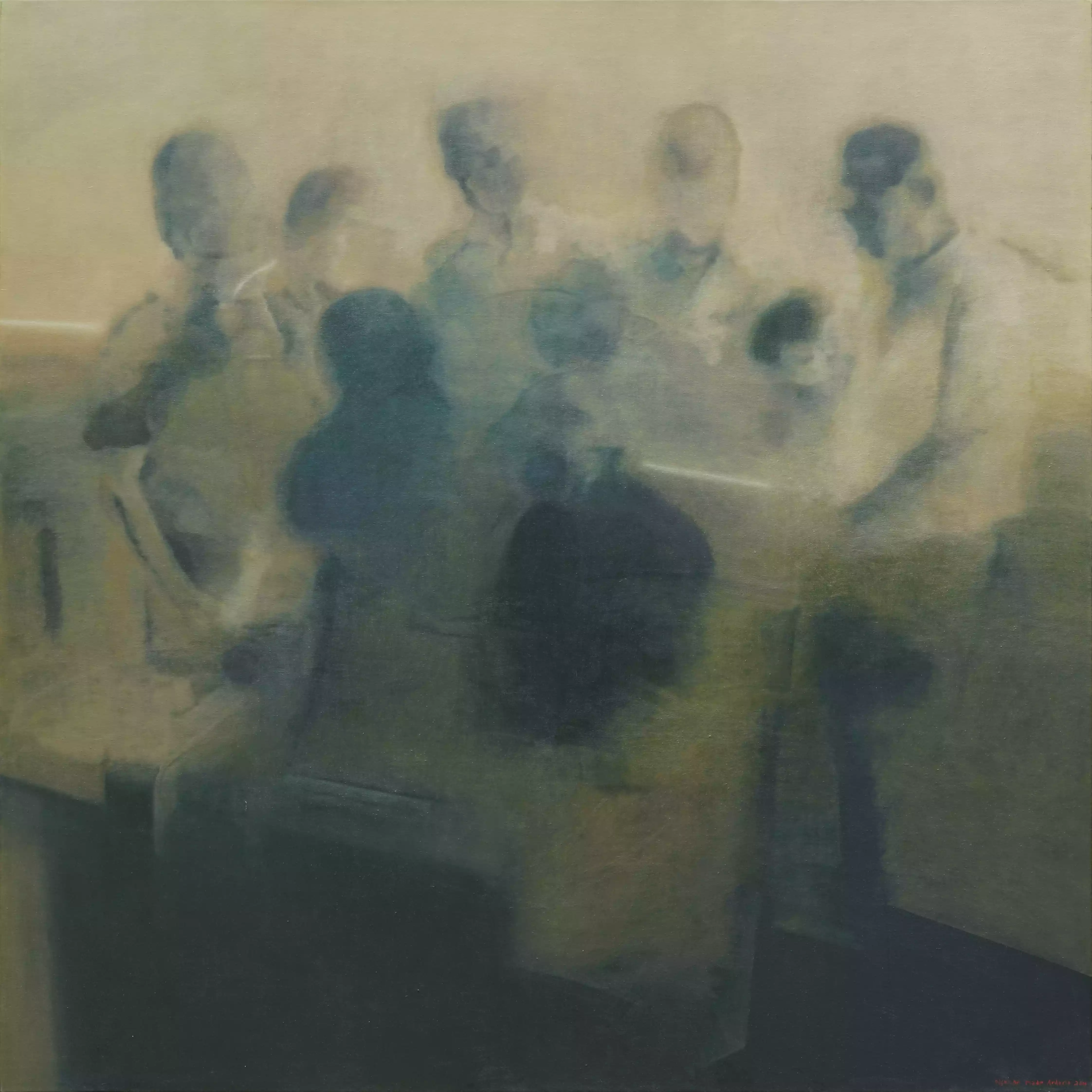
In his solo exhibition at Nadi Gallery this time, Ardana presents several paintings that make up an
extension of his project on victims of the 1965 violence in Bali, including: Rumah Pertanyaan
(Lodge
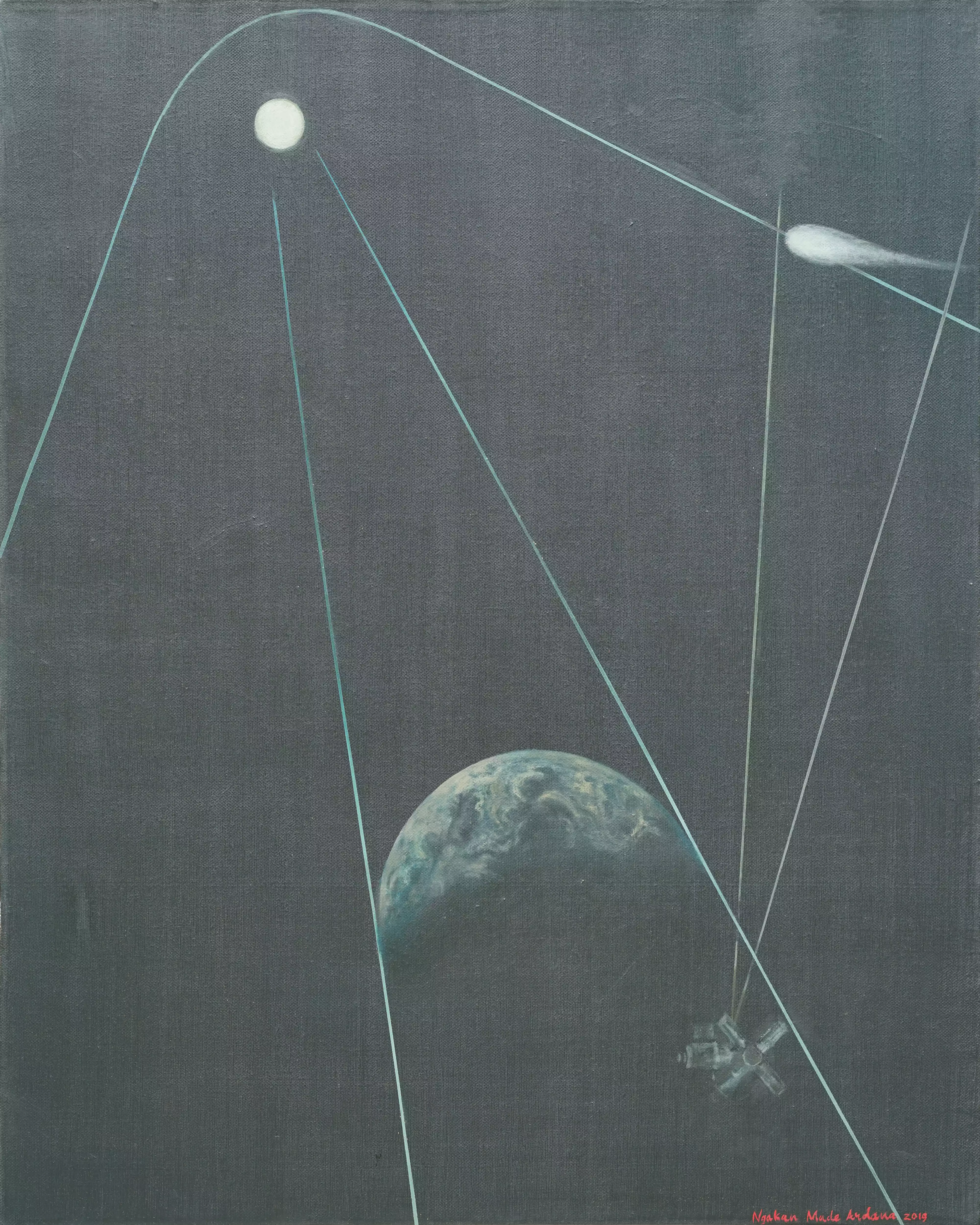
of Questions, 2019) and Bias/Bayang (Refracting/Reflecting, 2019). As for three other
paintings,
namely Lintang Dhuwur Gunung (Star above the Mountain, 2019), Lintang Kemukus (Comet,
2019) and
Ruang Perjumpaan (Space of Encounter, 2019) Ardana uses photographs that he found from old
magazines
like Prisma and Tempo. Another painting Grondslag (2019) is adapted from an
internet archive black
and white photo depicting BPUPKI’s (Preparatory Committee for Indonesian Independence) hearing
sessions on May 29-June 1, 1945. These sessions were organized with the goals to examine and plan
matters relating to the preparation for the Indonesian independence, in which the principles of the
state of Indonesia that later came to be known as Pancasila and the opening manuscript of the 1945
Constitution began to be formulated by independence activists.
Ardana did not choose the historic photos without careful considerations. On Grondslag, he
refers to
the discourse of the national history which raises a debate about who the formulator of Pancasila
really was. The first camp argues that it was Sukarno who was the first to formulate it. Meanwhile
other opinions, which were said to be reinforced by the New Order’s motive to get rid of Sukarnoism,
said that Sukarno only summarized the various thoughts of BPUPKI members who had convened before,
including Mohamad Yamin and Supomo.
For me, “In the Face of Reflections” is an Ardana’s project that shows another level of maturity,
especially in his manner to reflect on the photos he transforms into paintings. In Camera
Lucida,
Roland Barthes once likened the experience of reflecting on photos as a pilgrimage of a photo
connoisseur to their true identity of “I”. It seems that Barthes’s phenomenological method is an
appropriate application to understand the ways Ardana delves into photographs that, as he claims,
are similar to “mirror” and “glass” all at once. Based on this approach, a photograph beholder is an
adventurer looking for the essence of a photo. From the image of a photo, he/she dares to wander
into the imagination of things outside him/herself, only to later look for the most unique things
back at the “I-as-photo-viewer”. In this phenomenological gaze model, the position of the photo
viewer is an observing subject, as well as an object observed through the photo.
On Grondslag, a question might arise: how could Ardana find himself in the reflections of an old
photograph that depicted the hearings of a nation’s preparation for independence? Ardana admits that
his main motive in selecting these photos is different from the motives of historians who seek to
uncover an “objective truth” through archival studies. Neither is it an attempt to understand the
facts that actually happened in the past, his considerations in fact are based on his opinions about
“...Indonesia's current democratic situation,” which according to him, “...shows no signs of
improvement.” Ardana is able to find himself in these photos as he feels a part of an incredibly
long series of causalities: He as an individual is part of the great constellation of the Indonesian
national histories, where important moments that happened in the past resonate with today’s events.
Andre Bazin once pronounced his great adage that a photograph is the result of a frozen
space-and-time. But a sheet of photo print, aging and fading, is a frozen time-and-space that
returns to melt, or evaporate, into thin air. Ardana treats the photos as lenses, or binoculars,
that are able to deliver his imaginations through time and space, collecting evaporated particles to
be transformed into paintings. I myself can see the transformation of photographic forms into
Ardana’s paintings as a conceptual gesture of a painter when he must place himself into a grand
narrative called “history”.
While developing formulations for presenting color prints that are old-fashioned and outdated,
Ardana also continues to experiment with paints and brushes with the aim of adding a personal touch.
At first glance, one might think that the shapes of figures and the distorted objects in his
paintings are mere copies of what actually appear in old faded photographs. However, his creative
method is not limited to copying and enlarging the photographic images, but also editing
them—instantly as he paints. The result is paintings that exude a powerful enigmatic aura. The human
figures in the paintings appear like physically deformed physical characters. Some are even
translucent like phantoms in horror films. The loss of clarity in this work series in fact serves as
a bridge of gaps between a painters’ sentimental and subjective feelings on the one hand, and
“objective” knowledge on the other hand (which we generally want to find when looking at historical
archives).
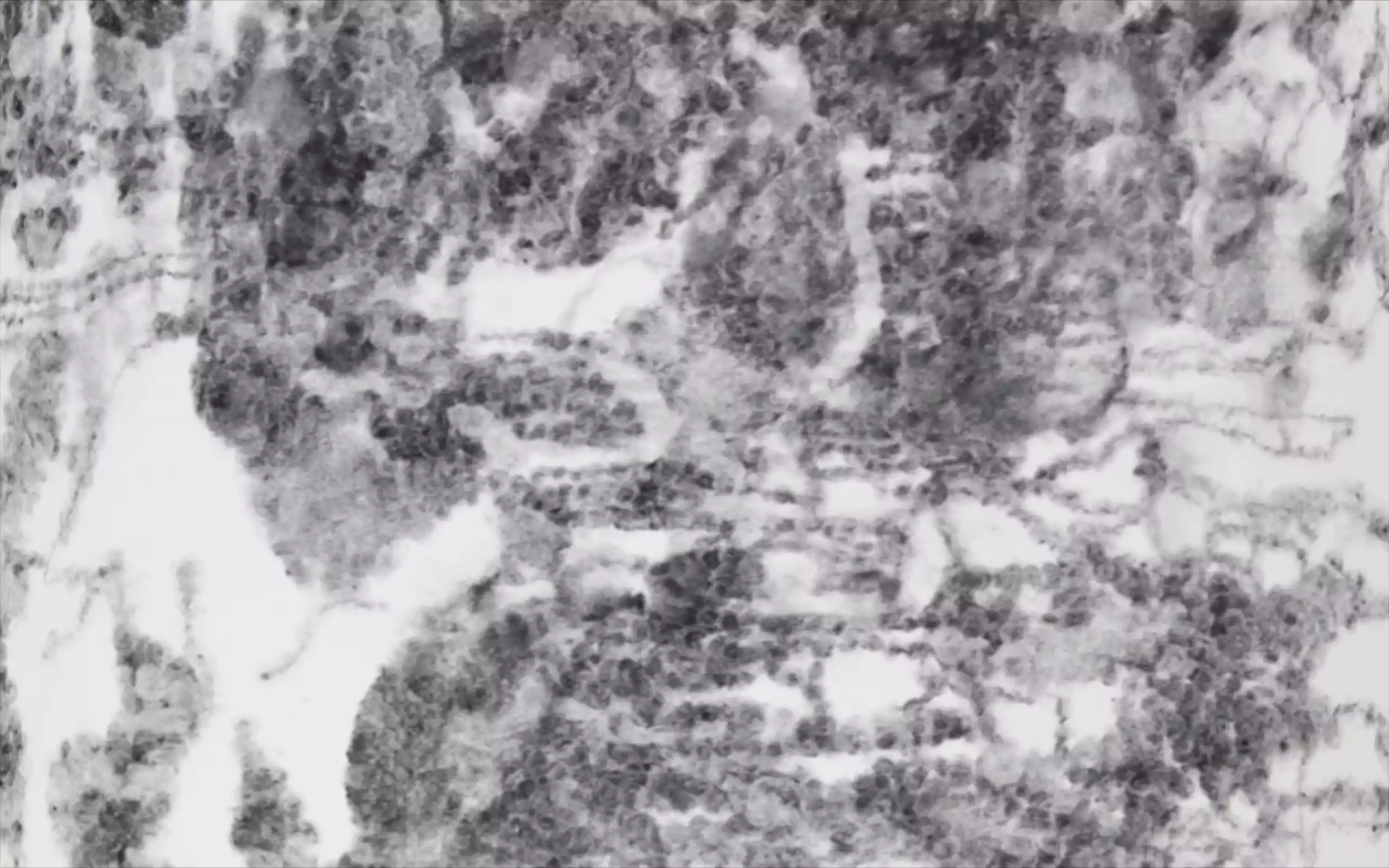
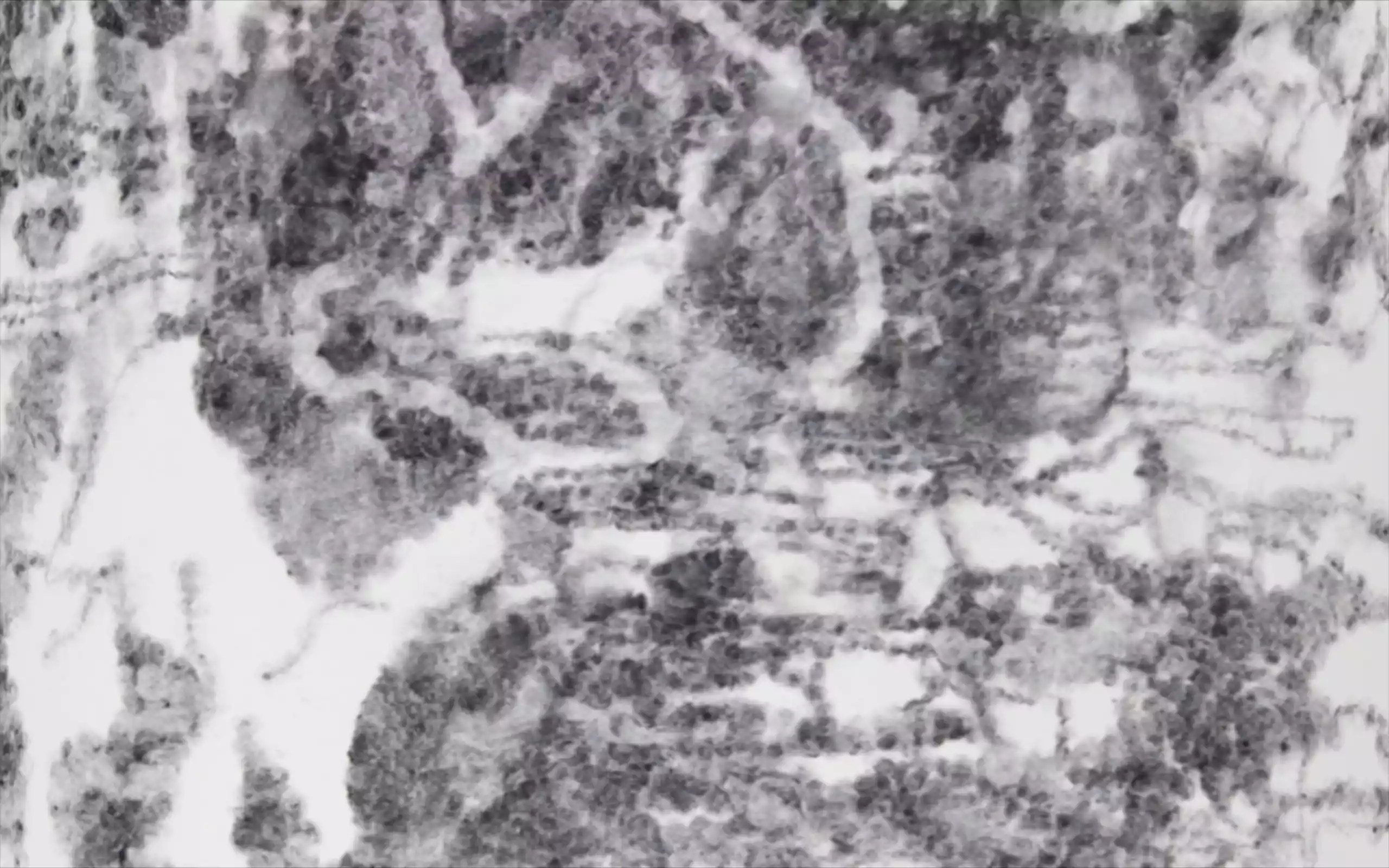
For this exhibition, Ardana has worked on hundreds of drawings on paper representing the development
of his technical exploration in “editing”, transforming the forms of figures and objects in the
photographs. It can be said that the work Dislokasi Ruang-Waktu (Dislocation of Space-Time,
2020) in
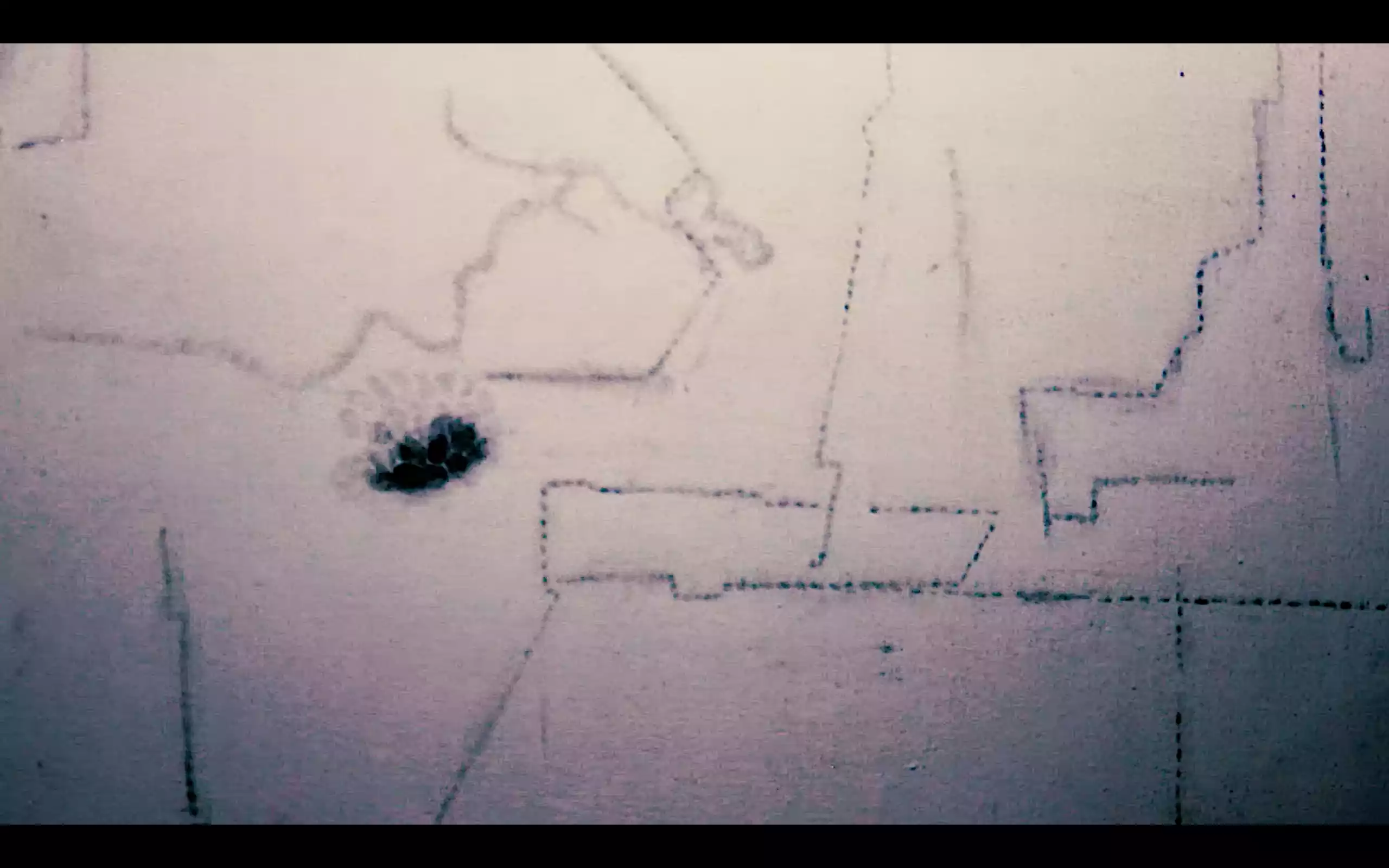
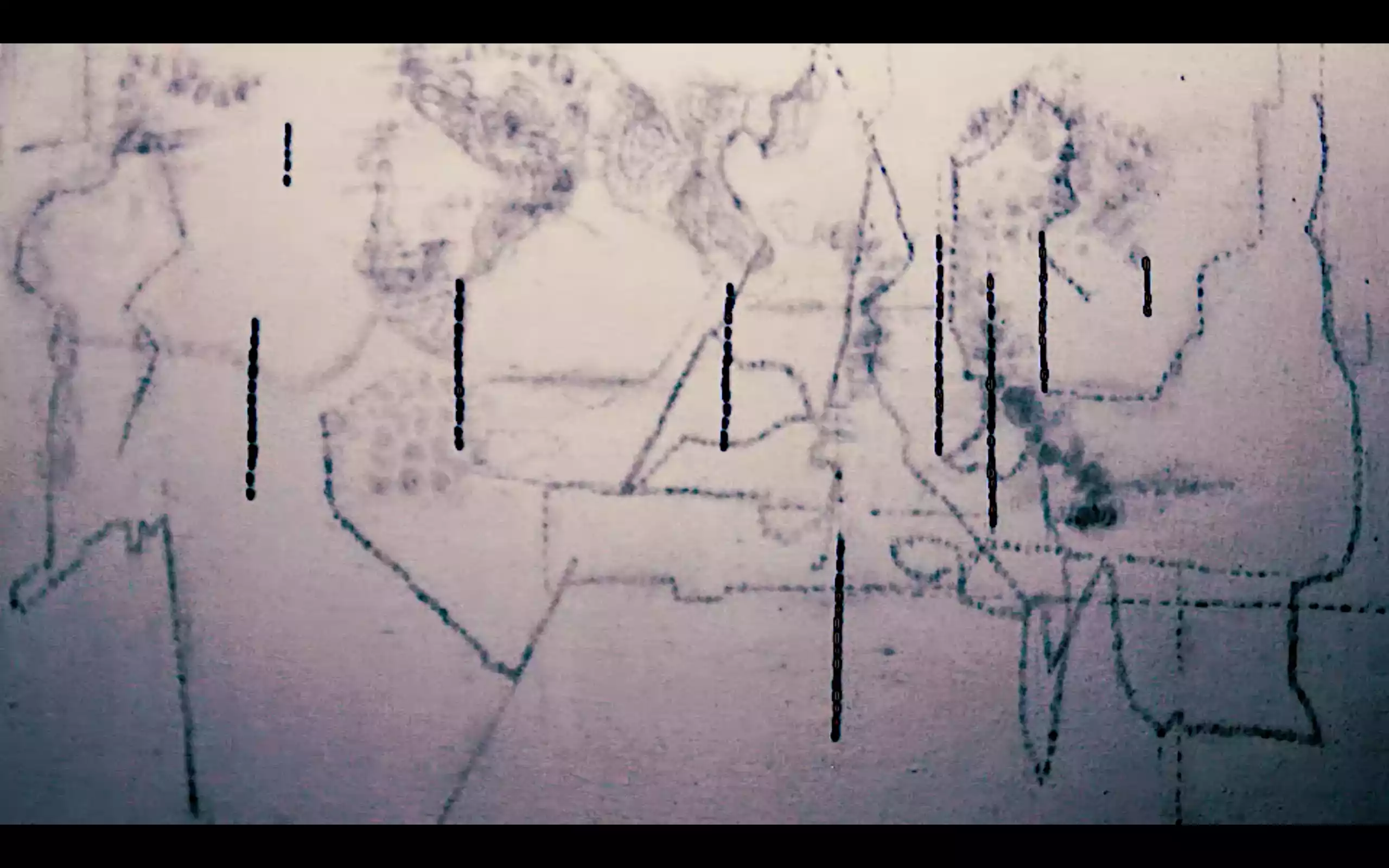
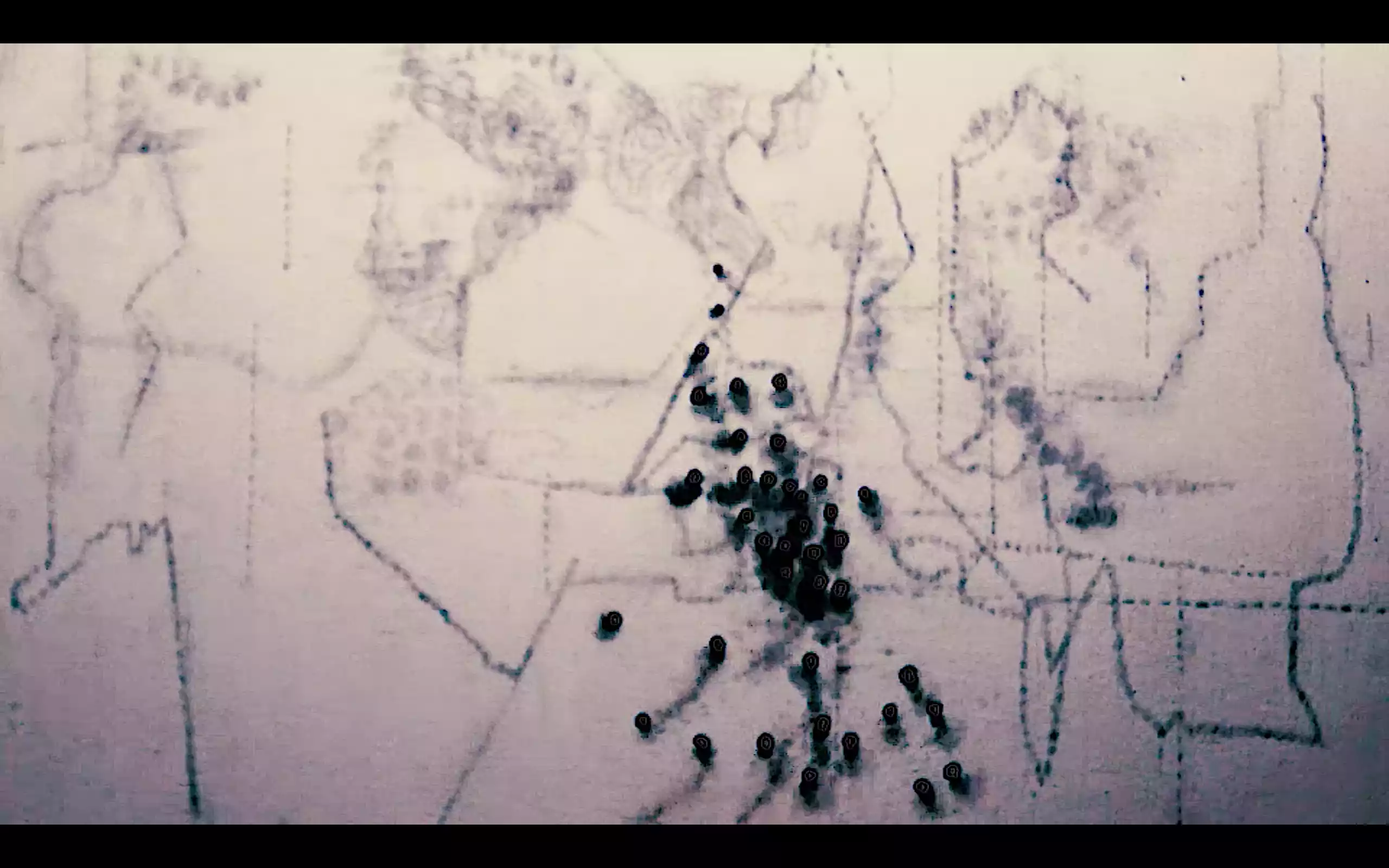
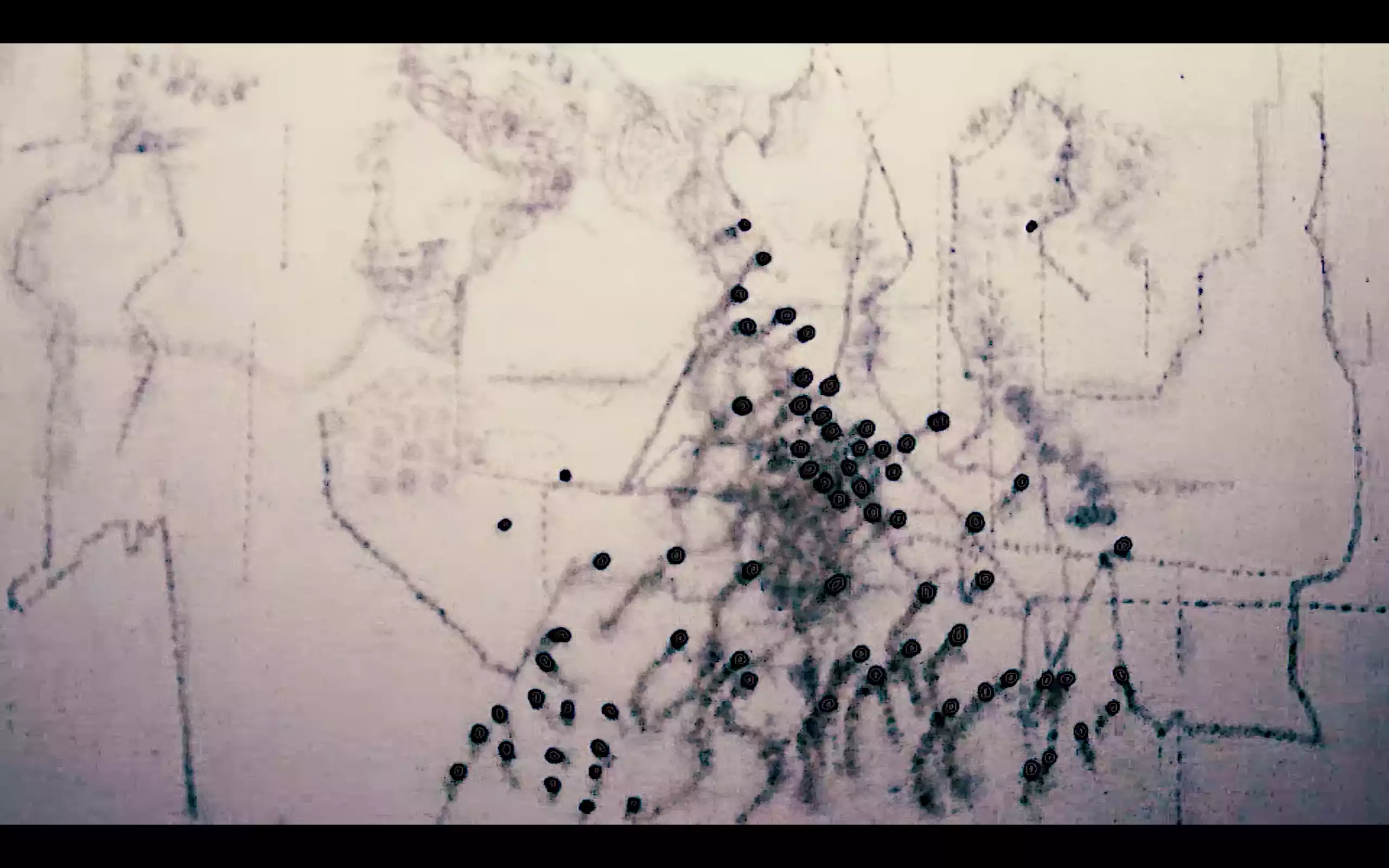
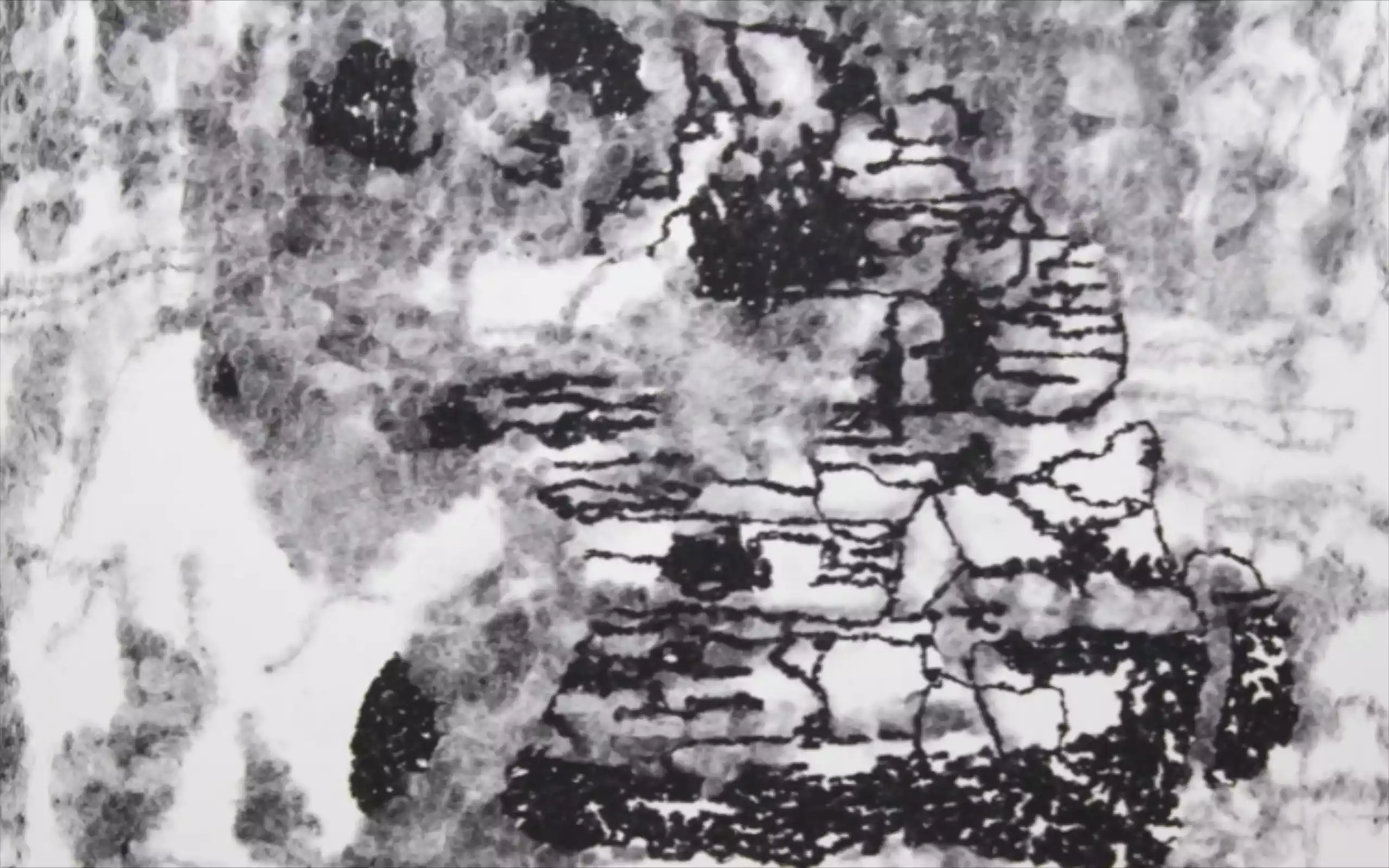
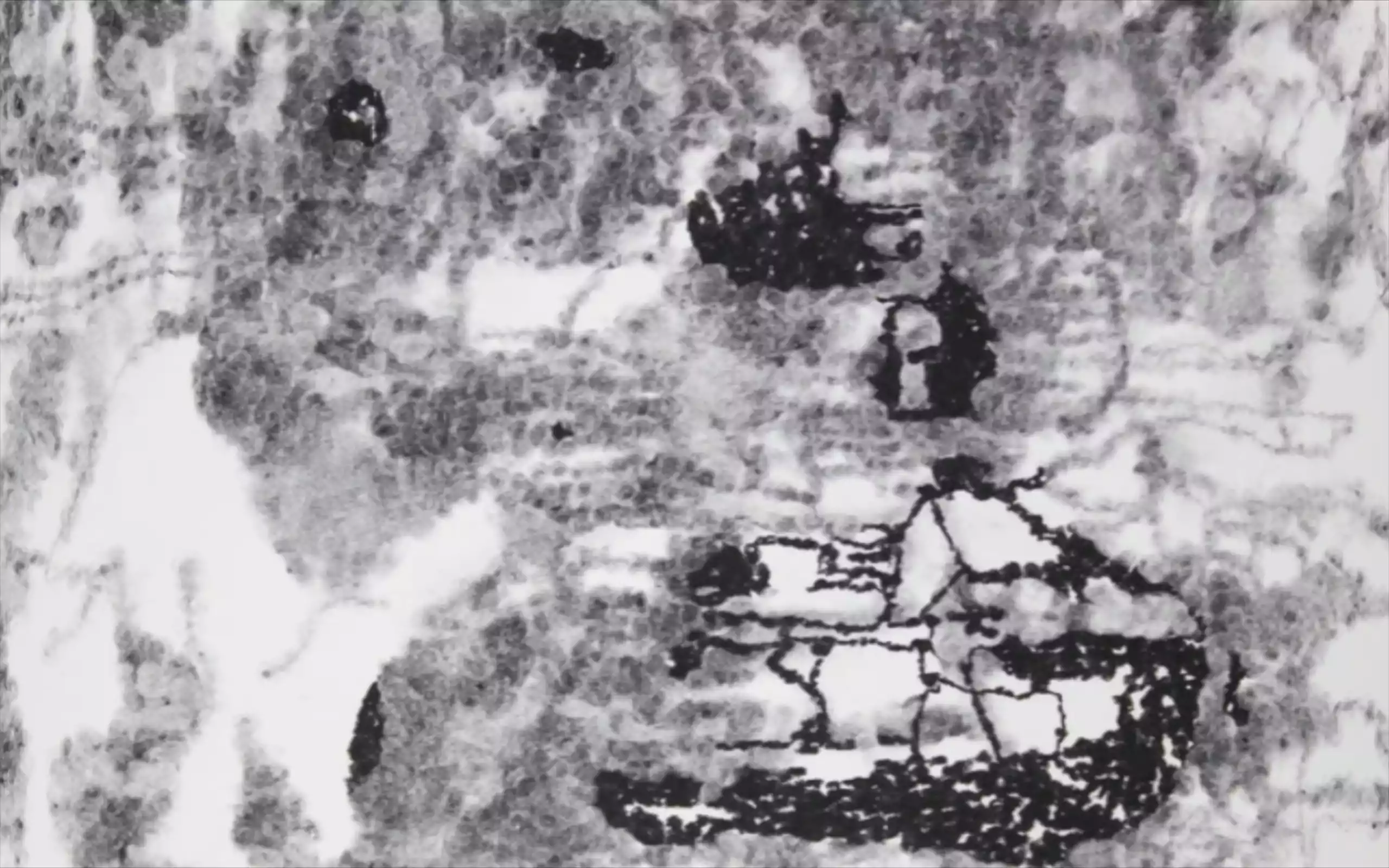
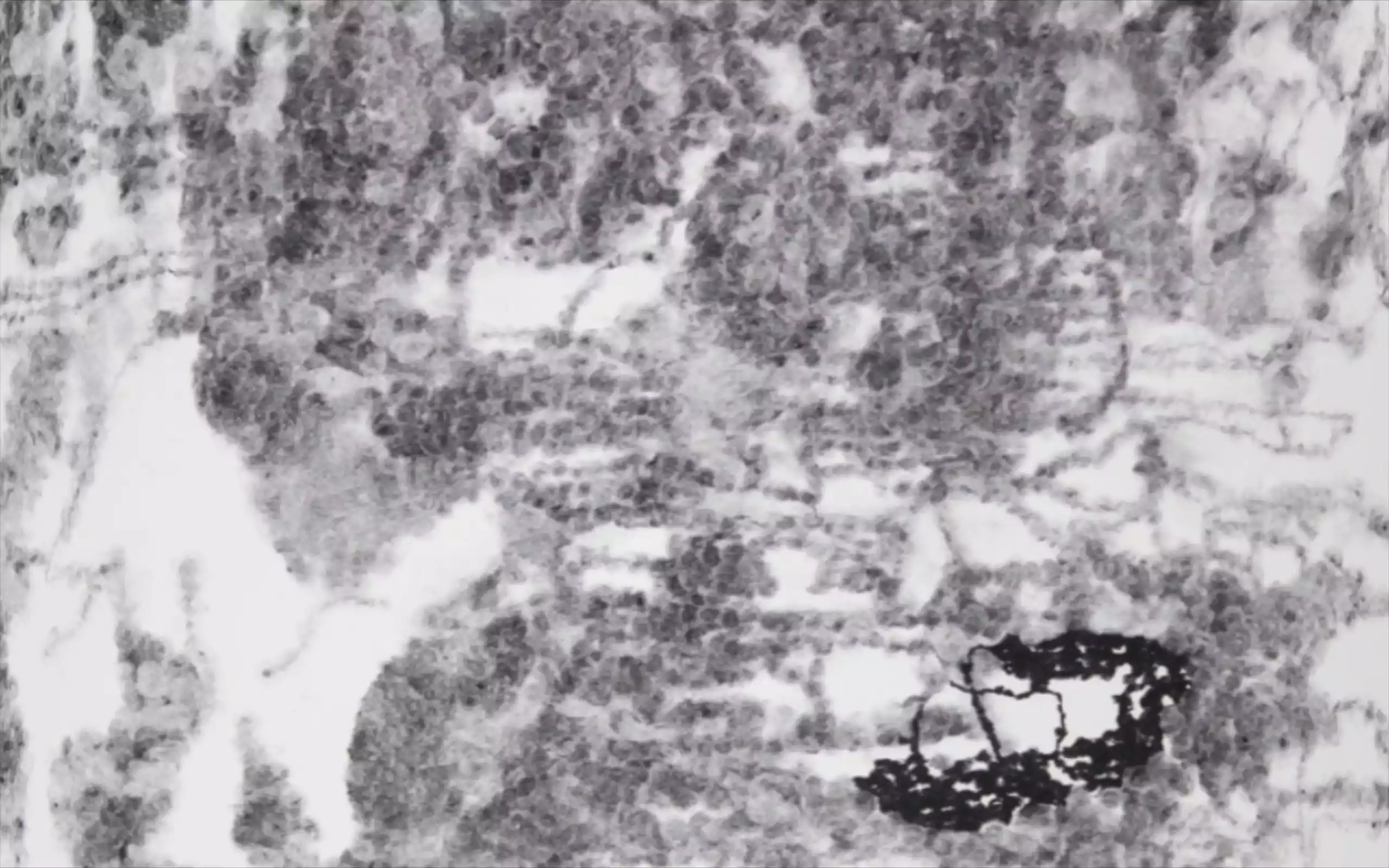
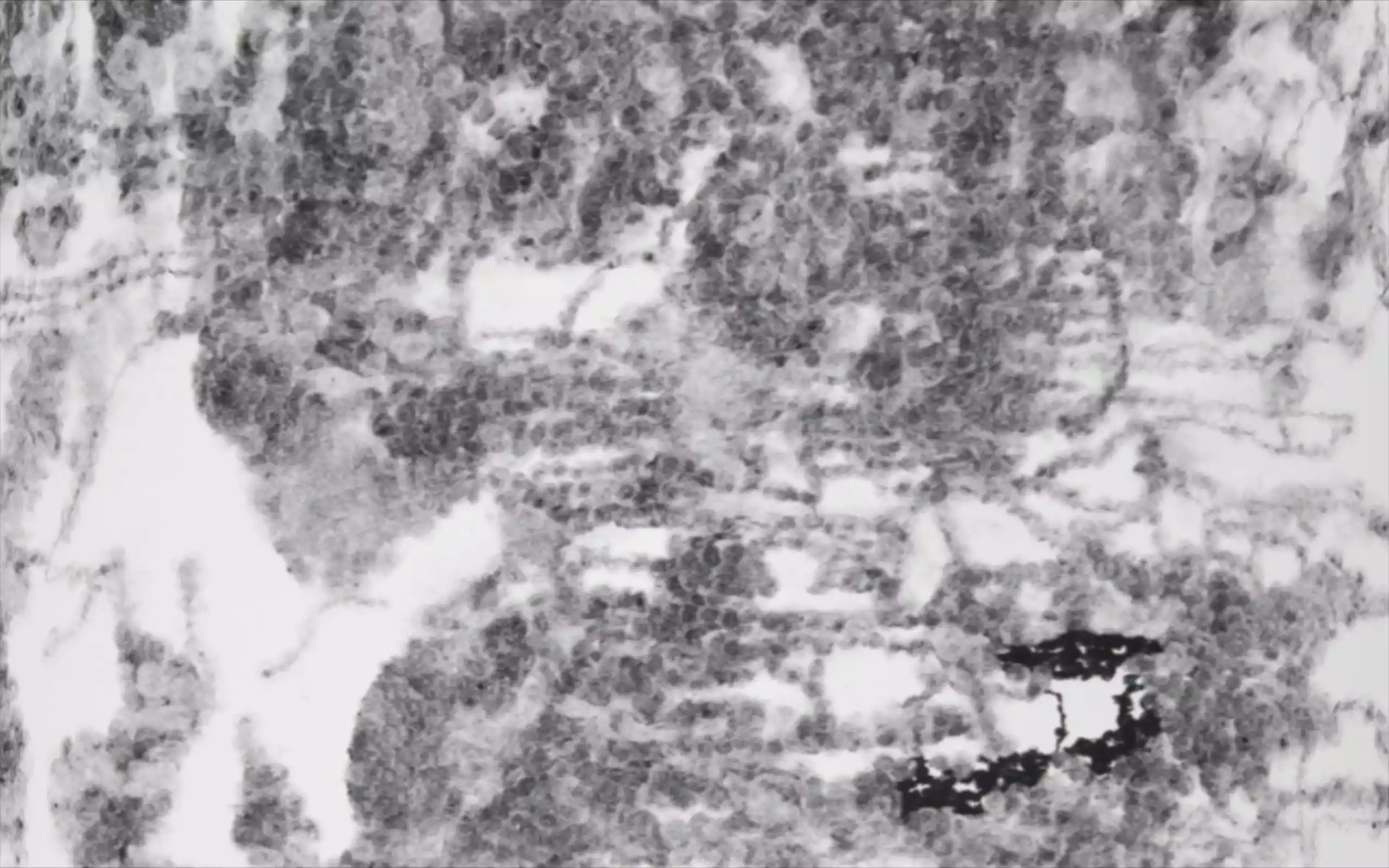
the form of hundreds of sheets of papers arranged on white tables, and two animated videos, Jalan
Retasan #1 and #2 (The Hacked Routes #1 and #2, 2020) stand for Ardana’s most extreme
gestural
responses to historical archives: he deconstructs and erases the solid forms in the photo images.
But in the three works, the activists and independence figures do not disappear altogether. Ardana
allows their traces in groups and repetitions of dots, straight lines, or curves, and repetitive
geometric shapes that give off sublime impressions.
Could this be what is called the “historical sublime”? The answer: Yes, especially when the
ambiguous relations between what is present and what is absent can grip us in a realization that
what we know and see is nothing but a tiny intersection, or thin slice of actual historical events
that are all complex and beyond our understanding.
Agung Hujatnikajennong
exhibition curator
TO REFRACT/TO REFLECT
Writing down what is expressed as of now in my artworks is a process of re-asserting my perspective
as a creator. Here I would like to use a simple metaphor to elaborate on my artistic process,
through an experience of confronting two types of glass, namely mirror and transparent glass.
I am sure we are all very familiar with mirrors. Everyday we stand in front of a mirror. We are
certainly familiar with our own reflection in it, familiar with the awareness of “I” as a subject.
But I am not setting up “mirror” here as something that reflects my psychological image. When
looking in a mirror, I am not trying to get to know myself or solely learn about my identity. I am
setting up a mirror to allow questions, for example: What kind of distortion effects are present in
the mirror? To what extent can my retina clearly capture the images that appear? Does the mirror
upon which I reflect myself have a flat, convex, or concave surface? It is these questions that
become the basis of what I have worked out for this exhibition. I do not always agree with the
statement “I reflect therefore I am.” When I look in a mirror, I grow even more doubtful about how
the image of an object reflected in the mirror and my background can converge at “I” as a “subject”.
Compared to mirror, or looking glass, transparent glass has a completely different principle. In the
face of it, “I” as subject lies in the infinity of space: Space filled with particles of other
subjects and objects, where “I” is only one among this multitude. The border between “I” (as someone
who is fantasizing in the face of a transparent glass) and another person or subject who observes me
(who is also fantasizing) becomes blurred. Who and what that appear on a transparent glass become
one reality; in it various image combinations occur. I think such metaphor above can also represent
what I myself think as I labored to create works both on papers and canvases.
My main ingredients have been photographs of journalistic reports that I got from old magazine
bundles, such as Tempo and Prisma from the 1960s and 1970s. I also took a small portion of the
materials from the Internet archives relating to the history of nationalism in Indonesia. I chose
these photos because of the urgency of the questions arising from my observation toward the
democratic process in Indonesia in the past 20 years. In the course of it, the photos became a
bolster for me to exercise my artistry.
I think of this creative process of mine as a “burning”. I brought up various compositions and
figures by deforming the fundamental shapes in the photos I have chosen. From this, I realized how
the matter of form and content became something inherent as I transformed observations on those
photographs into the process of painting.
When drawing (using a pen to create images on paper), to some extent I brought artistic compositions
into play through diverse styles of doodle streaks. I did that to bring out other colors apart from
the principles of a static image limited by scale and long-short ranges of perspectives. In this
logic of sequential image, I encountered many possibilities of shapes and forms without any
inclinations to judge or interpret the main source of the photos I have found. In such process of
painting and drawing, I tried to absorb what had passed and what was passing, and moving forward.
For me, these works are by no means an attempt to escape from the intricacies of history, neither
are they an evasion of the chaotic days of the present. In contrast, as the metaphor of mirror and
transparent glass suggests, my creative process has been an attempt to re-understand my position, a
part of the Indonesian society, being a subject as well as an object of history.
December 2019
Ngakan Ardana




Dewa Ngakan Made Ardana
Jalan Retasan #1, 2020
Stills from video, image 1-8
Unlimited loop duration


Dewa Ngakan Made Ardana
Jalan Retasan #2, 2020
Stills from video, image 1-8
Unlimited loop duration
Dewa Ngakan Made Ardana
Bias Bayang, 2019
oil on canvas
200 x 200 cm

Dewa Ngakan Made Ardana
Gronslag, 2020
oil on canvas
150 x 200 cm
Dewa Ngakan Made Ardana
Lintang Dhuwur Gunung, 2019
oil on canvas
75 x 60 cm
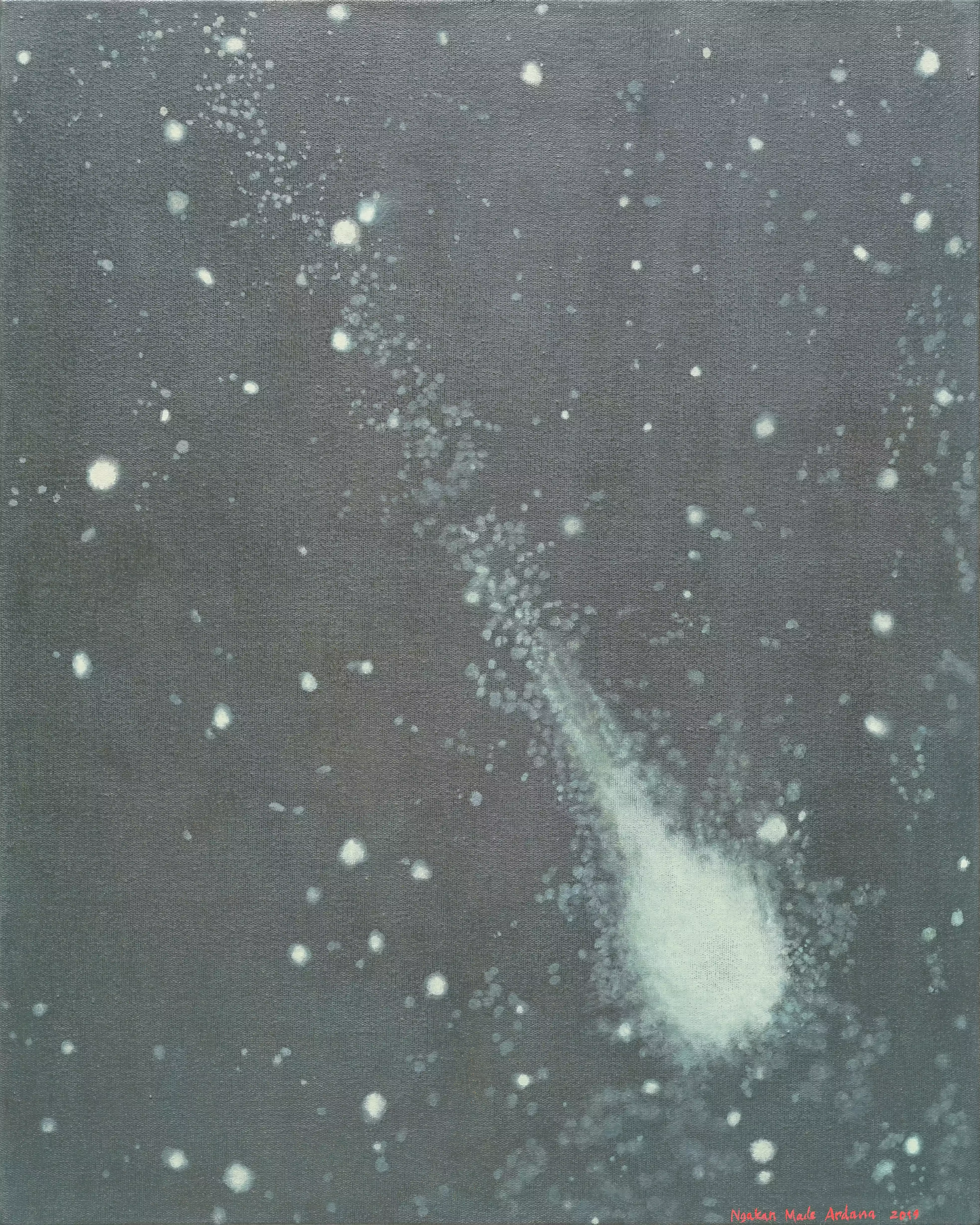
Dewa Ngakan Made Ardana
Lintang Kemukus, 2019
oil on canvas
75 x 60 cm
.webp)
Dewa Ngakan Made Ardana
Menggugat Bayang Bayang, 2019
oil on canvas
241 x 312,5 cm (triptych)

Dewa Ngakan Made Ardana
Ruang Perjumpaan, 2019
oil on canvas
200 x 150 cm

Dewa Ngakan Made Ardana
Rumah Pertanyaan, 2019
oil on canvas
200 x 200 cm