
27.08.19 — 09.09.19
Imaginative Mimetic: Against Interpretation
Solo exhibition by Agung Santosa
Download E-Catalogue
Agung Santosa’s Solo Exhibition
IMAGINATIVE MIMETIC: AGAINST INTERPRETATION
Some of Agung Santosa’s works at this exhibition have familiar forms—pillows, inner tube of a
tractor tire, a piece of rusted steel. Others aren’t so immediately recognizable, such as those that
assume abstract biomorphic forms. These two approaches to form appear together in Agung’s first solo
exhibition at Galeri Nadi, showing how both methods are somehow connected. It is truly not easy to
classify Agung’s creative methods and, perhaps, it is not needed. Perhaps, because he is a
self-taught artist, Agung is able to let his creative spirit flow without restraint, employing a
variety of methods in his creative work. Thus, we can find a unique singularity to Agung’s works.
Although he has no formal art background, Agung is close to the art world in Yogyakarta by virtue of
working as an assistant to several artists in the city. Agung unobtrusively uses this opportunity to
experiment, increase his technical skills, and learn more about material possibilities. These
experiences helped to form/sharpen his senses and technical skills. However, it seem that his
insights changed and flourished once he began discovering things about the wider world, online. It
further solidified his resolve to pursue a career in art.
Agung moves intuitively, none too preoccupied with the rigid dictates of a particular method or
approach. As can be seen at this exhibition, such movements often lead to mimetic and abstract
forms. They intertwine, enriching the way by which each work can be read and understood. His mimetic
works are able to detach themselves from the strictures of the nature of the objects being alluded
to or borrowed. Thus, the possibilities of representation could flow everywhere, not just toward
accepted formal perceptions. In the same way, works that initially appear abstract might in time
come to be read as narrative or representational artworks.
According to Agung, his creative intuition is triggered by his ‘daydreams’, or his imagination. He
wonders: is ‘daydreaming’ also considered ‘thinking’? Interestingly, his daydreams and imaginations
are often triggered by his own works. This shows how Agung tends to think or to enter into a dialog
with himself within the spaces of his own imaginations, synthesizing his next steps. This esoteric
dialog is his way of building his creative ideas.
For this exhibition, the chain of imagination begins with a work titled Tertidur dalam Ingatan, a
pillow put up on a wall that is also a music box playing a strain of music at a pull of a cord.
Then: Dengar-Dengar, an ear-shaped wall relief that also serves as an opening salvo. These two works
represent the importance of ‘daydreaming’ or ‘listening to one’s heart’. According to Agung, the
very voices that come from inside himself are the ones that have invited him onto a journey into the
world of imagination, thusly further realized in his sculptures.
Narration is an important element in Agung’s works, even his abstract works They come from the
fictional narratives wrought by Agung’s imagination. Agung is able to relate many different stories
through his works. His stories come from many sources—his childhood memories, his surroundings, or
even his own heart. It is of course quite difficult to build new or different interpretations onto
mimetic works, but by using such an approach, Agung is able to imbue his works with a poetic touch.
His compositions help to jog the imagination and trigger many more approaches leading to further
understanding of his works.
A series of artworks uses the form of an inner tube (or colloquially known as a floatier)—along with
their additional components—to present a variety of narratives. Most interesting, I feel, is
Frenemy. The two shark fins on the tube’s face feels like a unified and natural addition. Frenemy
describes the paradox found within the works. A tube is considered a safety device that helps people
stay afloat in a body of water, in this case, the sea. On the other hand, a shark is seen as a
‘threat’, a predator feared by those who find themselves stranded at sea. Friend and enemy come
together in Frenemy. The sense of an inner tube’s suppleness or the spongy fin is quite visibly
perceivable despite the fact that they are both made from solid resin. This demonstrates Agung’s
smart and skilful handling of his materials.
Dayung Palinggam also uses an inner tube, with two steel rings holding down two oars on the left and
right side of the tube. It resembles an emergency vessel and conveys a sense of some rudimentary
journey. Looking at the title, however, we soon learn about the importance of maintaining a level of
morals and wisdom while embarking on a journey. The inner tube here is made of resin, although the
oars are from wood and the rings from metal. This muddles the extent of Agung’s material usage for
his mimetic ends. While the tube has been made using resin, the oars and rings are made according to
their usual materials, wood and metal respectively. Certainly, it is possible for Agung to make his
oars and rings from resin, but it would be quite impractical, especially when easier alternatives
are available. This shows how artists will also consider the practical and technical aspects of
their creative processes. For Agung, he begins his ‘journey’ with a realization of his intentions—it
is not to ‘highlight’ or ‘lean into’ the identity of resin as material. He uses resin merely due to
practical reasons, because he feels that resin has the ability to help him create forms according to
the desired or required characteristics.
Materials or mediums are important in art. The history of art in the Western world recognizes a
hierarchy of art materials and mediums. Oil on canvas is considered one of the primary mediums, even
a key paradigm in Western art history, from the Renaissance up to the Modern Era. Meanwhile,
sculpture considers bronze and marble as its major substances, while ceramics and wood are quite low
in the hierarchy. Even lower, however, is resin because it is considered unnatural and
characterless. Consider Roland Barthes:
In the hierarchy of the major poetic substance, it figures as a disgraced material… it embodies none
of the genuine produce of the mineral world: foam, fibers, strata. It is a ‘shaped’ substance:
whatever its final state, plastic keeps its flocculent appearance, something opaque, creamy, and
curdled… [i]
Judith Collins concluded Barthes’s statement thusly: With plastic, Barthes felt that hierarchy of
substance had been abolished, to be replaced by a single one that could mimic them all. [ii]
Agung shares Judith Collin’s conclusion. Resin, as polymers—like plastic—can mimic almost all kinds
of materials. Resin is a neutral media that possesses almost no character. Materials in the
traditional Western sense—like bronze and marble, even wood and ceramics—have strong characteristics
that may influence the final work’s narrative content and extent of representation. Sometimes, the
narrative itself can become coopted by the material being used. Bronze has typical metal
characteristics—sturdy and weighty. Marble is solid but also fragile, like ceramics. For Agung, who
prioritizes the conveyance of his imaginative narrations, resin seems to be the best choice. The use
of neutral and compliant resin allows Agung to take his explorations of narratives and forms a step
further.
These days, contemporary art no longer classifies materials into hierarchies. Resin is considered a
legitimate material of equal standing, alongside other mediums and substances. Instead, an artwork’s
class is determined by the class of the artist. On the other hand, the art world still recognizes
qualities and classes of a medium or material in relations to the intrinsic value of the materials
being used, and the level of sophistication involved in the development of such materials it into a
three-dimensional artwork. Works made using bronze or metal—from an artist who also works with
resin, for instance—are often considered more prestigious than said artist’s resin-based works.
Agung surely understands this reality, but he comfortably works with resin because his intention is
not to champion resin as a medium, but rather to use resin as means to facilitate his endeavor.
Like the inner tube series, the same artistic desire can be found in Benda Temuan– and Benda Temuan–
We see a block of metal and a thick sheet. A rusty curved sheet stands precariously on a cylindrical
pedestal, almost pushing past its balancing point. Meanwhile, the rusty metal block is held only by
a fragile rope. Both works play with our tactile and perceptual preconceptions. These works
represent the duality of softness and hardness.
Other works are comprised of biomorphic abstract objects, like Benda Temuan #6 and Benda Temuan #7.
The narratives in these works are related to those found in the inner tube series, where they claim
connections with water, or in their case, the sea. The connection between the two series is found in
Menyelam, comprised of a pair of feet circled by an inner tube; the rest of the legs and body are
not visible, as though already diving into a realm of imagination. “Found” objects, benda temuan,
refer to objects that Agung ‘finds’ beneath the surface of the sea. These objects could be anything:
flotsam and jetsam, things thrown away by people, sea-dwelling things. In this series of works,
objects are no longer expected to mime or resemble any known counterparts, because imagination has
surpassed the objects themselves. The same could be found, for instance, in Gelombang Pasang and
Sekitar Pesisir, which are clearly abstraction of natural scenes. In these works, Agung’s
imagination has been transformed into poetic semi-abstract objects, as though a poetry of form that
invite and encourage audience to explore their imagination.
From discussions with Agung, we learn that his works are inspired by or related to his past personal
experiences. They seem like catharsis for his past traumas, but are also opportunities for him to
explore beautiful memories—like his experience among the natural wonders of Bukit Tinggi. These
desires inspire the dualism or paradox in his works. Even so, experiences are not the most important
element of Agung’s works: only that they serve as triggers. The main representative aspect of his
works is his own imagination or ‘daydreams’. It is not easy to put ‘daydreams’ into reality, and so
Agung builds a launching pad for his narrations by ‘miming’ or ‘patterning’ his works after known
forms or objects.
Agung, the artist, is still young and his sculptures are already promising. In a contemporary art
world, replete with socio-political identity representations or enviro-cultural content, imagination
seems to have become a rare commodity. Agung has the potential to work within these spaces,
especially considering his unpretentious approach toward representation as the main aspect of work.
He is content that he is able to ‘represent his daydreams’. Most notably, however, is the importance
he places on having the desire and ability to realize his daydreams into art objects perfectly and
completely.
Agung has a long road ahead of him. We pray that he will become a strong and important artist from
Indonesia. We look forward to it.
Bandung, 11 August 2019.
i. Judith Collins, Sculpture Today (London: Phaidon Press Limited, 2007), hlm. 172.
ii. Ibid.
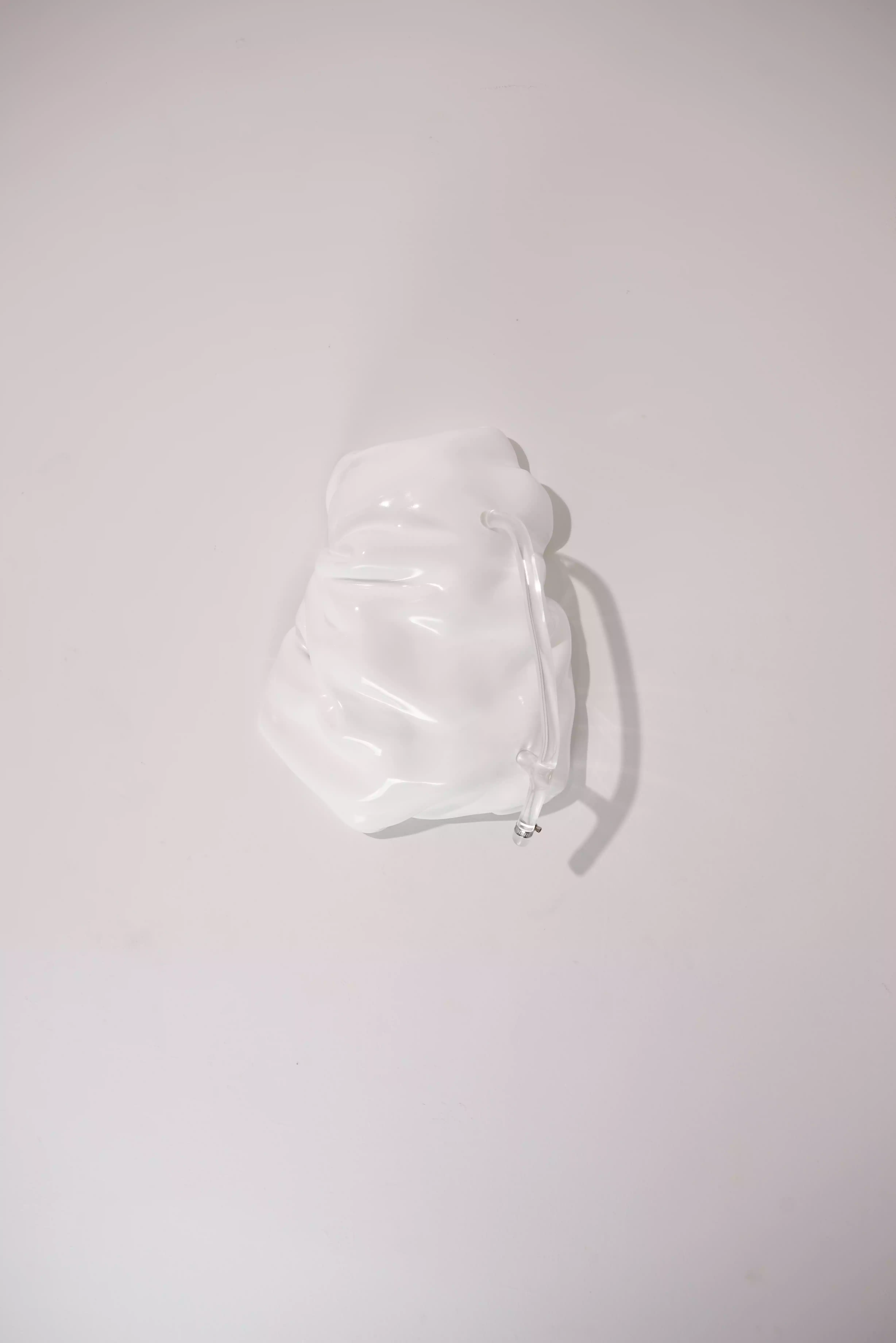
Agung Santosa
Benda Temuan #1, 2019
Fiber resin, acrylic sheet, hose clamp and polyurethane paint
50 x 35 x 19 cm
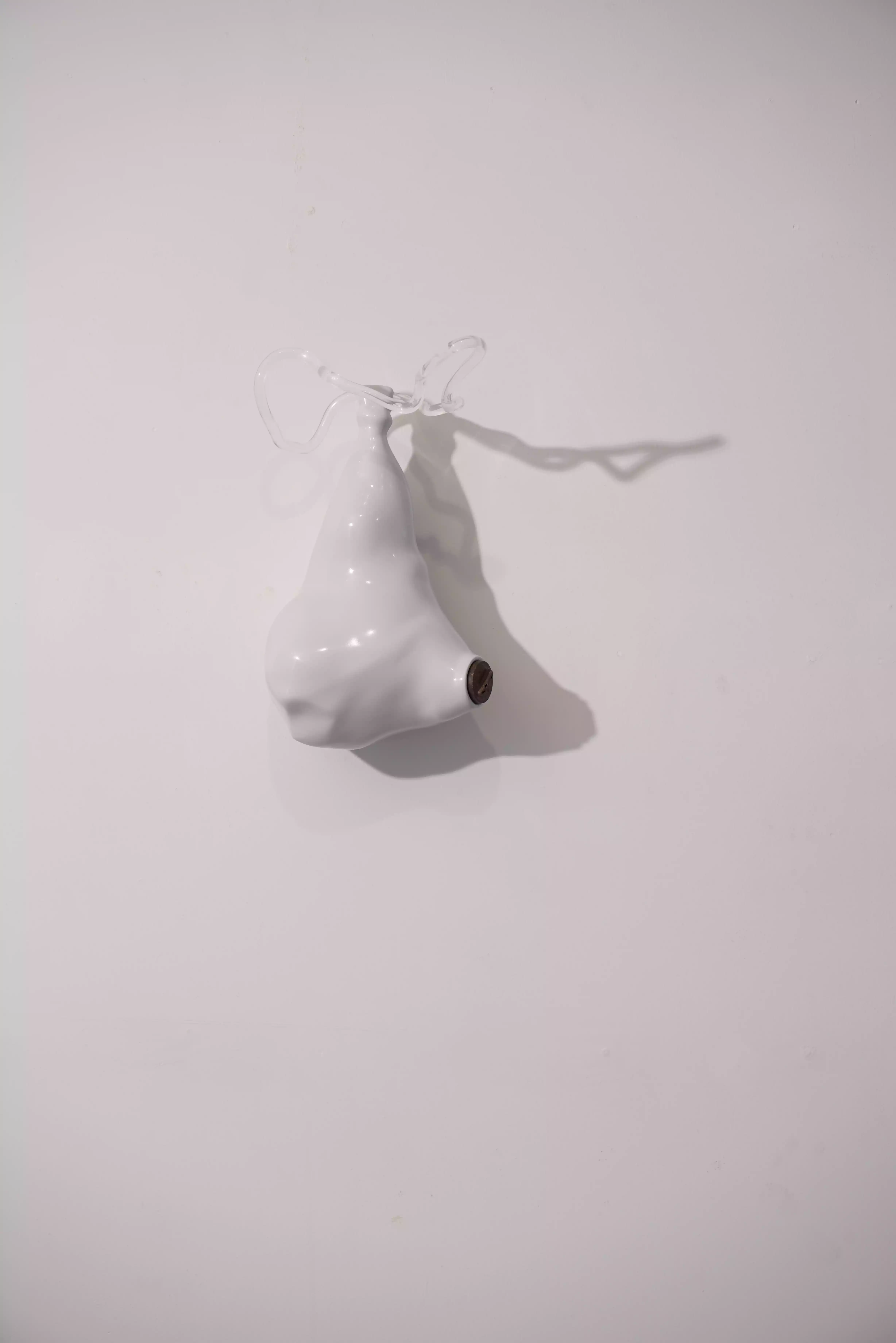
Agung Santosa
Benda Temuan #2, 2019
Fiber resin, acrylic sheet, motor tank cap and polyurethane paint
55 x 35 x 35 cm
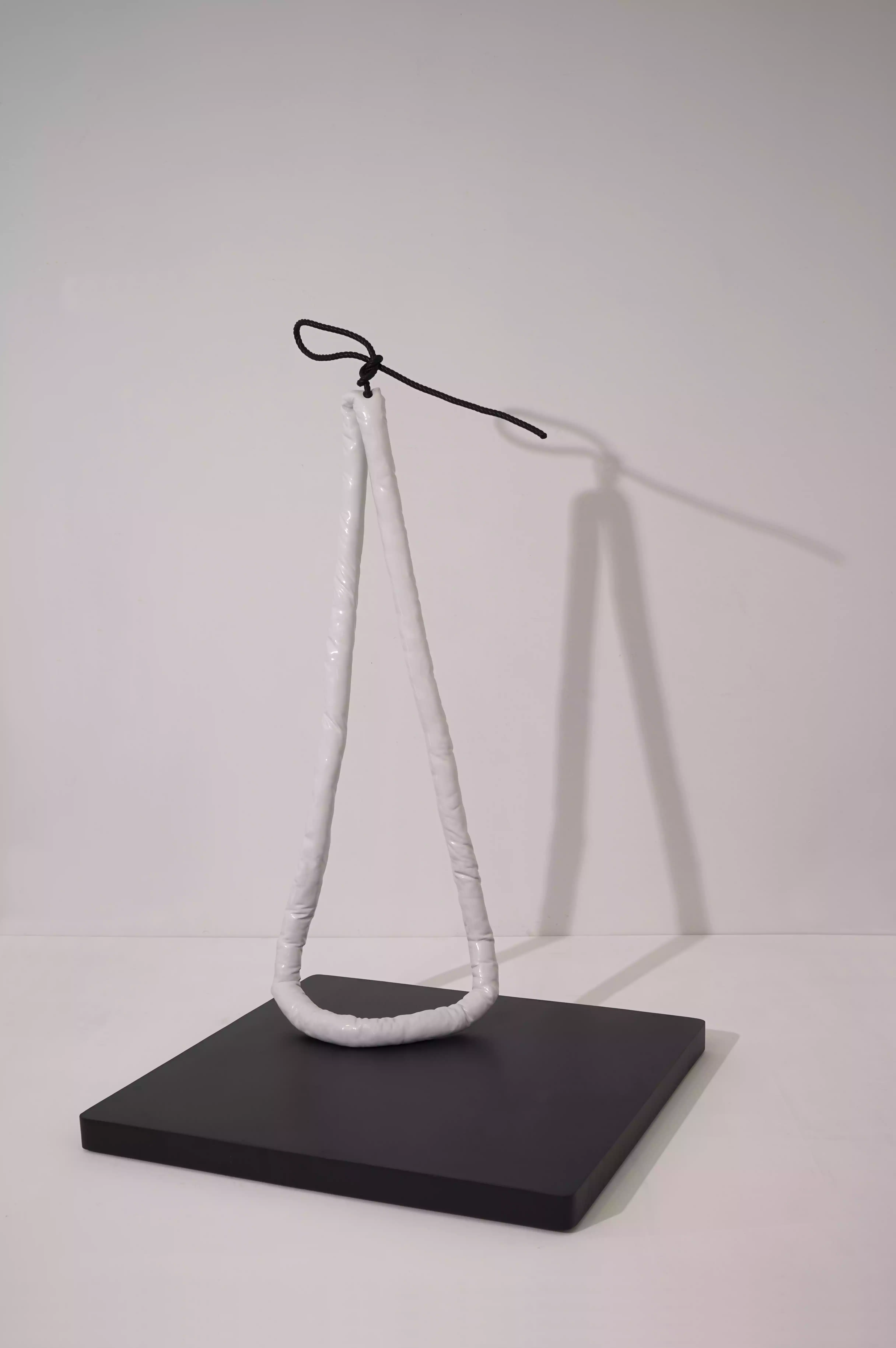
Agung Santosa
Benda Temuan #3, 2019
Fiber resin, plastic rope and polyurethane paint
160 x 50 x 40 cm

Agung Santosa
Benda Temuan #4, 2019
Fiber resin, iron plate, barrel drum and polyurethane paint
190 x 77 x 60 cm
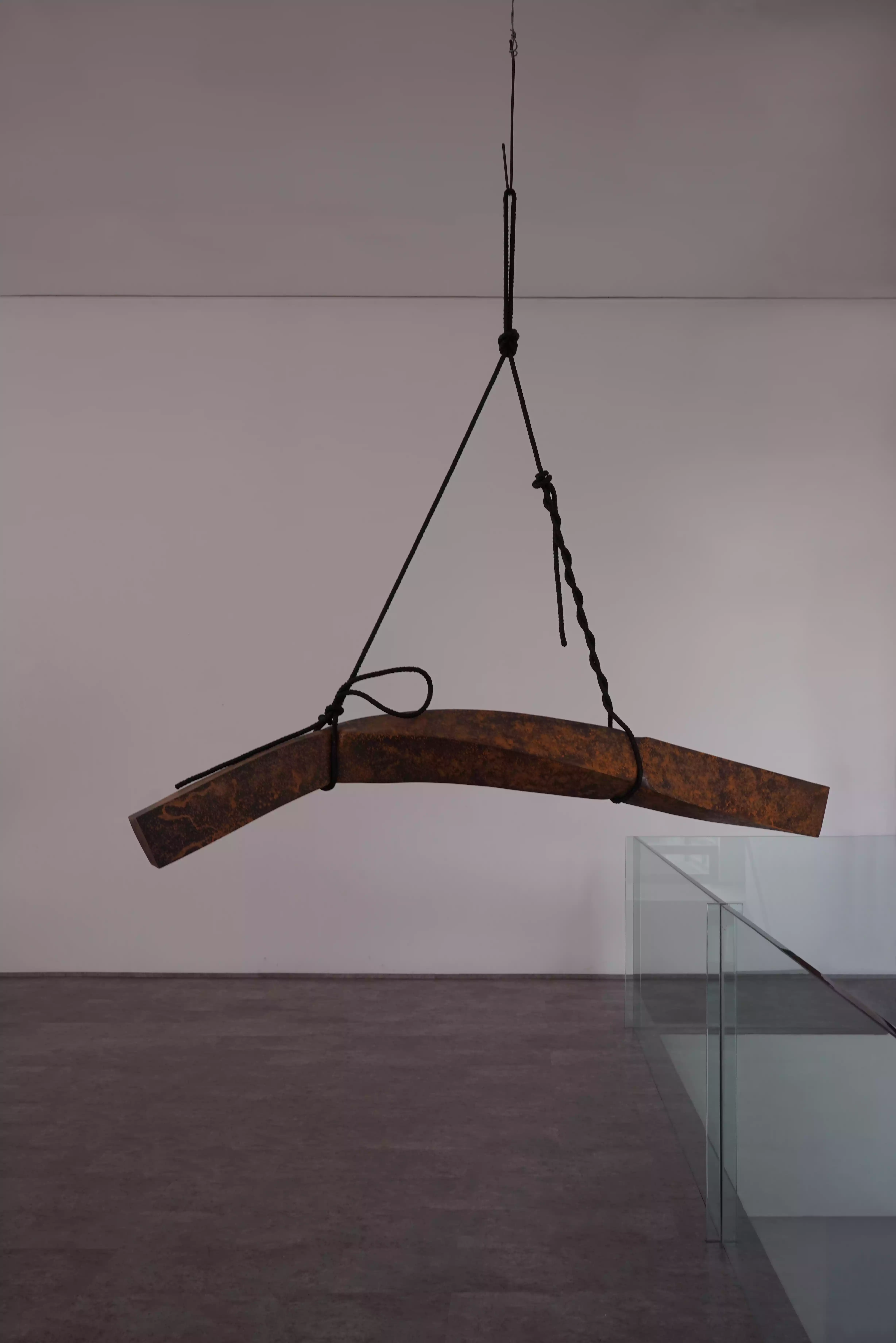
Agung Santosa
Benda Temuan #5, 2019
Fiber resin, plastic rope and polyurethane paint
175 x 200 x 20 cm
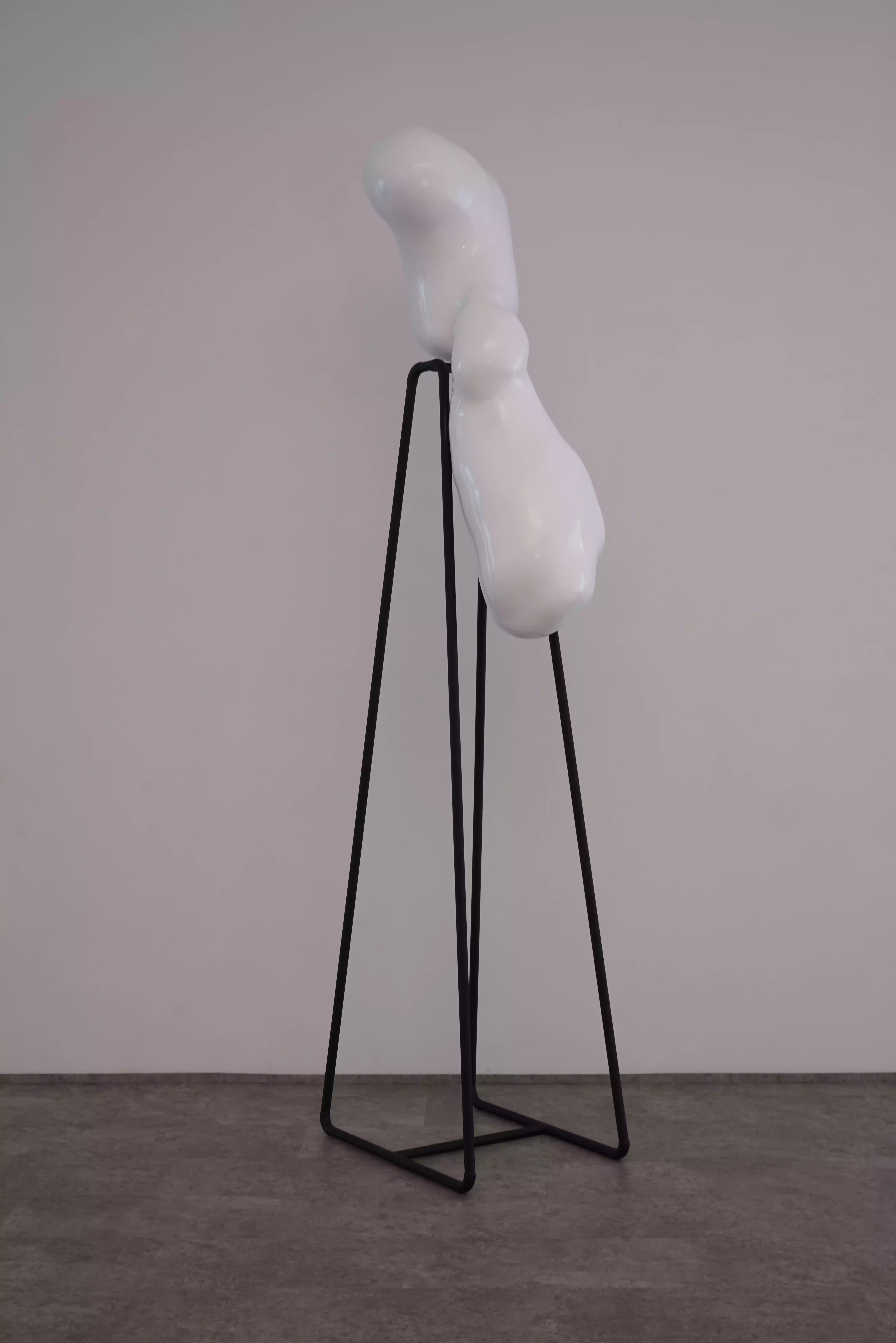
Agung Santosa
Benda Temuan #6, 2019
Fiber resin, iron pipe and polyurethane paint
260 x 50 x 60 cm
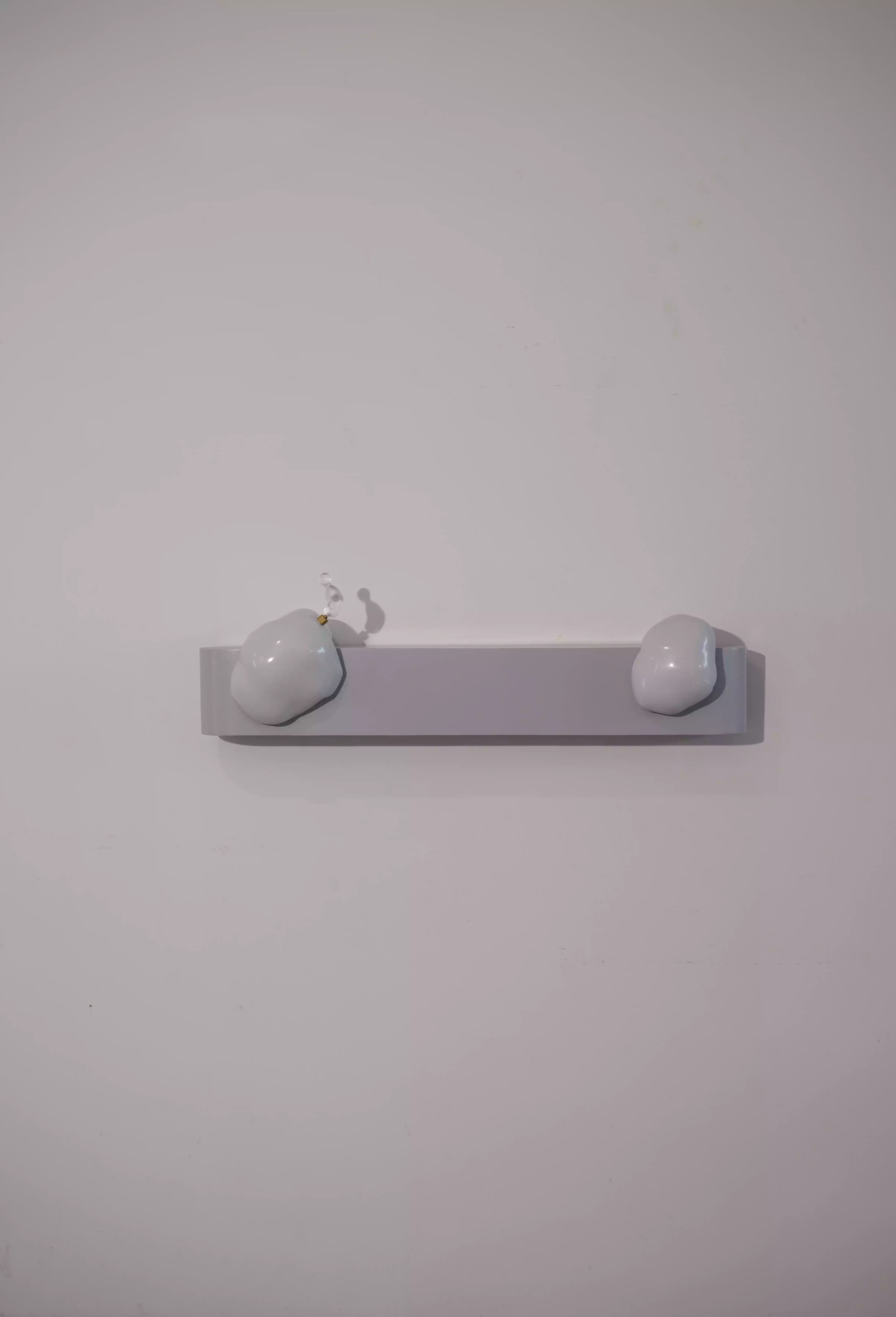
Agung Santosa
Benda Temuan #7, 2019
Fiber resin, acrylic sheet, hose nipple and polyurethane paint
32 x 105 x 25 cm

Agung Santosa
Bukan Lautan, Hanya Kolam Rindu, 2019
Fiber resin, steel bar, tire valve stem and polyurethane paint
116 x 42.5 x 116 cm
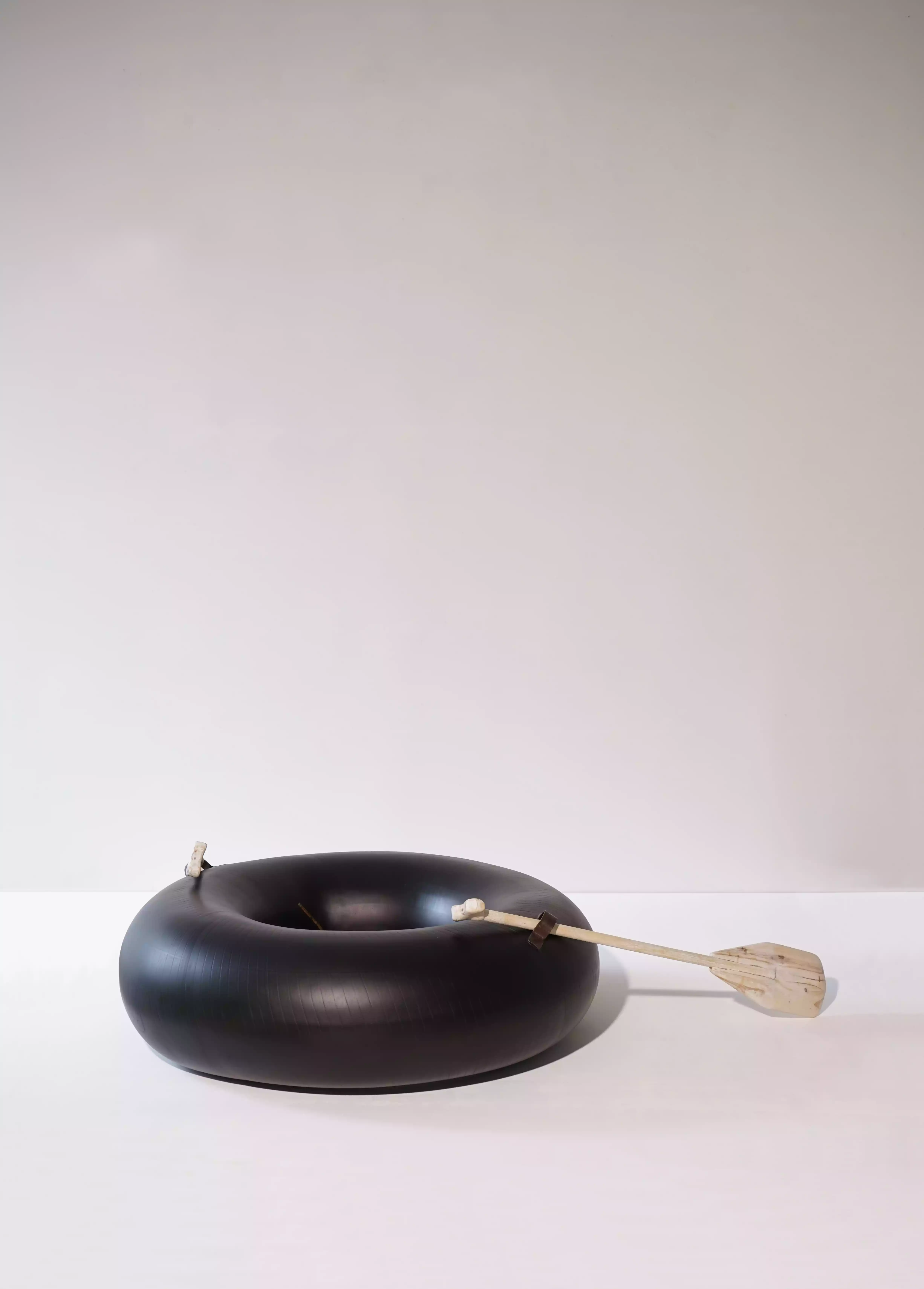
Agung Santosa
Dayuang Palinggam, 2019
Fiber resin, iron plate, steel, tire valve stem and polyurethane paint
200 x 116 x 65 cm

Agung Santosa
Denger-Denger, 2018
Acrylic on canvas
150 x 120 cm
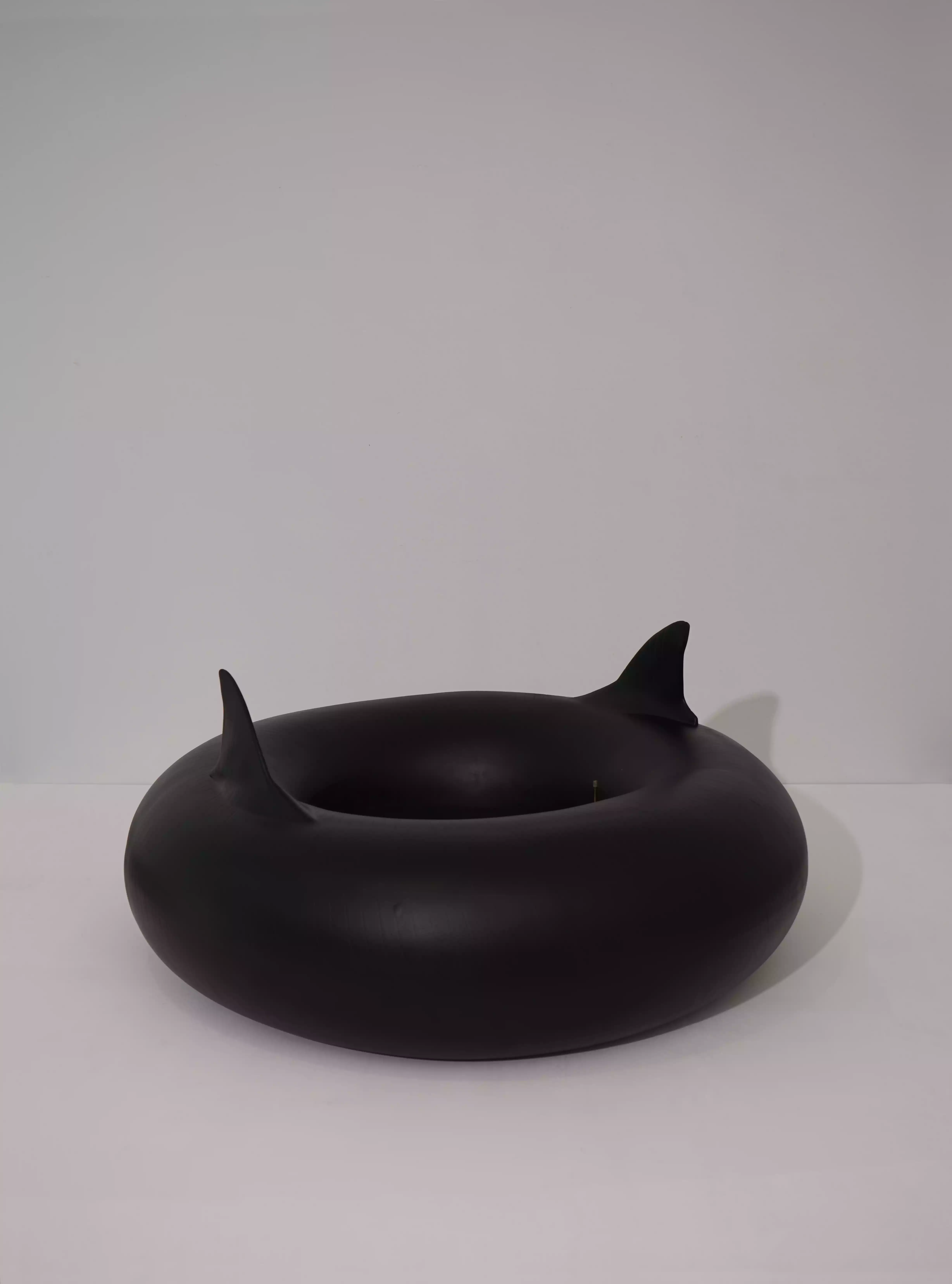
Agung Santosa
Frenemy, 2019
Fiber resin, tire valve stem and polyurethane paint
116 x 59 x 116 cm
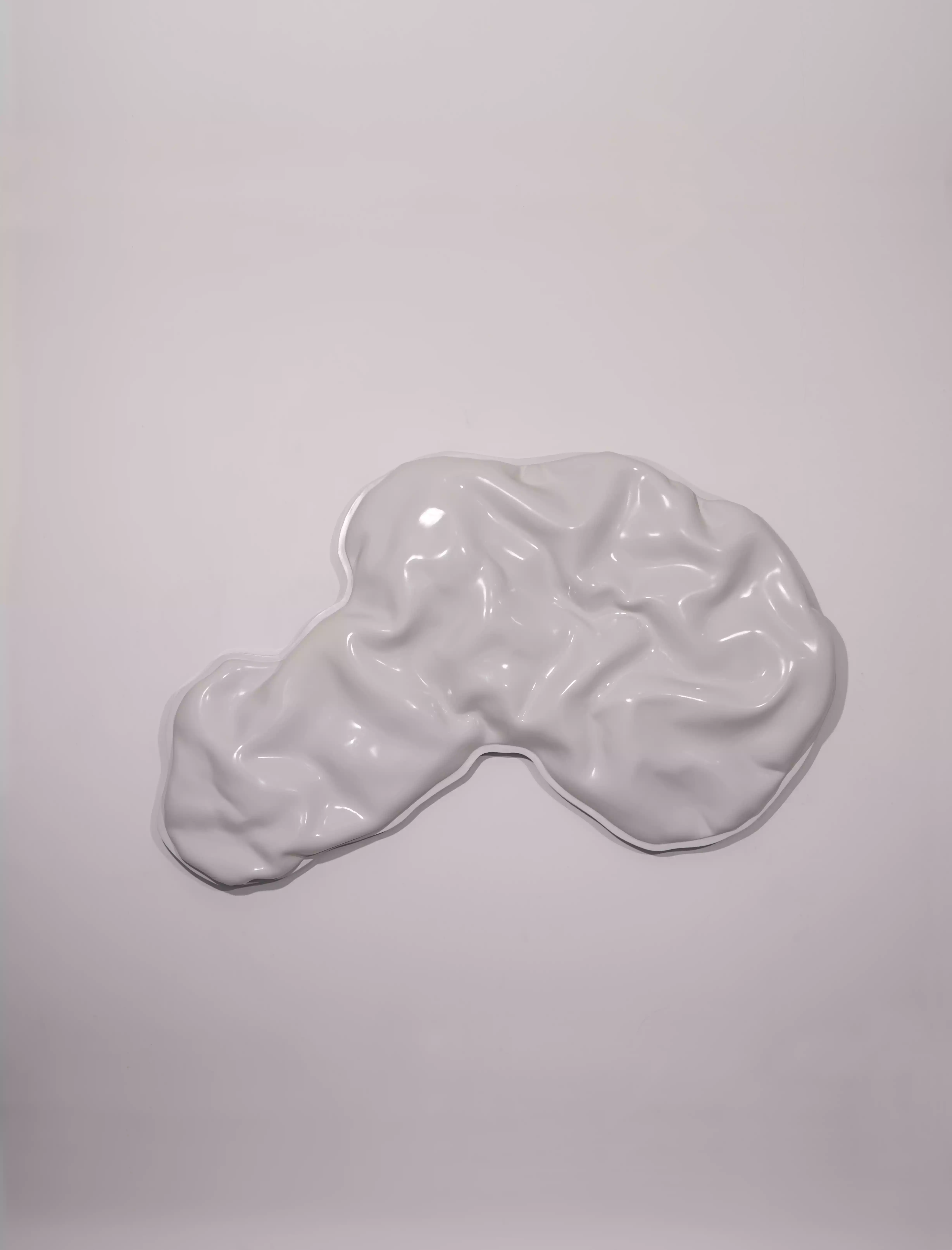
Agung Santosa
Menghafal Daratan, 2019
Fiber resin, polyurethane paint
150 x 230 x 20 cm
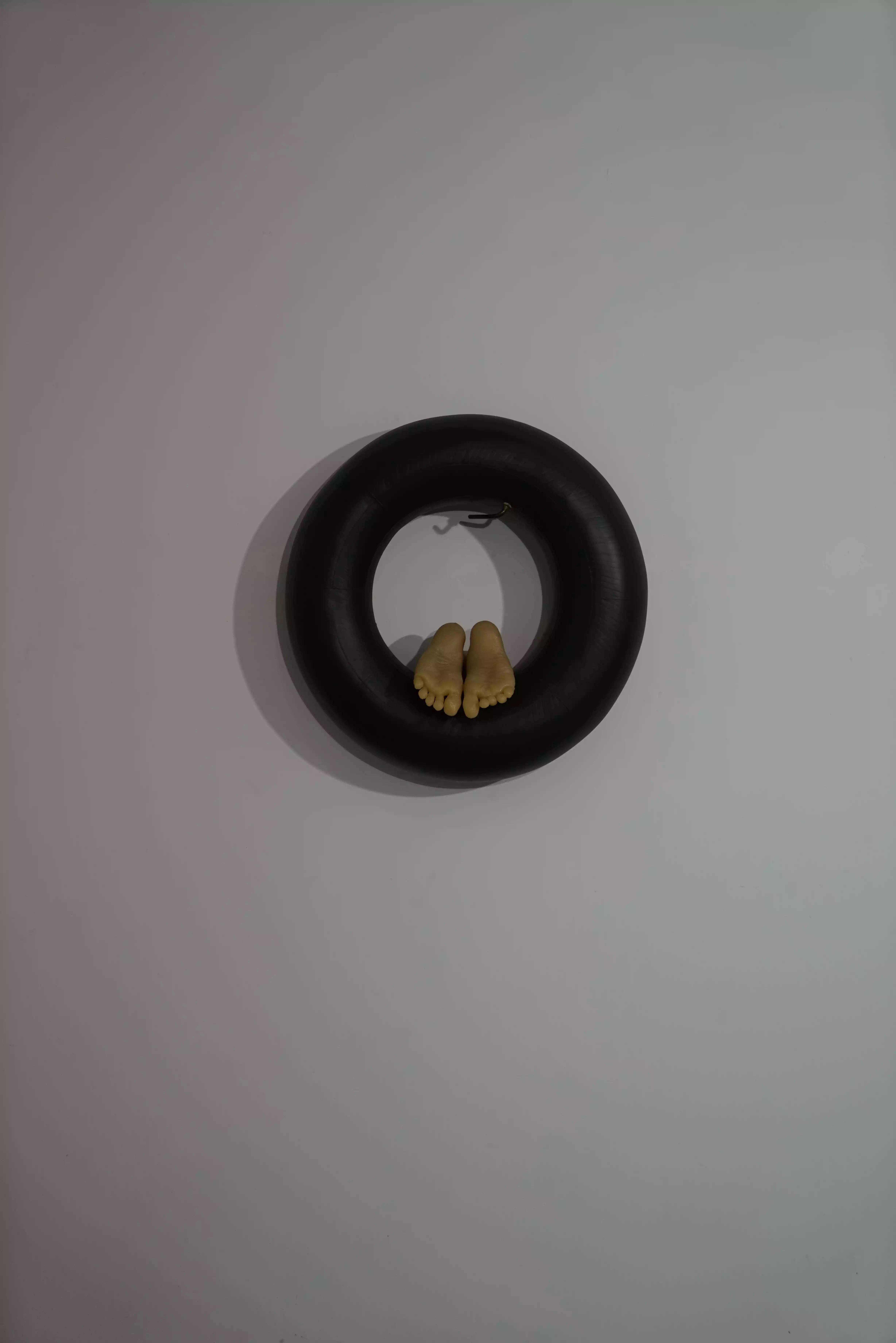
Agung Santosa
Menyelam, 2019
Fiber resin, tire valve stem and polyurethane paint
63 x 63 x 26 cm
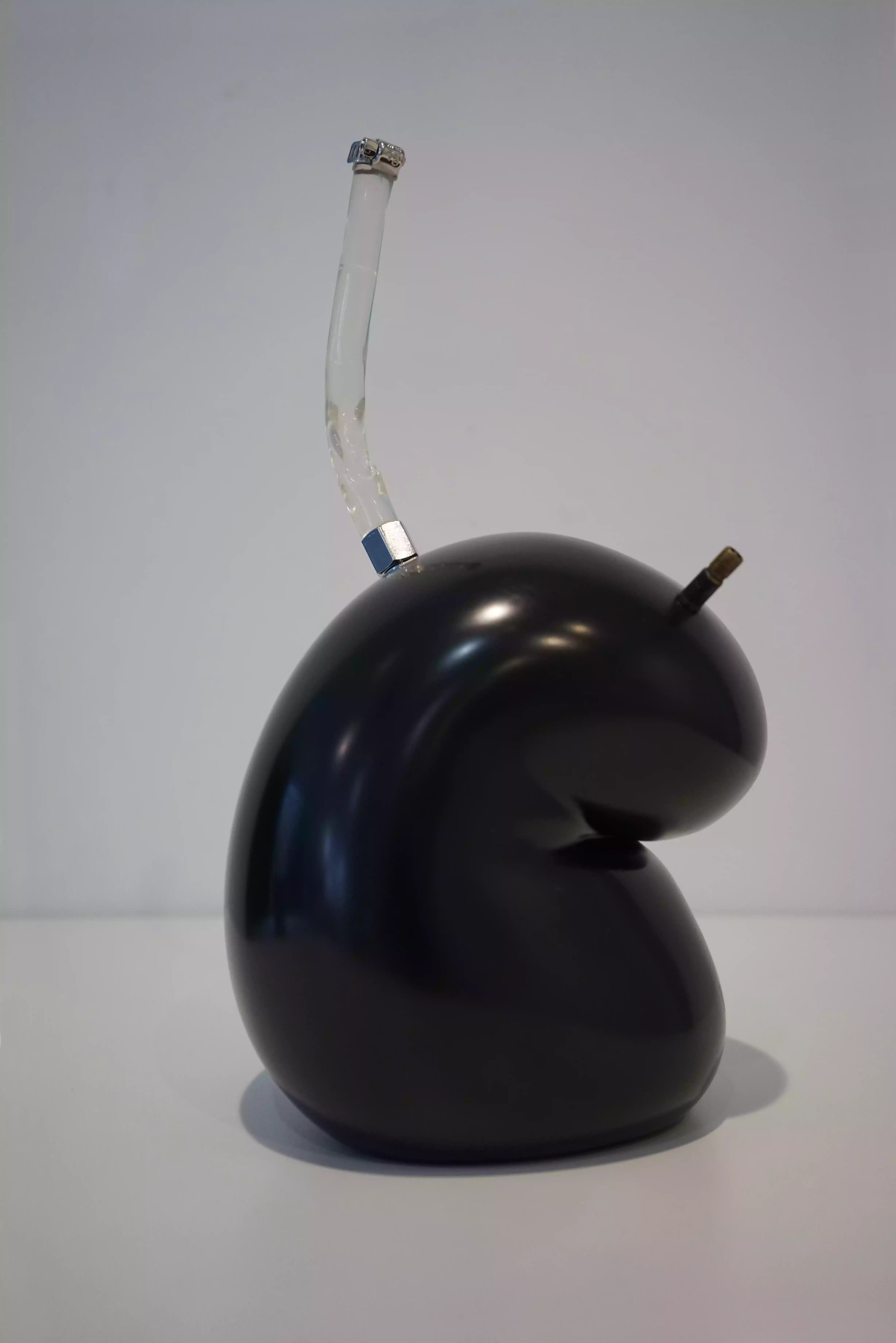
Agung Santosa
Rembes, 2018
Fiber resin, hose clamp, tire valve stem, hose nipple, acrylic sheet and polyurethane
paint
35 x 17 x 18 cm
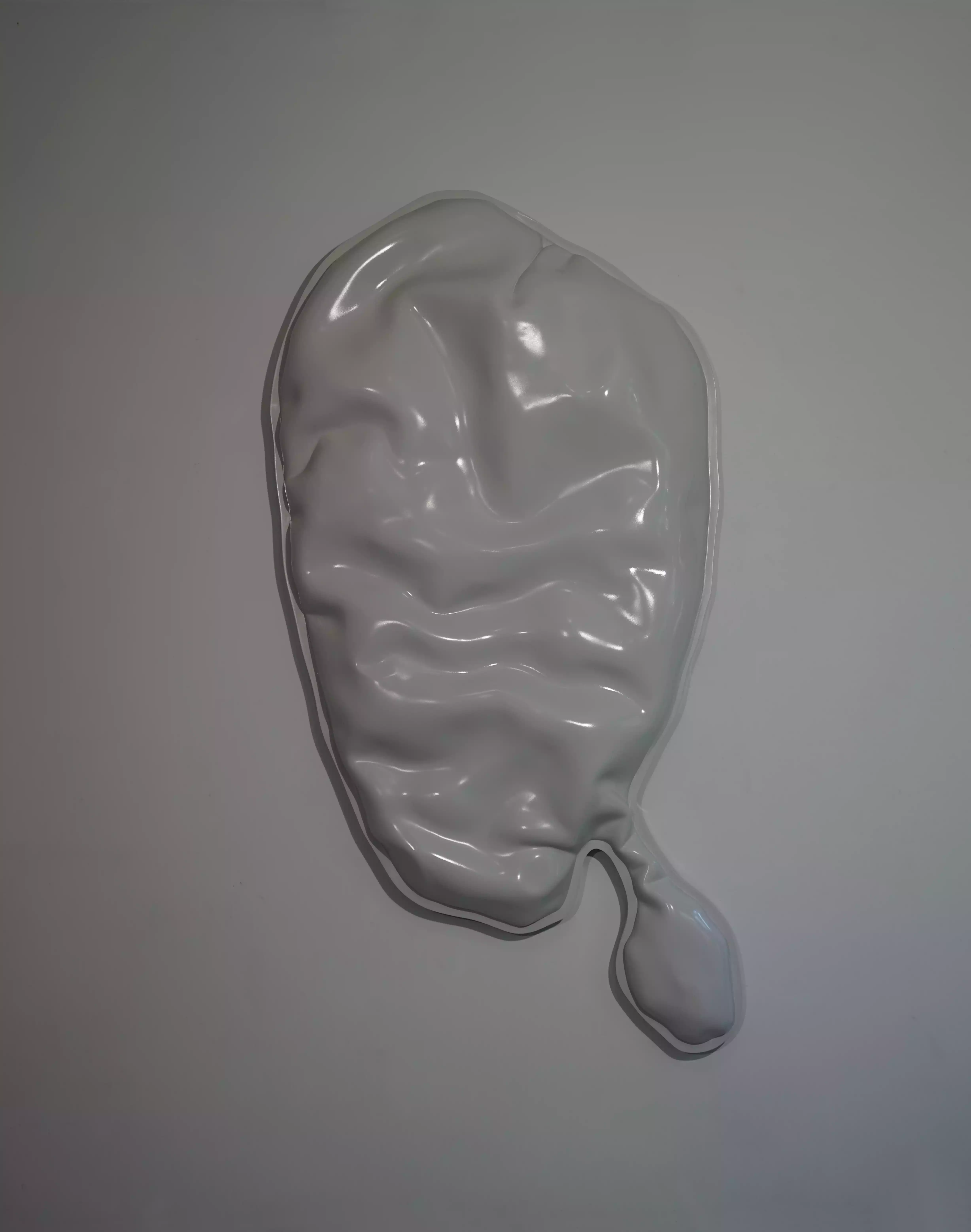
Agung Santosa
Sekitaran Pesisir, 2019
Fiber resin, polyurethane paint
240 x 115 x 23 cm

Agung Santosa
Tertidur Dalam Ingatan, 2019
Fiber resin, pull string music box, hair and polyurethane paint
28 x 46 x 7 cm