
21.11.19 — 09.12.19
Jamais Vu
Solo exhibition by Goenawan Mohamad
Download E-Catalogue
JAMAIS VU
For a dozen years, since he has started painting seriously, Ronald Efendi has often been putting
words and letters on his canvases. Even when he had to work on still-lifes during his years as a
student, Ronald chose to paint consumer products in a box or can packaging to satisfy his obsession
with letters. In the series of paintings he made throughout 2006, to mention another example,
letters and numbers were his main objects. He worked on the shape of a number, combining it with
other numbers, stacking it with yet other numbers, all with transparent acrylic colors, so that we
could no longer really grasp what numbers were actually drawn on the canvas.
In Ronald’s early paintings, an attempt to negate everything clear and definitive has been visible.
Not only he likes the alignments and mixings of letters and numbers—as a kind of signs with a
certain convention in their reading and writing—with lines, fields, textures, and colors (which tend
to be subjective and idiosyncratic). In most of his other paintings, letters are the starting point
for treating expressions of lines—spontaneous, overlapping, sometimes wild, irregular—and textured
areas of color, which are also never symmetrical.
For the paintings in his solo exhibition this time, Ronald still puts words, too. However, it helps
us to delay too hard an effort to read or capture what those words mean. This is not only because
they are almost completely illegible. In some of the paintings, the words seem more like letters
crossed out spontaneously, suddenly, or even in a hurry. In some others, the letters are distorted
by blurring brush strokes that impair the clarity of their shapes. Interlocked between strokes of
lines and areas of color that predominantly exhibit a release of hard, intense energy, the
appearance of those words in fact seems to refuse to be read. At an extreme level, the words in
Ronald’s paintings require us to “not read”.
The title of this exhibition, “Jamais Vu”, is taken from two words readable in one of Ronald’s
paintings, Menggali Dangkal Memendam Dalam (Digging Shallow Burying Deep) (2018). In psychology,
jamais vu (from French, ‘never seen’) is a situation in which someone in a sudden feels alienated
from something he has done, recognized, or experienced repeatedly. An antonym of déjà vu, this
forgetting condition is accompanied by an unease when seeing something foreign for the first time.
It is beyond my capacity here to examine in depth the characteristics of jamais vu as a
psychological phenomenon. As Ronald himself has explained to me, he is not trying to express some
meanings behind the words through his paintings.
This exhibition uses jamais vu as an allusion to a comprehension of Ronald Efendi’s artistic
practice. Over a dozen years Ronald has gone through a number of artistic exploratory phases,
producing several distinctive approaches to painting. It is quite clear that most of the formal
elements in his paintings are dealt with expressive approaches. However, unlike the cathartic
expressiveness that emphasizes the release of hidden emotions or feelings, Ronald’s paintings are
more likely to express an “obsession”. Despite his occasional tridimensional/installation projects,
to me it is very clear that he has only one passion in his life, and that is painting.
For someone who is obsessed with the process of painting, a blank canvas, no matter how often stared
and touched, will always be something strange and “mysterious”. It is such never-ending “alienation”
in front of a blank canvas that, I imagine, compels Ronald to move, be in haste, grab his brush, and
stroke his brush to paint. Jamais vu in the context of Ronald’s works becomes a productive motif for
creation.
To enjoy Ronald’s works, we may first imagine how the distortions of lines and fields are the
consequence of his very distinctive gestures when painting. Even though he never has any specific,
repeating motifs or patterns, Ronald admits that the way he paints is greatly influenced by what
comes to mind as he faces a blank canvas. He has no design, sketch, or theme that binds him too
tightly when working. It is the canvas that moves his body and hands—mixing paints, stroking
brushes, then daubing them with rollers or sticking them with unusual objects.
It must be emphasized that, in Ronald’s works, the act of sticking something to a canvas is not an
ordinary collage technique that produces an effect of paste-up. Sticking, for him, is part of an
exploration of texture (see, for example, Untitled and Untitled #2, 2019, that accentuates the
texture of paper). Several paintings in this exhibition—see for example, Drowning in the Shallows #1
and #2 (2019)—are born from a very unique method. Ronald begins by working on two pieces of canvas
of identical size with strokes and brushes. After that, he presses the two surfaces together and
then lets them sit for a while before separating them again. It’s quite easy to imagine how this
leads to an unpredictable, final form. As a result, the paint on Drowning in Shallows #2 is mostly
peeled off, stuck to the other canvas’ surface. And it is precisely such surprising elements that
Ronald searches for in his painting process.
With the example above, I would like to reiterate that if there was indeed one big obsession that
controlled Ronald’s life and work, it is no exaggeration to say that it would be this painting
process, and painting itself (as a “language” as well as “object”). And it is no coincidence that
such an obsession is most fittingly manifested through the style of painting that Ronald has been
working on for the past ten years. I’m convinced that most of us will easily call it “abstract”, or
“abstraction”. These days “abstract art” has become an overused term to generalize art practices
that do not depict, or refer directly to, an object in the real world. The history of fine art has
placed abstract painting as an artistic tradition brought on through ongoing criticisms toward the
conventions of naturalistic pictorial representation in painting and sculpture.
The problem is, though, abstract art nowadays is often seen as a category that is too dense and
rigid: as if all abstract paintings adhere to only one principle, namely formalism. It might be that
this phenomenon of generalization is related to criticisms toward modernism in the West. Since the
1970s, while declaring “the end of painting”, postmodernists have attacked abstract art as an
“anti-humanist” style that marginalizes political representation.
As an Indonesian artist who grew up in the post-Reformasi era, Ronald Efendi did not experience the
ideological tension between abstract and representational arts like his predecessors in the 1960s.
Also, abstraction in Ronald’s works is not the formalism à la Bandung-style that advances the
language of form, nor Affandi’s abstract expressionism that became the forerunner of “jlebret art”
(basically paintings made instantly, by splattering paint on a canvas, especially those that boomed
in the Indonesian art market in the early 2000s). Even if, in Ronald’s paintings, there is something
to be called a quest for form, it is related to the uncertainty and ambiguity of it. For Ronald, the
most difficult thing he has to deal with, when painting, is determining when he is done with it. He
has no formula for it—he feels that a formula has no place in his lexicon.
In this exhibition, we see Ronald’s paintings forcing us to delay our various final conclusions
about forms. The lines and fields of color that suggest certain shapes in fact are present as traces
of the acts of erasing, stacking, and daubing layer by layer of colors that are never solid.
Nevertheless, even as his paintings are characterized by ambiguity, we can always capture one word
very clearly from them: “ronal”.

Ronald Efendi, little red rooster, acrylic and collage of ID photos, 40 x 40 cm, 2002
What or who is “ronal”, truly, in his paintings? “It’s never intended at all. I’ve deleted the
letter d on my name since I was in middle school. ‘ronal’ in lowercase is also more artistic. And to
be sure, ‘ronal’ is easier pronounced in my social milieu,” said Ronald. Born in Simabua, West
Sumatra in 1981, Ronald inherits the Minang tradition of naming children based on the memory of the
Revolutionary Government of the Republic of Indonesia’s (PRRI) defeat in the early 1960s.
Notwithstanding Ronald’s simple accounts, I feel that such “signature” contains mockery and subtle,
unconventional rejection of the artist’s own personal history and identity. It may be that rejection
and mocking are inherent attitudes in Ronald’s artistic practice. While studying at the Indonesian
Institute of the Arts, he absorbed the influences of the works of a number of Yogyakarta painters
emerging in the early 2000s, such as Ugo Untoro, (late) S. Teddy D., and of course Jendela Group,
especially Handiwirman Saputra and Yunizar. For Ronald, their works at that time showed a strong
will to “rebel” (though not in a frontal way) and declared themselves to be “the authentic”.
Like an Abstract (2018) is an important element in Ronald’s solo exhibition this time. In that
painting, the choice to erase one of the letters in the word ABSTRACT seems to reflect his attitude
regarding the term “abstract art”, which has already been labeled to his works. I am convinced that
the act of erasing one letter in that word is a decision he has carefully weighed (and this again
proves a difference in his artistic practice from the abstract expression that is all impulsive and
njlebret). With ABST (abstain), it’s as if he steps away (from various claims and classification).
With ACT, he seems to express a choice, an act: to keep on painting.
Agung Hujatnikajennong

Ronald Efendi
Astral, 2019
Acrylic, pastel on canvas
140 x 180 cm
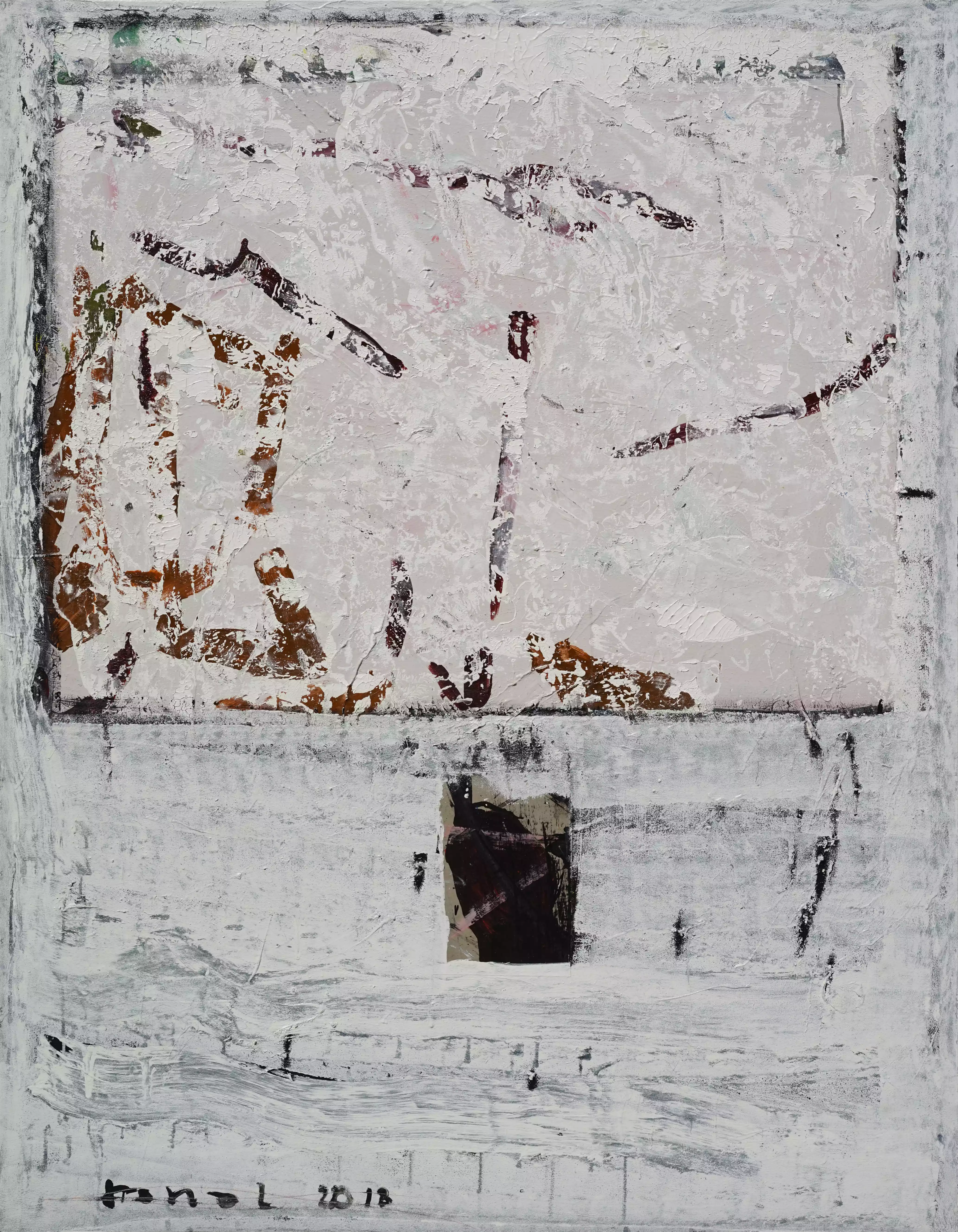
Ronald Efendi
Atas Sadar, 2018
Mixed media on canvas
180 x 140 cm

Ronald Efendi
Diam Dalam Putih, 2019
Mixed media on canvas
130 x 100 cm
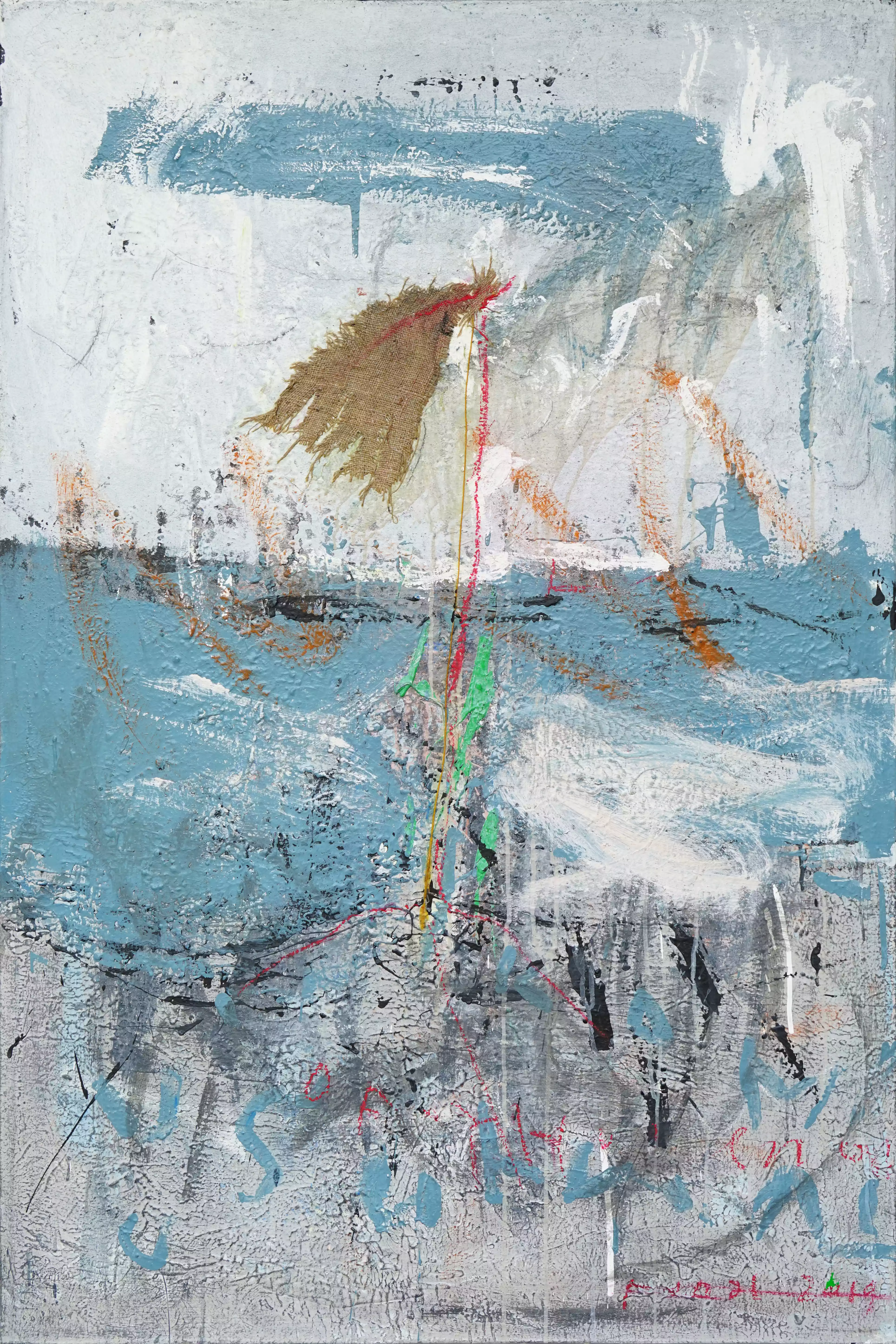
Ronald Efendi
Ensconce, 2019
Acrylic, pastel, jute on canvas
150 x 100 cm
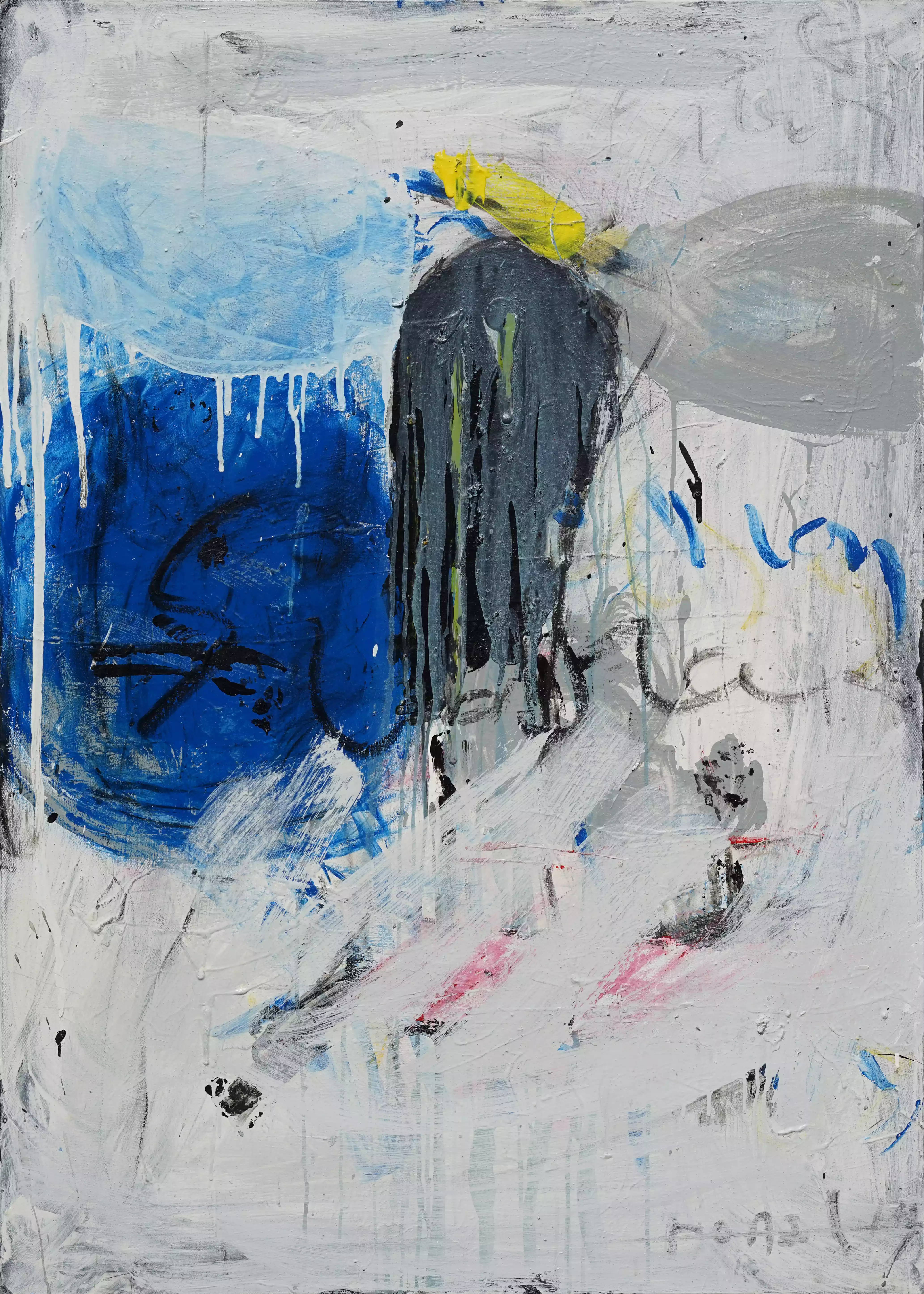
Ronald Efendi
Kepala Dingin, 2019
Mixed media on canvas
140 x 100 cm

Ronald Efendi
Like an Abstract, 2018
Acrylic, pastel on canvas
150 x 150 cm
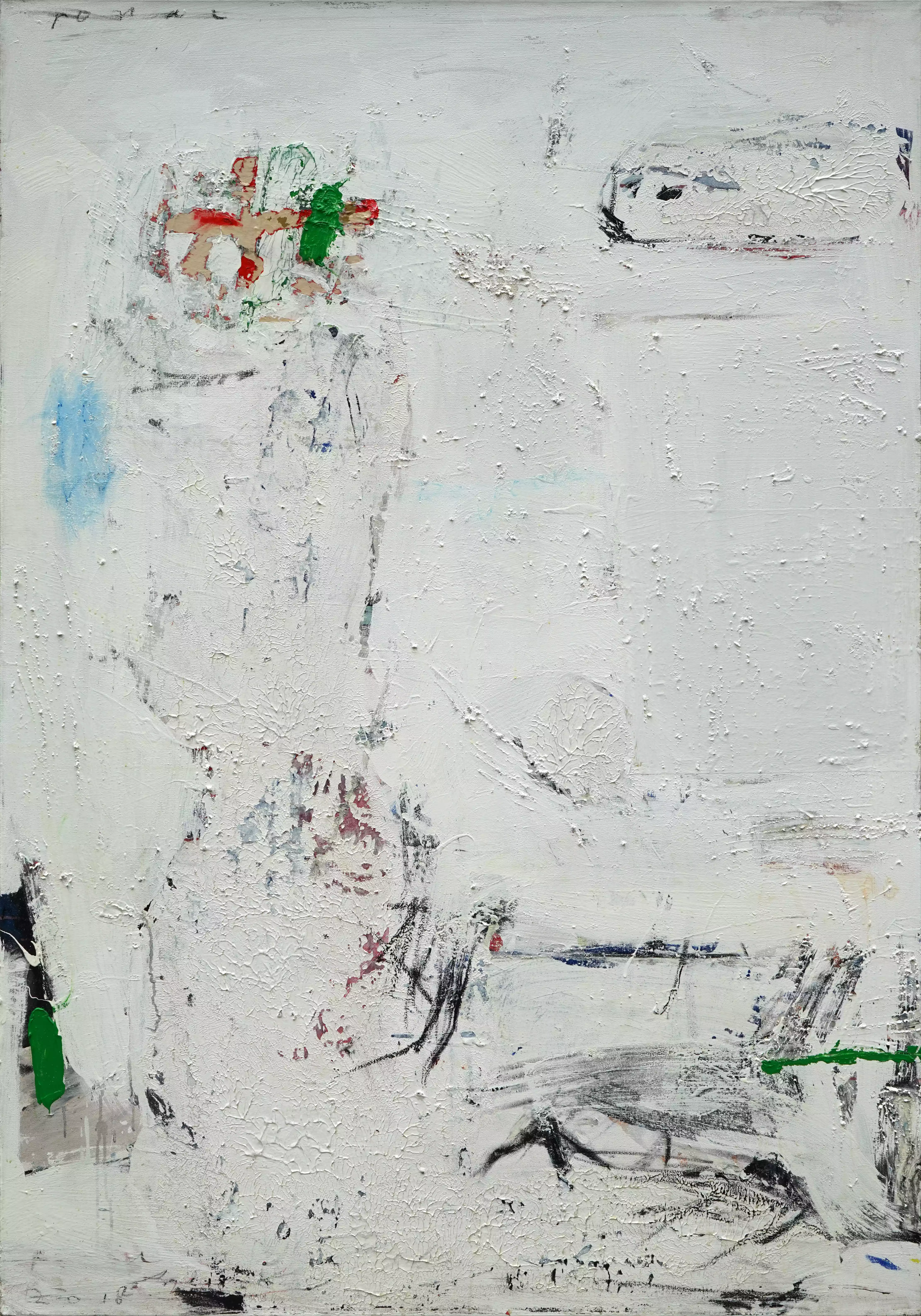
Ronald Efendi
Menggali Dangkal Memendam Dalam #2, 2018
Acrylic, pastel, paper on canvas
200 x 140 cm
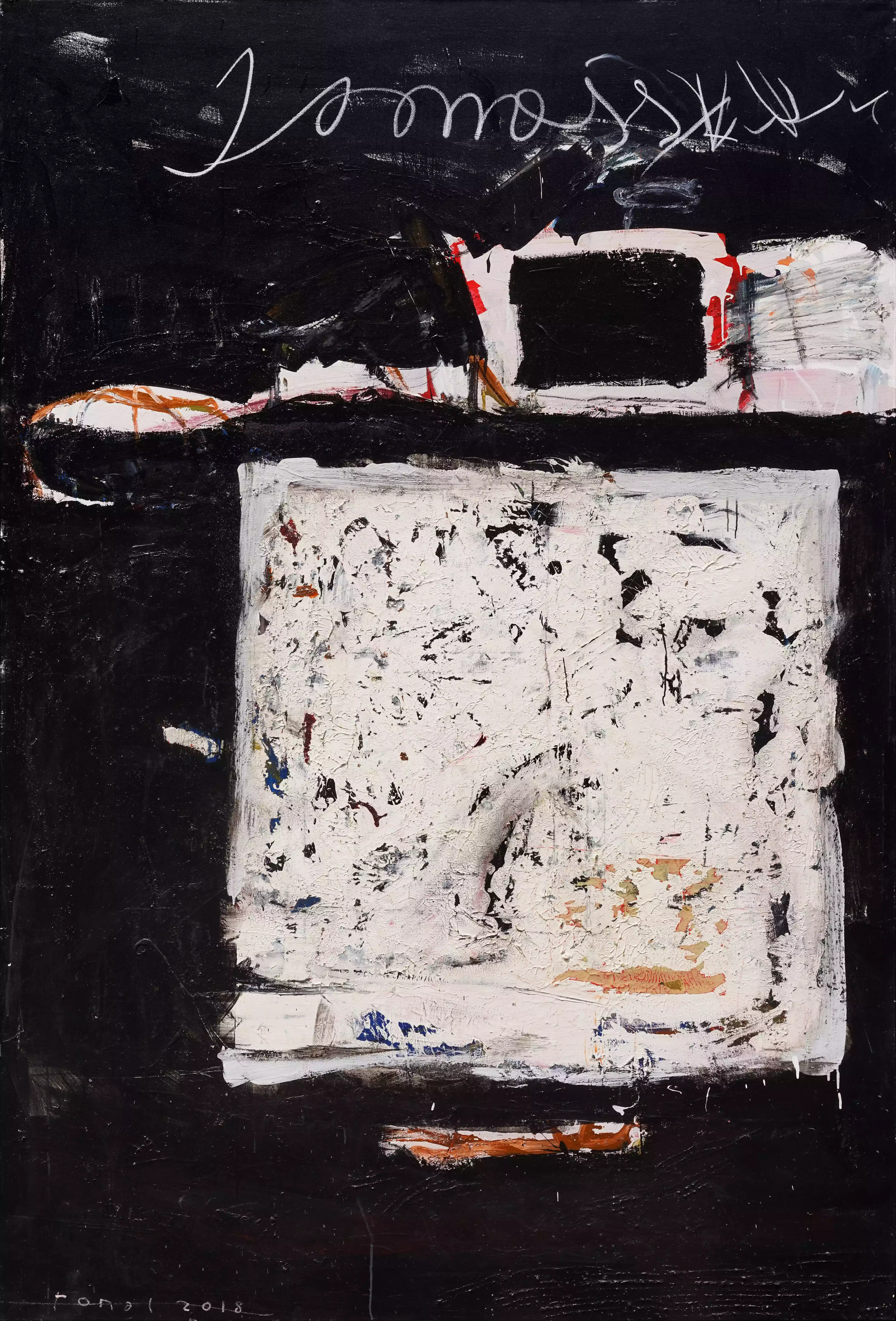
Ronald Efendi
Menggali Dangkal Memendam Dalam, 2018
Mixed media on canvas
280 x 190 cm

Ronald Efendi
Mengintip ke Sudut Berdebu Malam, 2019
Acrylic on canvas
140 x 180 cm

Ronald Efendi
Mum, 2018
Acrylic on canvas
150 x 150 cm

Ronald Efendi
Nocturne, 2019
Acrylic on canvas
150 x 150 cm
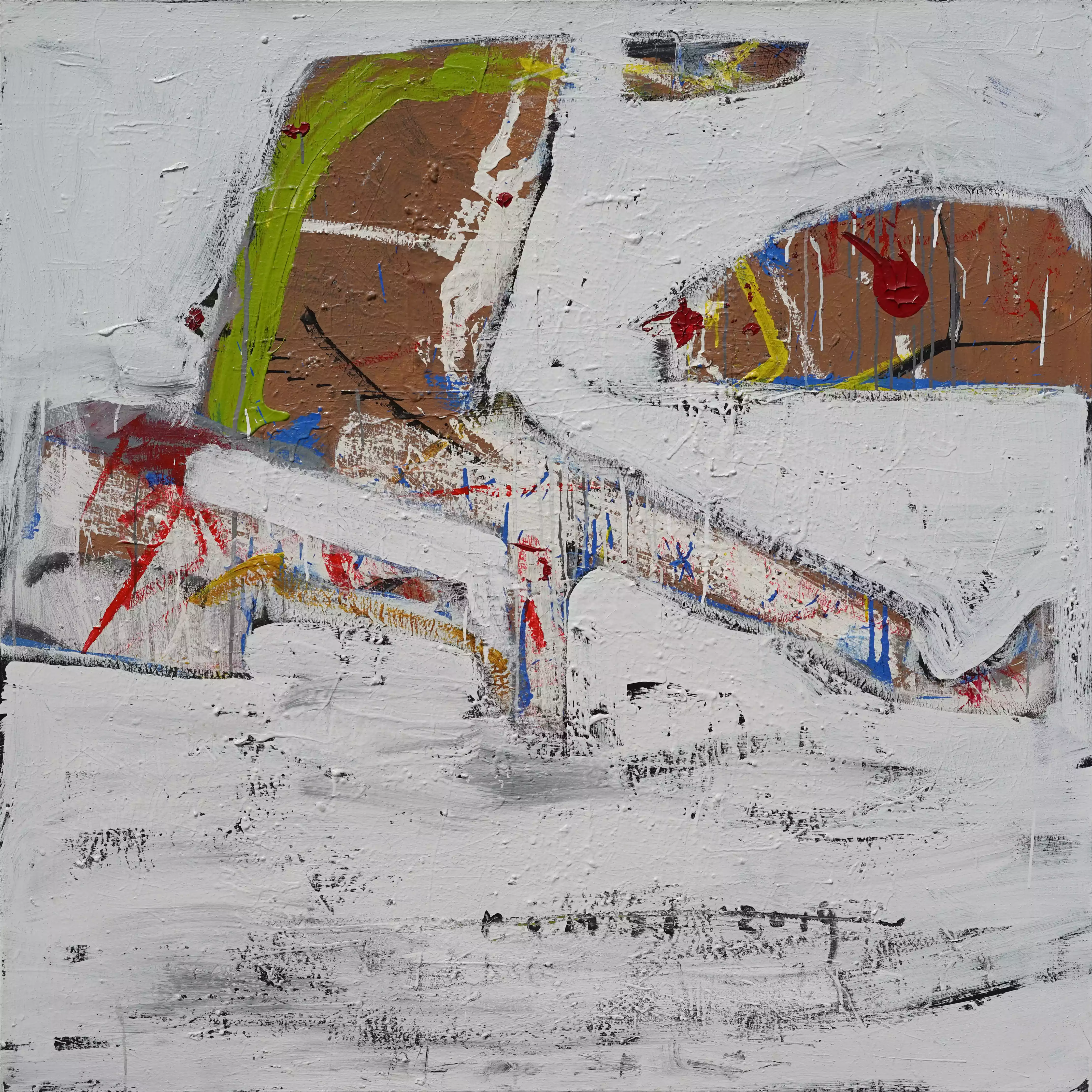
Ronald Efendi
Protracted, 2019
Mixed media on canvas
150 x 150 cm

Ronald Efendi
Range, 2019
Acrylic, pastel on canvas
150 x 100 cm

Ronald Efendi
Serenade #2, 2019
Acrylic on canvas
200 x 300 cm
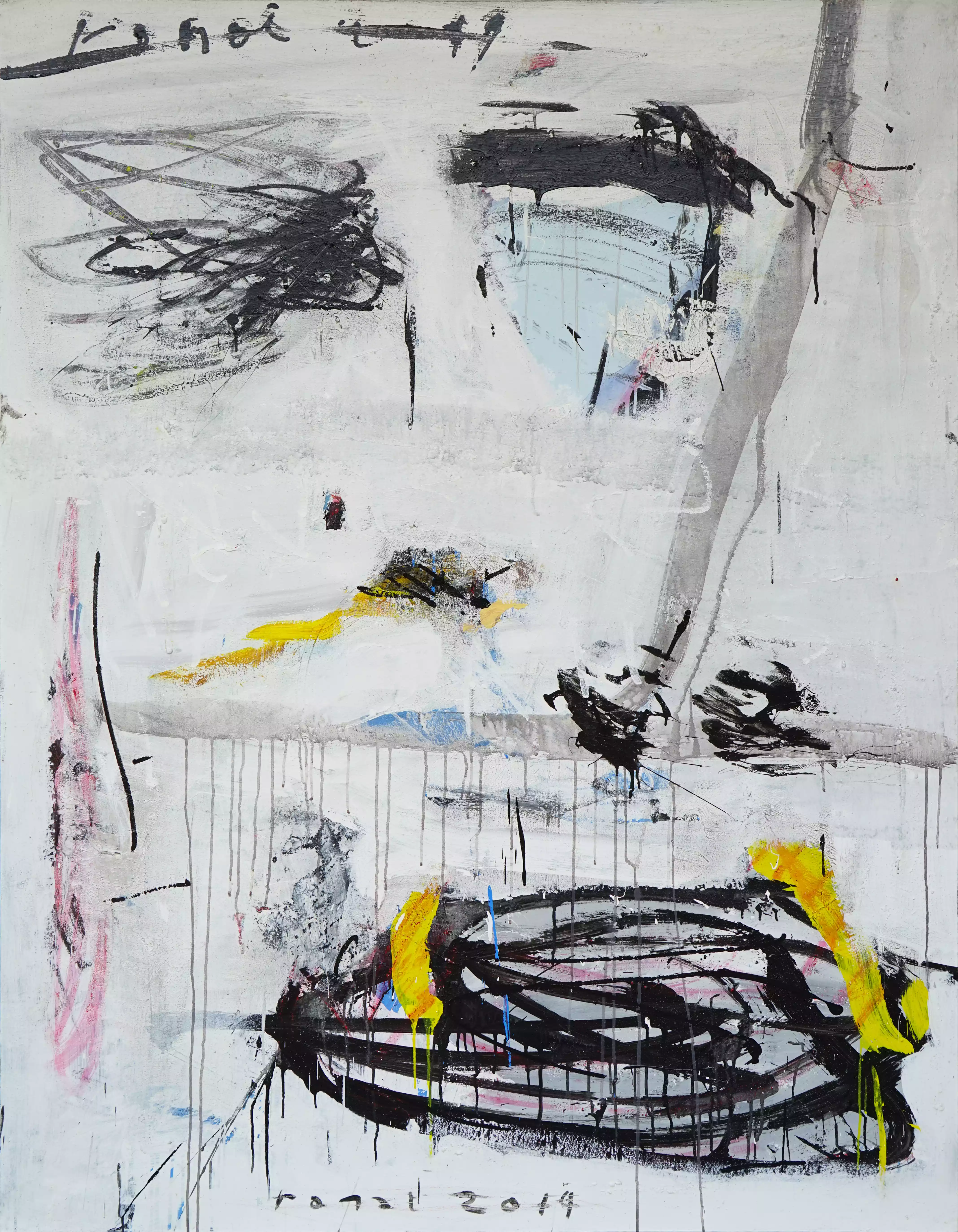
Ronald Efendi
Serenade #3, 2019
Acrylic on canvas
180 x 140 cm
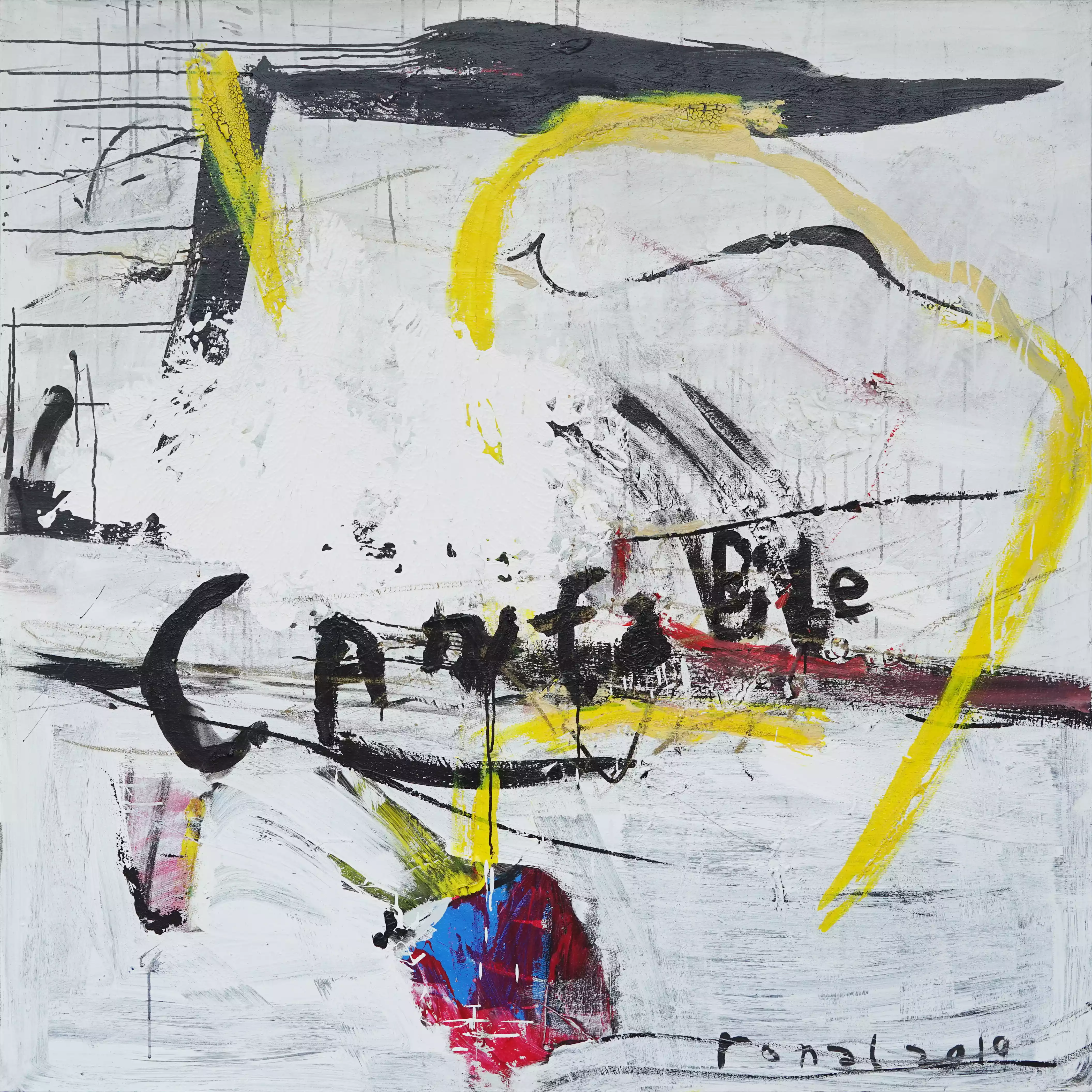
Ronald Efendi
Serenade, 2019
Acrylic, pastel on canvas
150 x 150 cm

Ronald Efendi
Superficial Sighs, 2019
Mixed media on canvas
200 x 300 cm
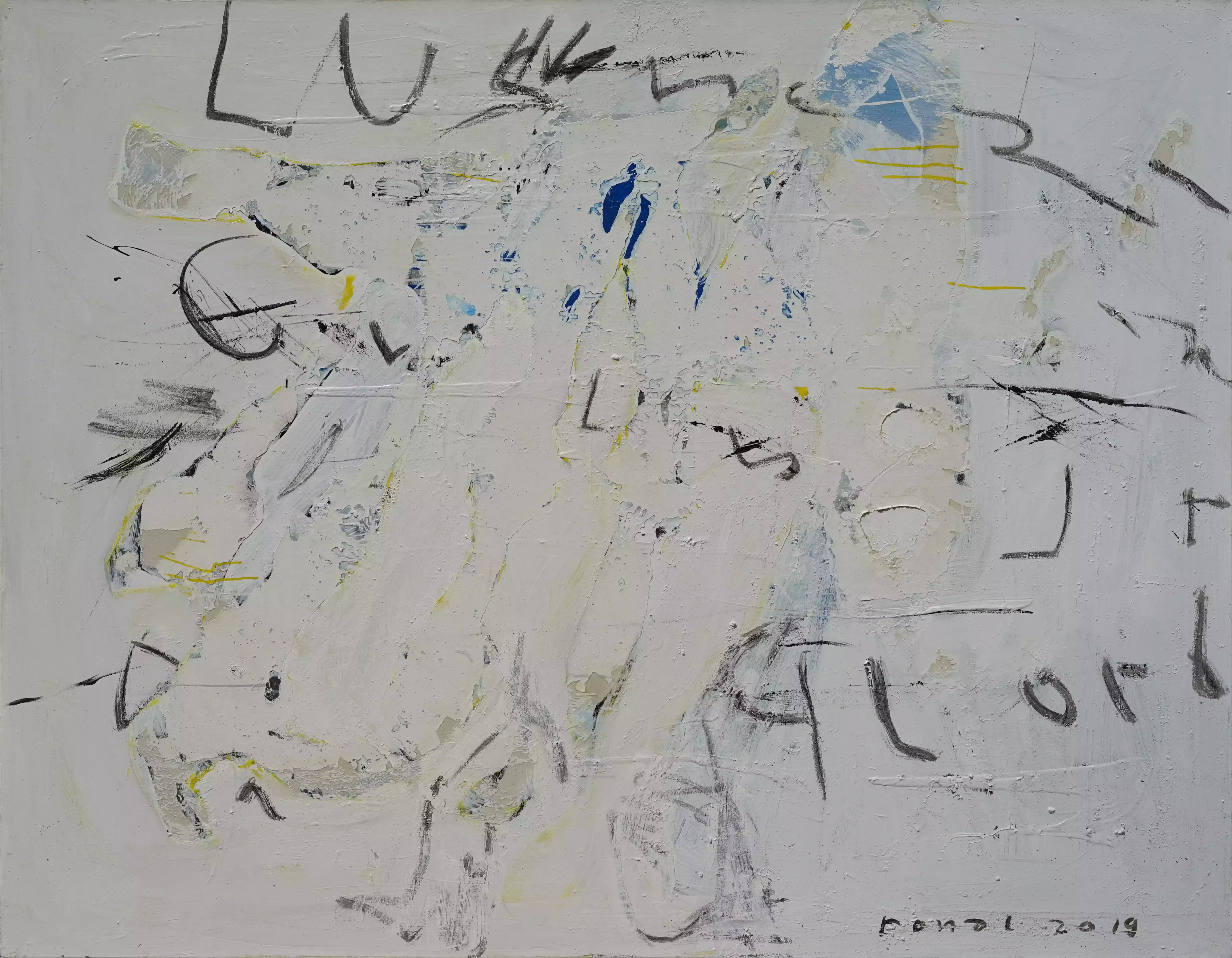
Ronald Efendi
Tenggelam Dalam Dangkal #2, 2019
Acrylic, pastel on canvas
140 x 180 cm
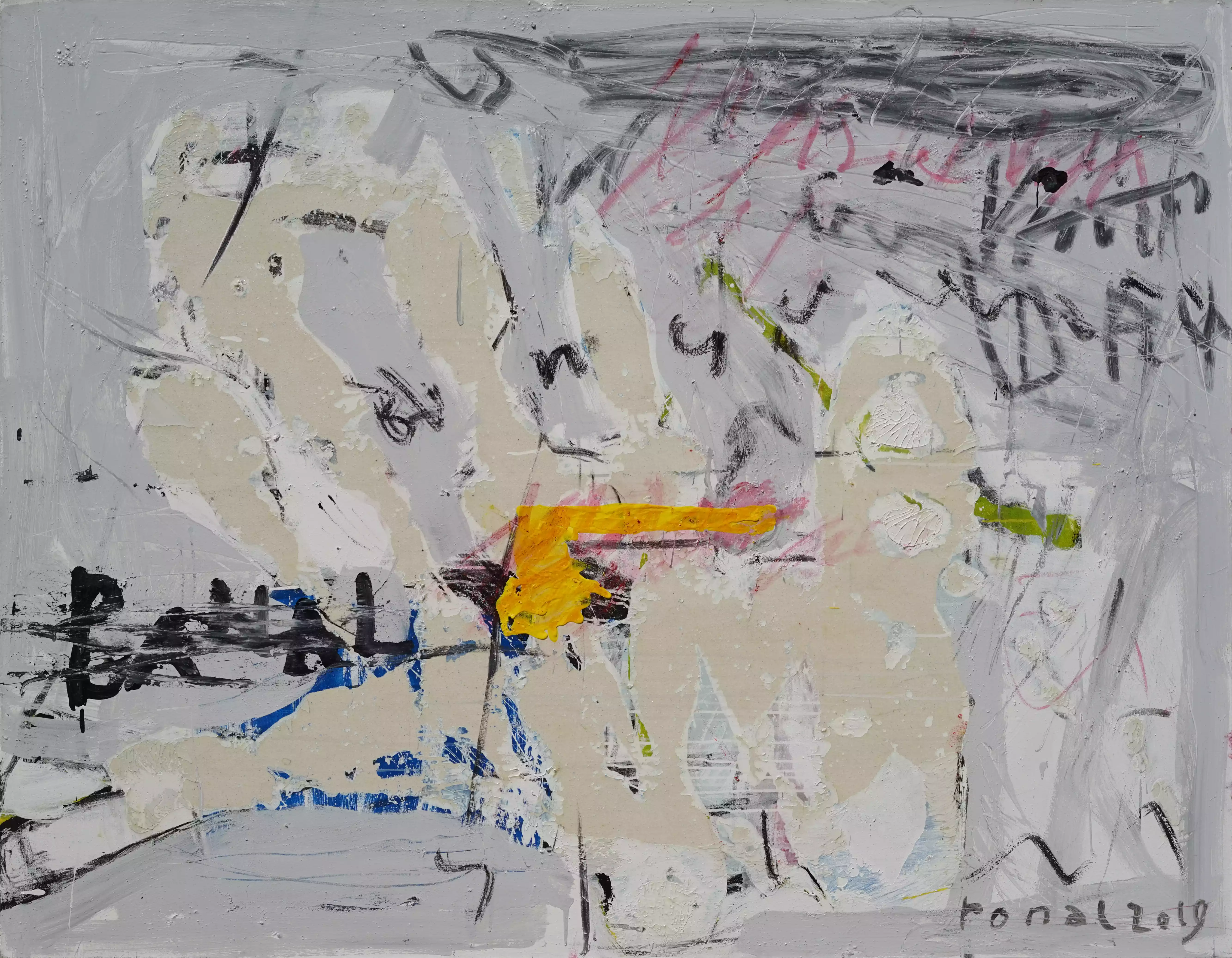
Ronald Efendi
Tenggelam Dalam Dangkal, 2019
Acrylic on canvas
140 x 180 cm
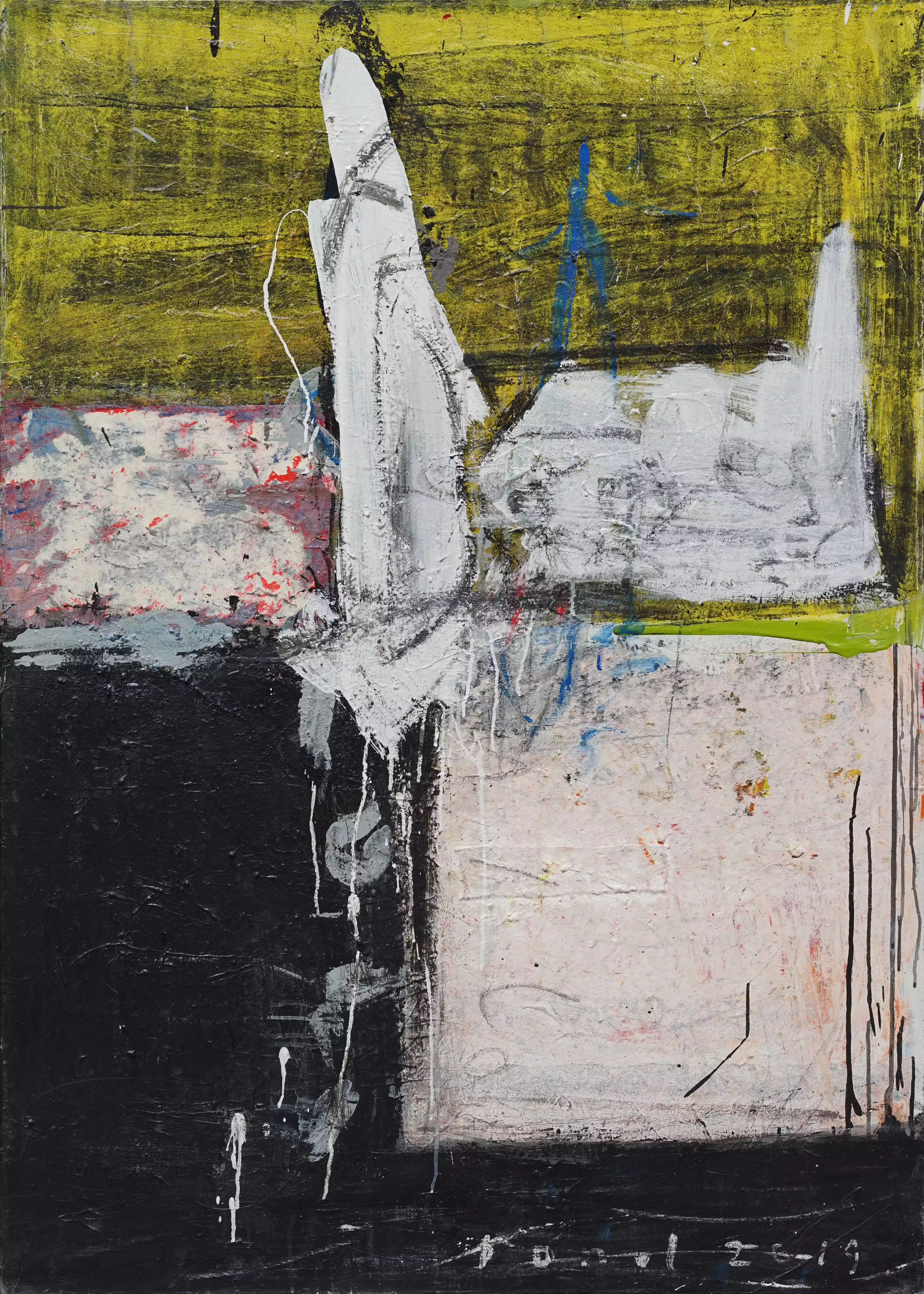
Ronald Efendi
Untitled #2, 2019
Mixed media on canvas
140 x 100 cm
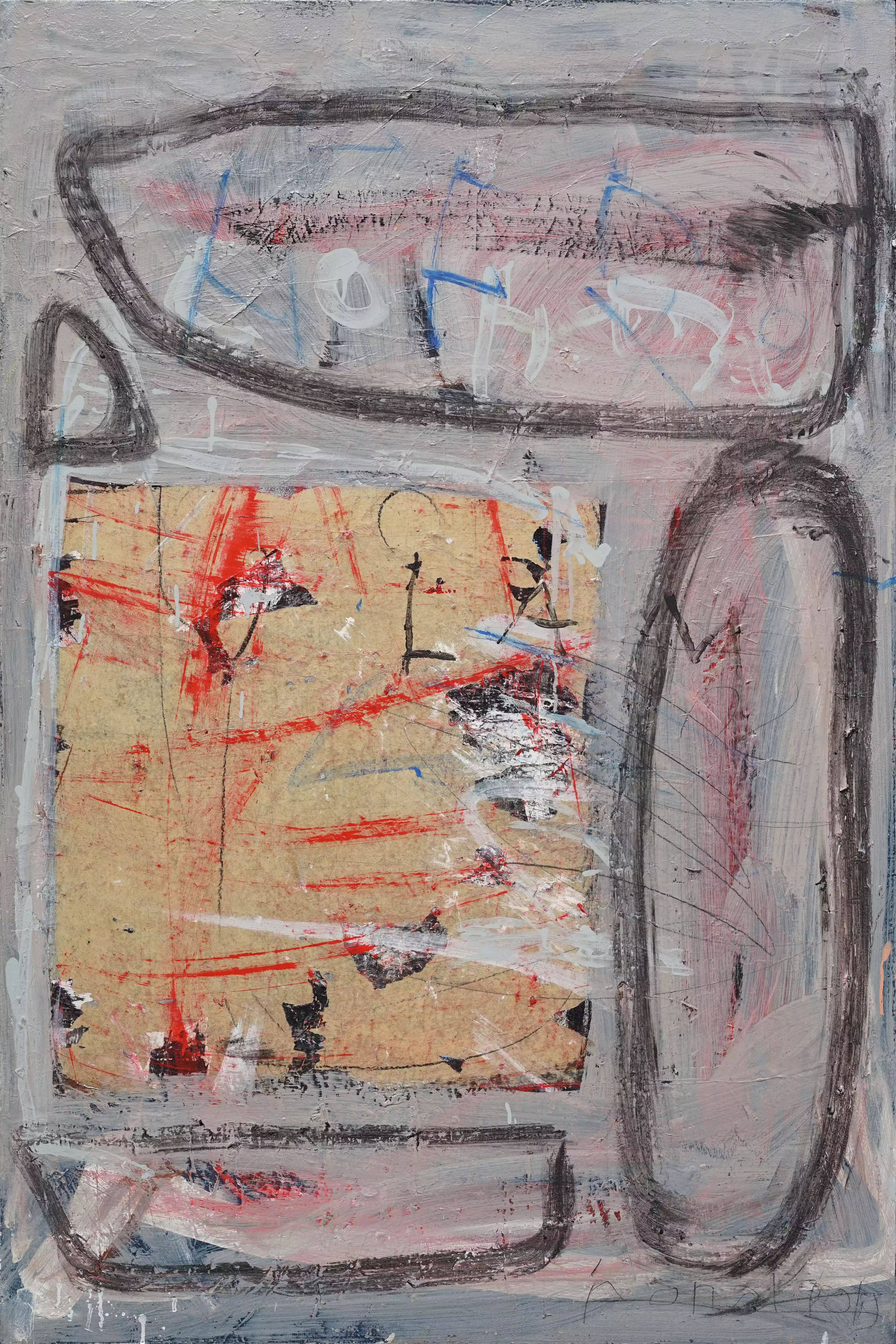
Ronald Efendi
Untitled, 2019
Mixed media on canvas
150 x 100 cm